
FIFA Awards 2031 Women's World Cup to US, Mexico, Costa Rica and Jamaica
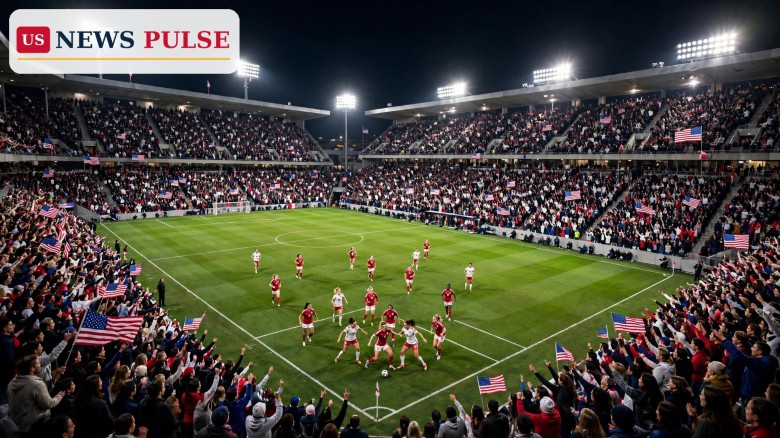
FIFA has awarded the 2031 Women's World Cup to the United States, Mexico, Costa Rica and Jamaica, confirming the biggest tournament in women's football history at an Extraordinary Congress in Zurich on Monday, November 23, 2026. The joint bid was approved by acclamation, with no rival candidate, and the same meeting confirmed the United Kingdom as host of the 2035 edition.
Key Points
- FIFA approved the four-nation bid for the 2031 Women's World Cup at its Extraordinary Congress in Zurich on Monday, November 23, 2026; the 2031 and 2035 bids were both unopposed and approved by acclamation by FIFA's 211 member federations.
- It will be the first Women's World Cup co-hosted by four nations and the first played with 48 teams and 104 matches, bringing the women's tournament into line with the men's.
- The bid offers 20 cities - 14 in the United States, four in Mexico, plus San Jose in Costa Rica and Kingston in Jamaica - with FIFA's final host-city decision due by the end of 2028.
- The United Kingdom - England, Northern Ireland, Scotland and Wales - will host the 2035 edition, the first Women's World Cup in the UK, with 19 venues on offer including Wembley Stadium.
- The 2031 tournament is projected to draw more than 4.5 million spectators and generate over $4 billion in revenue, per CBS Sports.
What Happened
FIFA's 211 member federations met online on Monday for an Extraordinary Congress in Zurich, where both unopposed bids were approved by acclamation - the formal route FIFA uses when a bid faces no rival. The 2031 award hands the tournament to a four-nation partnership spanning North America and the Caribbean; the 2035 award takes it to the United Kingdom for the first time.
The US-led group stood alone for 2031 and the UK stood alone for 2035. US Soccer president Cindy Parlow Cone addressed FIFA's members ahead of the vote, telling them: "This will be the largest women's sporting event in history." She said the tournament would accelerate the growth of women's football around the world.
Background and Context
The 2031 edition will be the third Women's World Cup staged in North America. The United States hosted the tournament in 1999 - when the Rose Bowl final in Pasadena drew 90,185 fans, still a record for a women's sporting event - and again in 2003, while Canada hosted in 2015. The United States women's national team has won it four times, in 1991, 1999, 2015 and 2019, more than any other nation.
The tournament has grown steadily since its first edition in China in 1991. Australia and New Zealand staged the 2023 edition, the first with 32 teams, and Brazil will host the next tournament from June 24 to July 25, 2027, also with 32 teams. The jump to 48 teams in 2031 mirrors the men's tournament, which expanded to 48 teams for its 2026 edition in the United States, Mexico and Canada - the same three countries that anchor the women's bid, now joined by Costa Rica and Jamaica.
2031 Women's World Cup: What the Four-Nation Bid Offers
The bid puts 20 cities on the table: 14 in the United States, four in Mexico, San Jose in Costa Rica and Kingston in Jamaica. More than 80 of the 104 matches are expected to be played in the United States, with Mexico staging a significant share and Costa Rica and Jamaica each hosting matches - a first senior World Cup for both, and for the Caribbean.
The 48-team format means 12 groups of four, a round of 32 and 104 matches in all - 40 more than the 64 played at Brazil 2027. More places means more debutants and more confederations represented, and a tournament of the same scale as the men's event for the first time. FIFA will confirm the final host cities by the end of 2028, giving organisers just over two years to prepare.
Reactions and Quotes
Parlow Cone's address to FIFA members set the tone for the American bid. "This will be the largest women's sporting event in history," she said, adding that the tournament would accelerate the growth of women's football worldwide. She framed the bid as an investment in the women's game across the region, not only a hosting decision.
The award is a landmark for the two smallest hosts. Costa Rica and Jamaica have produced leading players but never hosted a World Cup finals; the Caribbean and Central American legs are a chance to grow the game where infrastructure and investment have lagged behind the United States and Mexico.
Why It Matters
The scale of the 2031 tournament is the story. More than 4.5 million spectators are expected, with revenue above $4 billion, per CBS Sports - figures that would make it the biggest women's sporting event ever staged. For FIFA, a four-nation, 48-team edition completes the women's tournament's rise to parity with the men's in size and commercial weight.
It also matters for the geography of the game. The United States and Mexico host the region's strongest women's leagues; Costa Rica and Jamaica bring it to new audiences and markets. A World Cup in Kingston and San Jose gives young players in the Caribbean and Central America a finals on their doorstep.
What Happens Next
The next milestone is FIFA's host-city decision, due by the end of 2028. Until then the four federations will work with FIFA on stadiums, training bases and the schedule, with the bulk of the 104 games in the United States. Before that, attention turns to Brazil 2027, the last 32-team edition, from June 24 to July 25, and to the qualifying campaigns that will decide the first 48-team field. The United Kingdom, meanwhile, begins planning for 2035, with 19 venues on offer including Wembley, which would stage a Women's World Cup final for the first time.
Frequently Asked Questions
When and where is the 2031 Women's World Cup?
The United States, Mexico, Costa Rica and Jamaica, in 2031. Exact dates are yet to be confirmed; FIFA will name the host cities by the end of 2028.
How many teams will play in 2031?
48 teams, playing 104 matches - the first time the women's tournament has matched the men's format. Brazil 2027, the previous edition, still has 32 teams.
Which cities will host matches?
The bid offers 20 cities: 14 in the US, four in Mexico, plus San Jose in Costa Rica and Kingston in Jamaica. More than 80 of the 104 matches are expected to be played in the US.
Who is hosting the 2035 Women's World Cup?
The United Kingdom - England, Northern Ireland, Scotland and Wales - confirmed the same day, with 19 venues on offer including Wembley Stadium.
When is the next Women's World Cup?
Brazil 2027, from June 24 to July 25, 2027, with 32 teams - the last before the expansion to 48.
Related coverage: Alyssa Naeher retires after 16-year career, two World Cups and Olympic gold and 49ers crush Vikings 35-10 in Mexico City as Purdy tosses three touchdowns.
© 2026 US News Pulse. All rights reserved.
 Print
 Save