
Venezuelan Man Arrested in Utah Over Trump Assassination-Threat Stickers
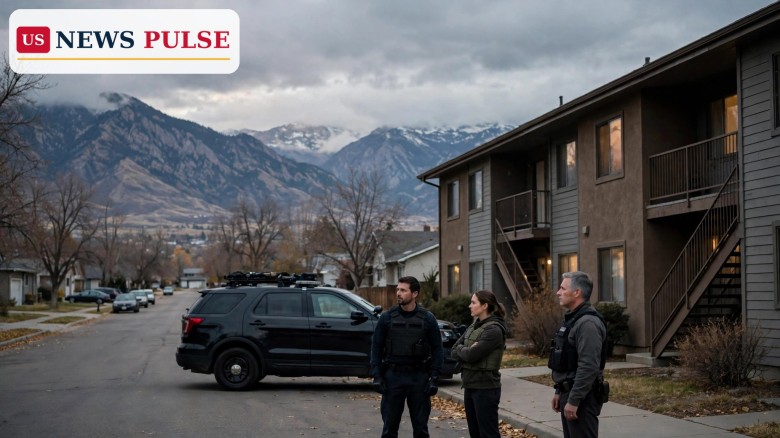
PROVO, Utah — Federal agents arrested a Venezuelan man living in Utah last month after the FBI linked him to stickers urging the assassination of President Donald Trump, the Department of Homeland Security announced on Monday. Hector Alejandro Mujica-Hernandez was taken into custody on October 16 during a targeted enforcement operation in Provo, after investigators traced online threats against the president to his activity and found he had handed out stickers reading “Shoot Trump, be a hero, become unforgetable” at a meeting of an anti-ICE group. The arrest was disclosed more than five weeks after it happened.
Key Points
- ICE Homeland Security Investigations arrested Hector Alejandro Mujica-Hernandez, a Venezuelan national, on October 16 in Provo, Utah.
- The FBI tipped off investigators after tracing online threats to assassinate President Donald Trump to Mujica-Hernandez’s online activity.
- The case centred on stickers reading “Shoot Trump, be a hero, become unforgetable”, with the letter “A” stylised as an upside-down anarchist symbol.
- Investigators say he distributed the stickers at a meeting of a group called “People of Provo Against ICE” (POPAI).
- Mujica-Hernandez was lawfully admitted to the United States in July 2016 and chose to overstay his visa, the Department of Homeland Security said.
What Happened
The Department of Homeland Security announced the arrest on Monday, November 23, 2026, more than five weeks after agents took Mujica-Hernandez into custody. According to the department, U.S. Immigration and Customs Enforcement’s Homeland Security Investigations unit arrested him during targeted enforcement action in Provo after the FBI passed on information about threats of assassination it had identified through his online activity.
The investigation centred on the stickers. The Department of Homeland Security said the images bore the message “Shoot Trump, be a hero, become unforgetable” — misspelling “unforgettable” — with the letter “A” drawn as an upside-down anarchist symbol. Investigators determined that Mujica-Hernandez had distributed the stickers during a meeting of People of Provo Against ICE, a local group opposed to immigration enforcement.
Background and Context
Mujica-Hernandez entered the United States legally, the department said, and then stayed after his permission to remain expired. He was lawfully admitted in July 2016 and “chose to overstay his visa in defiance of United States immigration law and remain in the country illegally,” the Department of Homeland Security said in its statement.
Threatening the president is a federal crime under 18 U.S.C. 871, which carries a penalty of up to five years in prison. The Secret Service and the FBI assess thousands of such threats each year. The department did not say in its announcement which charges Mujica-Hernandez faces or when he is expected to appear in court.
The case is separate from an earlier incident this month involving a different Venezuelan man. On November 5, an armed Venezuelan migrant was arrested near the White House, in a case that involved a rifle and two handguns in a stolen car. The two arrests involve different people, different places and different conduct, and the Department of Homeland Security has not linked them.
Trump Assassination Threat Stickers: What Investigators Found
The stickers are the heart of the case. According to the department, the FBI first identified the assassination threats through Mujica-Hernandez’s online activity and passed the information to Homeland Security Investigations. Agents then traced the distribution of the stickers to the meeting of People of Provo Against ICE, where investigators determined he had handed them out.
The department has not said how many stickers were printed or distributed, whether other people helped produce them, or whether the group itself is under investigation. The announcement described the stickers as images “intended to encourage the assassination of President Trump.”
Reactions and Quotes
Homeland Security Secretary Markwayne Mullin condemned the threats in the department’s statement. “This illegal alien not only broke our laws by illegally overstaying his visa, but threatened the life of the President of the United States,” Mullin said. “The Department of Homeland Security will not tolerate death threats of any kind. Under the leadership of President Trump, our brave ICE officers are working tirelessly to make America safe again.”
Mullin also used the announcement to criticise coverage of immigration enforcement, saying: “The media and the far-left must stop vilifying ICE law enforcement officers and President Trump.” The department urged the public to report crimes and suspicious activity by calling 866-DHS-2-ICE or completing its online tip form.
Why It Matters
Threats against a president are treated as a serious federal matter regardless of whether the person making them has the means to carry them out, and the law is written that way precisely because the presidency is a target for violence. The arrest also lands in a heated national argument over immigration enforcement, in which the administration has made arrests of people who overstayed visas a central part of its enforcement strategy.
The case also shows how online activity can draw federal attention: the FBI identified the threats through Mujica-Hernandez’s online activity before any sticker was handed out in person, and the distribution at a public meeting then became the evidence investigators cited. It is also a reminder that federal agents monitor both online spaces and local meetings.
What Happens Next
Mujica-Hernandez is in federal custody following the October 16 arrest, and the next step is expected to be a court appearance at which prosecutors set out the charges against him. The department has not said when that hearing will take place or in which court. Because he overstayed his visa, he also faces immigration proceedings.
The investigation may also widen. Federal agents have not said whether they are looking into who else was involved in producing or distributing the stickers, or whether the People of Provo Against ICE group faces any scrutiny of its own. Further details are likely to emerge in court filings.
Frequently Asked Questions
Who was arrested in Provo, Utah?
Hector Alejandro Mujica-Hernandez, a Venezuelan national who was lawfully admitted to the United States in July 2016 and then overstayed his visa, according to the Department of Homeland Security.
What did the stickers say?
“Shoot Trump, be a hero, become unforgetable” — with “unforgettable” misspelled — and the letter “A” stylised as an upside-down anarchist symbol.
Where were the stickers distributed?
Investigators say Mujica-Hernandez handed them out during a meeting of a group called “People of Provo Against ICE” (POPAI).
When was he arrested?
He was arrested on October 16, 2026, during targeted enforcement action in Provo, Utah. The Department of Homeland Security announced the arrest on November 23, 2026.
What charges does he face?
The department did not say in its announcement which charges Mujica-Hernandez faces. Threatening the president is a federal crime under 18 U.S.C. 871, punishable by up to five years in prison.
Related coverage: an armed Venezuelan migrant was arrested near the White House earlier this month (armed man arrested near White House); the Justice Department admitted deporting a US citizen to Mexico (DOJ admits deporting US citizen Brian Morales Garcia); masked ICE agents dragged two people off a jet bridge at Seattle airport (ICE arrests at Sea-Tac airport).
© 2026 US News Pulse. All rights reserved.
 Print
 Save