
FBI Deputy Director Christopher Raia to Retire in December After Less Than a Year
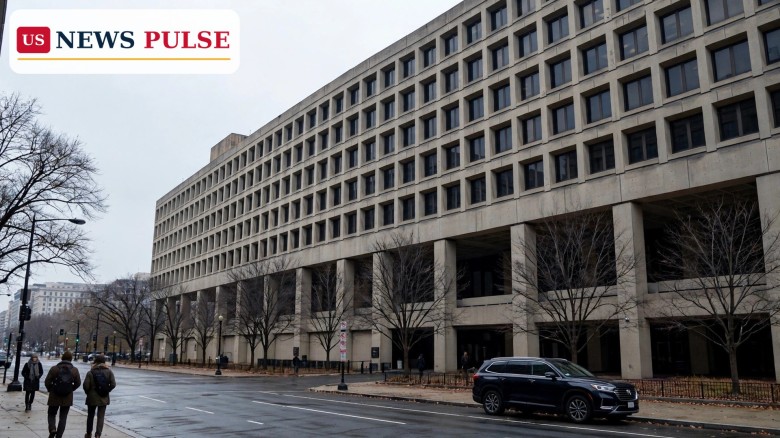
WASHINGTON — Christopher Raia, the FBI's deputy director, plans to retire in December after less than a year in the bureau's second-highest job, the Washington Post reported on Monday, in the latest departure from an agency rocked by turmoil and personnel changes during the Trump administration. The report cited three people familiar with the matter and did not give an exact date. Neither the FBI nor the Justice Department immediately responded to requests for comment.
Key Points
- Raia intends to retire in December 2026, the Washington Post reported on Monday, citing three people familiar with the matter.
- He has served as deputy director for less than a year, after being tapped in January 2026 to replace Dan Bongino, the former Secret Service agent and right-wing podcaster.
- A career FBI official since 2003, Raia previously served as a top counterterrorism official and as assistant director in charge of the FBI's New York Field Office from April 2025.
- He testified as deputy director at a House Homeland Security Committee hearing on worldwide threats on Wednesday, November 18, just days before the retirement report.
- Neither the FBI nor the Justice Department immediately responded to requests for comment.
What Happened
The Washington Post reported on Monday, November 23, that Raia intends to retire from the FBI in December, ending one of the shortest tenures in recent memory for the bureau's deputy director. The newspaper cited three people familiar with the matter, who spoke on condition of anonymity because they were not authorised to discuss internal personnel plans. The report did not say whether Raia has submitted formal retirement paperwork or whether a successor has been identified, and no announcement has yet come from the bureau or FBI Director Kash Patel.
The silence is notable: senior departures are usually announced in advance, with statements praising the departing official and confirming the transition. The planned exit comes as the FBI faces intense public scrutiny, and as Democrats prepare to take control of Congress in January. A departure in December would leave the bureau's second-in-command post vacant, or filled on an acting basis, just as the political balance in Washington shifts.
Background and Context
The deputy director is the FBI's second-ranking official, overseeing day-to-day operations, 56 field offices and its counterterrorism, counterintelligence and criminal investigative missions. The role is traditionally filled by a career agent with decades of experience, expected to provide continuity and institutional memory as directors come and go. Raia fit that mould: he joined the bureau in 2003 and rose through its counterterrorism ranks, a path that took him to some of the most sensitive assignments in federal law enforcement.
His appointment in January 2026 was itself a story. He replaced Dan Bongino, a right-wing podcaster and former Secret Service agent whose selection had been widely described as unconventional. Bongino had no prior FBI experience, and his appointment broke with the bureau's tradition of promoting from within. Raia's elevation was seen as a return to a more traditional model, and before it he had served as assistant director in charge of the FBI's New York Field Office since April 2025.
Christopher Raia's FBI Career
Raia's 23 years at the FBI have been spent largely in counterterrorism, the field in which he built his reputation. As a senior counterterrorism official he worked on investigations and operations that are rarely discussed in public, and colleagues have described him as a steady, low-profile operator rather than a public-facing figure. That background made his public role as deputy director a significant change.
His most visible moment came on November 18, when he appeared before the House Homeland Security Committee alongside the director of national intelligence and the homeland security secretary. The hearing was dominated by the nationwide outages that had disrupted Microsoft services, JPMorgan Chase, United Airlines, Apple Pay and the National Security Agency's classified network. The three officials told the committee the outages resulted from routine maintenance and the rapid patching of newly found vulnerabilities, not a coordinated foreign attack.
Reactions
No official reaction has followed the report. The FBI and the Justice Department did not immediately respond to requests for comment, and no statement has come from FBI Director Kash Patel or the White House. That silence leaves key questions unanswered: whether Raia's decision was his own, whether he was asked to step aside, and whether his departure connects to the policy disputes or personnel tensions that have marked the bureau this year. Outside the bureau, the report is being read as the latest sign of instability at the top of federal law enforcement, and congressional reaction is likely to build in the coming days.
Why It Matters
The departure matters because the deputy director is the bureau's operational backbone. While the director sets policy and serves as the public face of the FBI, the deputy runs the organisation: approving major investigations, managing the field offices, coordinating with other intelligence agencies and keeping the bureau's divisions working in concert. A vacancy, even a brief one, can slow decision-making while the bureau handles an unusually heavy caseload of politically sensitive matters. It also matters because of the pattern it confirms: Raia is the latest in a series of senior officials to leave after a short tenure.
What Happens Next
The immediate question is whether the FBI confirms the report and when Raia's final day will be. A formal announcement would normally be followed by the naming of an acting deputy director from the bureau's senior ranks while the White House considers a permanent replacement, and the administration may move quickly so the bureau enters January with its leadership settled. Longer term, the departure will be one of the first personnel questions facing the new Congress.
Frequently Asked Questions
Who is Christopher Raia? He is the FBI's deputy director, the bureau's second-ranking official. He joined the FBI in 2003, served as a top counterterrorism official, and led the FBI's New York Field Office from April 2025 before being tapped as deputy director in January 2026.
When is Raia retiring? The Washington Post reported on Monday, November 23, 2026, citing three people familiar with the matter, that Raia intends to retire in December 2026. No exact date has been reported, and the FBI has not yet confirmed the departure.
Who did Raia replace as deputy director? Dan Bongino, the right-wing podcaster and former Secret Service agent, an unconventional pick for the role with no prior FBI experience.
Why is Raia leaving the FBI? The reasons have not been reported. The Washington Post report did not give a reason, and neither the FBI nor the Justice Department has commented.
What happens to the deputy director's job after he leaves? The bureau would normally name an acting deputy director from its senior ranks while the White House considers a permanent replacement. No successor has been named yet.
For more on the bureau's recent appearances before Congress, see our report on the intelligence chiefs' testimony on the nationwide outages, and for the wider shake-up in federal cyber leadership, see Trump's firing of cyber director Cairncross and the FBI's investigation into a suspected hack of its NCIC criminal database.
© 2026 US News Pulse. All rights reserved.
 Print
 Save