
Number of Homeless Students in US Hits Record 1.55 Million, Federal Data Shows
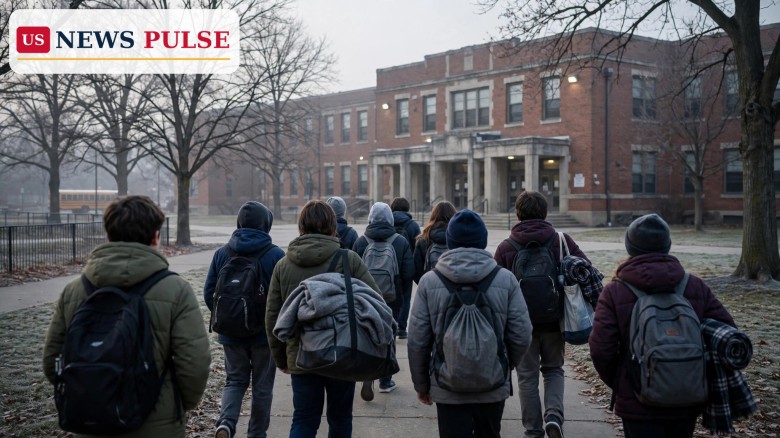
WASHINGTON — The number of children and young people experiencing homelessness identified by America's public schools hit a record high in the 2024-2025 school year, newly released federal data show: 1,553,989 students, the highest total since national reporting began in 2004-2005. Reported by the Washington Post on Monday, it means about one in every 32 public school pupils was homeless at some point during the school year, a share never seen before.
Key Points
- US public schools identified 1,553,989 children and youth experiencing homelessness in 2024-2025, the highest since reporting began in 2004-2005, slightly above the 2023-2024 record.
- They made up about 3.1% of all public school pupils, or about one in 32, the highest share on record, up from 2.7%, or one in 37, in 2018-2019.
- The total is 12% above pre-pandemic levels, although overall enrollment has fallen by about 1.3 million students since then.
- The $800 million rescue-plan programme for homeless students expired in 2024-2025, and 34 of 53 states and jurisdictions identified fewer students than the year before.
- Students in shelters or unsheltered situations rose for a fourth straight year, and a record number of children aged up to five were identified.
What Happened
The figures come from the National Center for Homeless Education, analysed by SchoolHouse Connection, a national non-profit working on student homelessness. It was the second straight year schools identified more than 1.5 million homeless students, up just 0.4% on the previous year but 28.9% since 2021-2022, the first full year of rescue-plan funding.
The increases were widespread. Forty-nine of 53 states and jurisdictions identified more homeless students in 2024-2025 than in 2021-2022, and 43 identified more than in 2018-2019. The largest increases since 2018-2019 were in West Virginia and Pennsylvania, both up 43%, South Carolina, up 37%, and Arkansas, up 30%. California and New York, together nearly a third of all identified students, kept the national total steady: without them, it would have fallen 1.3%.
Background and Context
Under the McKinney-Vento Act, a student counts as homeless not only when living in a shelter, motel, car or park, but also when sharing housing with others because the family has nowhere else to go. That "doubled up" group is by far the largest, and the most often missed by other counts.
The rescue-plan programme provided $800 million over three years to find and support homeless students, more than doubling the districts with dedicated resources. Today, only about one in five districts receives homeless-education funding. Meanwhile, rents outpaced inflation in 2023 and 2024, and by 2024 a record 22.7 million renter households spent over 30% of their income on housing, while child poverty reached 13.4% in 2025, above its pre-pandemic level.
Homeless Students at Record High: Where the Numbers Are Worst
The national share of one in 32 hides sharp differences: the share rose in 45 of 53 states and jurisdictions. In West Virginia, about one in 16 public school students was identified as homeless in 2024-2025, up from 3.9% to 6.2% since 2018-2019; Maine rose from 1.4% to 2.7%, Vermont from 1.2% to 2.1%, and Hawaii from 2.0% to 3.1%.
Students in shelters or unsheltered situations rose for a fourth year, even though the housing department's January 2025 Point-in-Time count found fewer homeless families — that single-night count leaves out children doubled up with others, while schools count every student identified during the year. A record number of children aged up to five were also identified. Even the record total is likely an undercount: many students are never identified, and infants and toddlers are largely missing from the data.
Reactions
SchoolHouse Connection warned that the drop in identification in most states is not good news. "Because children and youth must be identified before they can receive help, that decline is a serious concern," the organisation said. It added: "We urge Congress to increase EHCY funding so schools can rebuild the capacity to identify and serve students experiencing homelessness. We also urge state lawmakers to increase their investments in these students."
Fewer students identified does not necessarily mean less homelessness: a decrease can also reflect a lack of resources and training, and in 2024-2025 most decreases were in states where the rescue-plan funds had run out. The figures also land in a wider policy fight: a Rhode Island federal judge last week blocked the Trump administration's attempt to overhaul the $4 billion Continuum of Care programme, ruling officials exceeded their authority by steering funding away from permanent housing.
Why It Matters
The stakes are measured in classrooms, not just in counts. In 2024-2025, 47.3% of homeless students were chronically absent, down from 49.6% the year before but still about one and a half times the rate for other disadvantaged students. Their graduation rate was 71.8%, up 1.5 points on the previous year, yet the gap with other students persists.
That gap matters long after school ends. Research cited by SchoolHouse Connection finds that lacking a high school degree or GED is the single greatest risk factor for homelessness as a young adult. Targeted support — transport, tutoring, temporary motel stays and staff whose job is to find these students — is therefore not only about getting through the school year, but also one of the most effective forms of homelessness prevention the country has.
What Happens Next
The immediate question is what happens in the school year now under way. With the rescue-plan money gone, many districts no longer have the staff that helped them find homeless students, and the first full year without it will test whether identification — and the help that follows — holds up. The answer will not be known until the 2025-2026 federal data are released in 2027.
Meanwhile, pressure on families is set to grow: housing costs remain near record highs, child poverty is above its pre-pandemic level, and new Medicaid and food-assistance limits are coming. SchoolHouse Connection wants Congress and state lawmakers to increase funding, arguing that without it, the new record may prove a floor rather than a peak.
Frequently Asked Questions
How many homeless students are there in the US? Public schools identified 1,553,989 children and youth experiencing homelessness in 2024-2025, the highest since national reporting began in 2004-2005 — about one in 32 pupils.
What counts as student homelessness? Under the McKinney-Vento Act, it includes children in shelters, motels, cars or parks, and children sharing housing with others because they have nowhere else to go.
Why did the number rise to a record? A mix of causes: pandemic-era funding that helped schools find students, record housing costs, child poverty above its pre-pandemic level, and disasters such as Hurricane Helene and the Los Angeles wildfires.
Are the figures complete? No. The data likely understate the scale, because many homeless students are never identified and infants and toddlers are largely missing from the count.
What help do homeless students get? Federal law gives them the right to enrol immediately and stay in their school, with transport and support funded through homeless-education grants that reach only about one in five districts.
For more, see our report on US homelessness falling to 698,425, the court ruling blocking the $4 billion homelessness revamp, and the SNAP lawsuit over food-assistance limits in 18 states.
© 2026 US News Pulse. All rights reserved.
 Print
 Save