
Iran Flogs Singer Parastoo Ahmadi 74 Times Over Hijab-Free Concert in Qom
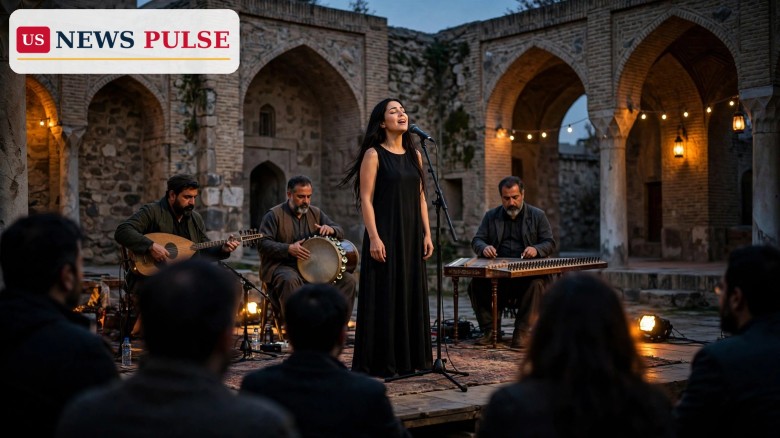
QOM, Iran — Iranian singer Parastoo Ahmadi has been flogged 74 times for performing without the mandatory hijab, her defence lawyer said, in a punishment that has drawn condemnation from human rights groups around the world. The lashing was carried out on Monday, November 23, 2026, at the Sentence Enforcement Unit of the Qom Prosecutor's Office, according to lawyer Mostafa Nili, cited by the Norway-based group Iran Human Rights. Four members of Ahmadi's concert team received 74 lashes each on the same day, in a case that began with a concert filmed nearly two years ago.
Key Points
- Ahmadi was lashed 74 times on Monday, November 23, 2026, for singing without a hijab.
- Four band members — organiser Mohsen Lashkari and musicians Soheil Faghih-Nasiri, Amin Taheri and Amir-Ali Pirnia — received 74 lashes each.
- The punishment was carried out at the Sentence Enforcement Unit of the Qom Prosecutor's Office.
- The case stems from her “Caravanserai Concert”, filmed in December 2024 at the Deir-e Gachin Caravanserai near Qom.
- All five were also given two-year bans on artistic and musical activities and on foreign travel.
What Happened
The flogging was confirmed by Ahmadi's lawyer, Mostafa Nili, and reported by Iran Human Rights, a Norway-based group that documents rights abuses in Iran. Nili said the sentence was enforced on Monday at the Qom prosecutor's office, where Ahmadi and the four men were each given 74 lashes. The punishment followed a court conviction for “offending public decency” over the concert performance. The sentence was upheld on appeal in September, clearing the way for it to be carried out. Alongside the lashes, the court imposed two-year bans on the five from artistic and musical activities and from travelling abroad. Rights monitors say the case was pursued deliberately as a public warning, with the timing and the location — the religious city of Qom — chosen to send a message to other performers and to women who appear in public without a hijab.
Background and Context
Iran has required women to wear the hijab in public since the 1979 revolution, and the rule is enforced by the courts and the morality police. Flogging remains a lawful punishment under Iranian law for a range of offences, including those classed as morality crimes. Enforcement of the dress code has intensified since the nationwide protests that followed the death of Mahsa Amini in police custody in September 2022, when hundreds of thousands of Iranians took to the streets under the slogan “Woman, Life, Freedom”. Since then, the authorities have cracked down on women who appear unveiled in public and on artists, actors and athletes who defy the rules. Singers have been a particular target: performing without a hijab, singing alongside men, or releasing music online without state approval can each bring criminal charges.
Parastoo Ahmadi and the Caravanserai Concert
The performance at the centre of the case was filmed in December 2024 at the Deir-e Gachin Caravanserai, a centuries-old roadside inn near Qom. In the video, Ahmadi sings in a long black sleeveless dress with her hair uncovered, accompanied by male musicians — a combination that breaks two of the Islamic Republic's rules for women performers at once. The concert, released online as the “Caravanserai Concert”, spread quickly on social media, where many Iranians praised it as a quiet act of defiance. For the authorities, it was a public challenge to the dress code in one of Iran's most religious cities.
Reactions and Quotes
Amnesty International has described flogging as a cruel, inhuman and degrading punishment, and has long called on Iran to abolish it. Rights groups say the lashing of Ahmadi and her bandmates shows the authorities are willing to use corporal punishment against artists to enforce the hijab law, even when the offence is a performance. Iran Human Rights, which first reported the flogging, said the case was part of a wider campaign against women and artists who refuse to comply with compulsory veiling. Outside Iran, the punishment has been condemned by women's rights campaigners and fellow musicians. The sentence had already been upheld on appeal in September, a sign the judiciary intends it to stand as a precedent. Iranian officials have not issued a public statement on the flogging in the reporting so far.
Why It Matters
The flogging matters because it shows how far Iran's authorities will go to enforce the hijab law, and how directly artists are now in the firing line. Ahmadi is not a protester on a street; she is a singer, and her offence was a song. Punishing her with 74 lashes, and her bandmates with the same, turns a performance into a criminal act and tells every other Iranian musician that the same fate awaits them. It also comes at a moment when Iran is under intense international scrutiny, with the country at war and its government under pressure at home and abroad. For women in Iran, the message is that the dress code is not negotiable.
What Happens Next
Ahmadi and her four bandmates now face two-year bans on artistic and musical activities and on foreign travel, on top of the flogging. The bans mean Ahmadi cannot legally perform, record or leave the country for two years, a punishment that could end her public career. Rights groups say they will keep monitoring her case and press governments to raise the flogging in diplomatic contacts with Tehran. Whether international pressure changes anything is uncertain: the sentence was upheld on appeal, and the authorities carried it out knowing it would be reported worldwide.
Frequently Asked Questions
Who is Parastoo Ahmadi? She is an Iranian singer who performed the “Caravanserai Concert”, filmed in December 2024 at the Deir-e Gachin Caravanserai near Qom, in which she sang with her hair uncovered.
Why was she flogged? A court convicted her of “offending public decency” for performing without the mandatory hijab and sentenced her to 74 lashes. The sentence was upheld on appeal in September 2026.
Who else was punished? Four members of her concert team — organiser Mohsen Lashkari and musicians Soheil Faghih-Nasiri, Amin Taheri and Amir-Ali Pirnia — each received 74 lashes, plus the same two-year bans.
What was the Caravanserai Concert? A concert filmed in December 2024 at a historic caravanserai near Qom, in which Ahmadi sang in a long black sleeveless dress with her hair uncovered, accompanied by male musicians. The video was released online and viewed widely.
What has the international reaction been? Amnesty International describes flogging as a cruel, inhuman and degrading punishment, and rights groups including Iran Human Rights have condemned the lashing of Ahmadi and her bandmates.
Related Coverage
US Probes Iran Cyberattacks on Energy Tankers After Up to 50 Ships Hit
US Fighter Jet Shot Down in Iran as One Crew Member Rescued, Search Continues
Trump Warns New Iran Strikes Could Resume After the New Year in Fox Interview
© 2026 US News Pulse. All rights reserved.
 Print
 Save