
Philadelphia Slavery Exhibit Removal Sparks Lawsuit Against Trump Administration
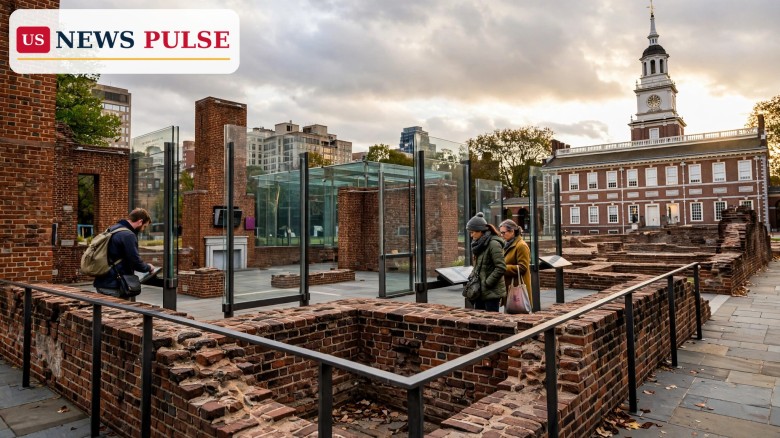
Advocacy groups sued President Donald Trump's administration on Monday, November 23, 2026, over the removal of a slavery exhibit at the President's House in Philadelphia, arguing that stripping the display about nine people enslaved by George Washington is a selective erasure of Black history from a federal historic site. Brought by the Avenging the Ancestors Coalition and The Black Journey, with the NAACP Legal Defense Fund as co-counsel, it says the removal violates the Administrative Procedure Act and the United States Constitution.
Key Points
- The Avenging the Ancestors Coalition and The Black Journey sued the Trump administration on Monday, November 23, 2026, over the removal of the slavery exhibit at Philadelphia's President's House; the NAACP Legal Defense Fund is co-counsel.
- The suit challenges the removal of an exhibit on the lives of nine people enslaved by George and Martha Washington at Sixth and Market streets.
- The groups say the removal violates the Administrative Procedure Act and the Constitution, uniquely harming Black people by erasing their history.
- The administration removed 34 panels without warning in January 2026 under a 2025 executive order; 11 replacements went up overnight on July 14.
- Critics say the replacement panels soften the language about Washington's role in slavery; the coalition calls them incomplete, whitewashed and fraudulent.
What Happened
Filed on Monday, November 23, 2026, the lawsuit is a new legal challenge to the Trump administration's changes at the President's House, the open-air memorial in Philadelphia's Old City marking where the first president lived when the city was the nation's capital. The plaintiffs are the Avenging the Ancestors Coalition, which led the campaign that created the memorial, and The Black Journey.
At the centre is an exhibit telling the stories of nine people enslaved by George Washington. The coalition says taking the panels down and putting up new ones was a selective removal of Black history, and it argues the move broke federal administrative law and the Constitution's guarantee of equal protection. The groups say the monument is necessary to tell the true and complete story of Black history.
Background: The President's House and the Nine Enslaved People
The President's House was established in 2010 to honour nine people enslaved by George and Martha Washington in Philadelphia during his presidency. The Avenging the Ancestors Coalition led the advocacy that created it, pressing for years for a memorial acknowledging the enslaved people who lived and worked at the house.
The site marks where the President's House once stood. Washington and John Adams each lived there during their presidencies in the 1790s, when Philadelphia was the nation's capital. According to the coalition, it is the only place in Philadelphia where Black people were enslaved on government property.
The Slavery Exhibit Removal and the Court Fight
In January, the administration removed 34 panels from the site without warning, under a 2025 executive order to remove displays containing what it called divisive narratives from the Smithsonian Institution and other federal sites. Philadelphia sued, and a federal judge ruled in February that the panels had to be restored.
In June, the 3rd US Circuit Court of Appeals overruled that injunction, and on July 3 another federal judge said the administration could install new displays. The 11 replacement panels went up overnight on July 14, and critics said they softened the language about Washington's role in slavery. The new lawsuit argues the removal and replacement together amount to an unlawful erasure, asking the court to look beyond the earlier procedural rulings to what was taken down and what was put up.
Reactions and Quotes
"The erasure of Black history is an inexcusable violation of the guarantee of Equal Protection afforded by the United States Constitution," the coalition said in a statement announcing the lawsuit.
The group was equally direct about the replacement display now standing at the site. "The current incomplete and whitewashed depiction of the (President's House) exhibit fails to recognize the horrific realities of slavery in the states and the contributions of the nine enslaved men, women, and children at that historic site," the coalition said.
"Each day that the incomplete, whitewashed, and fraudulent replacement interpretive panels remain there, ATAC — as well as the entire international public — is denied the ability to access complete, accurate, and truthful historical interpretive material," the coalition said. The case joins a wider run of legal challenges, including 22 states suing the Department of Housing and Urban Development over a rule stripping housing aid from mixed-status families.
Why It Matters
The case tests how far a president can go in reshaping what the federal government says about the nation's past at its own historic sites. The President's House is a public memorial on federal land, built after a long campaign by the very community whose history it records. If the administration can remove its central exhibit and replace it with a softer account, the coalition argues, the story told at one of America's most visited historic sites will no longer be complete.
The constitutional claim gives the case weight beyond Philadelphia: by arguing that the selective removal of Black history violates equal protection, the plaintiffs ask the court to treat a public memorial's content as a civil rights question, not museum management. In Connecticut, New Haven agreed to pay $30 million to a man jailed 27 years for a murder he did not commit.
What Happens Next
The case now moves through the federal courts, with the government's response expected in the coming weeks. The plaintiffs will ask the court to order the original exhibit restored; the administration must defend both the removal of the 34 panels and the content of the 11 replacements. For now, the replacement panels remain on display at Sixth and Market streets, and whether it returns will depend on how the court answers the question at the heart of the case: whether removing the history of nine enslaved people from a presidential memorial is curation, or erasure.
Frequently Asked Questions
What is the President's House in Philadelphia?
An open-air memorial at Sixth and Market streets, marking where the President's House once stood. Washington and John Adams each lived there in the 1790s, when Philadelphia was the nation's capital.
Who were the nine enslaved people honoured there?
Nine men, women and children enslaved by George and Martha Washington during his presidency. The memorial, established in 2010, honours them after a campaign led by the Avenging the Ancestors Coalition.
Why were the exhibit panels removed?
The Trump administration removed 34 panels without warning in January 2026, under a 2025 executive order to remove certain displays from the Smithsonian and other federal sites.
What have the courts decided so far?
A federal judge ordered restoration in February, but the 3rd US Circuit Court of Appeals overruled that injunction in June. On July 3, another judge allowed new displays, and 11 replacement panels went up overnight on July 14.
What is the new lawsuit asking for?
The coalition and The Black Journey, with the NAACP Legal Defense Fund as co-counsel, ask a federal court to restore the original exhibit, arguing the removal violates the Administrative Procedure Act and the Constitution.
© 2026 US News Pulse. All rights reserved.
 Print
 Save