
National Guardsman Andrew Wolfe's Miraculous Recovery a Year After White House Shooting
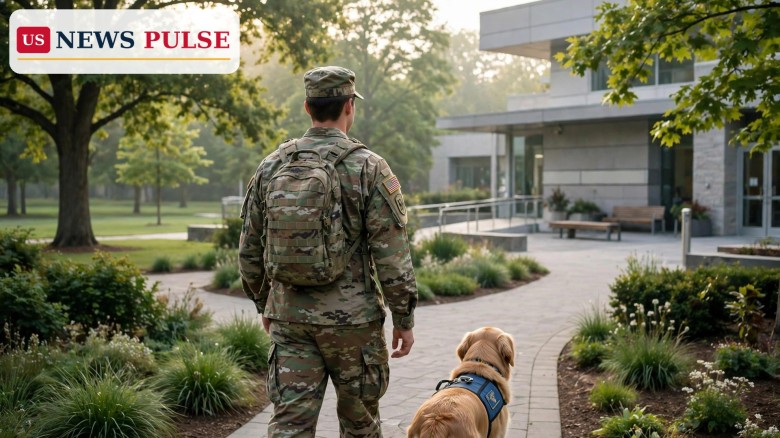
One year ago, Staff Sgt. Andrew Wolfe was shot in the head three blocks from the White House and left fighting for his life. Today, the 25-year-old West Virginia National Guardsman is driving again, playing golf and cornhole, and wrestling with his dogs — a recovery his neurosurgeon calls miraculous. The Washington Post told his story on Sunday, November 22, 2026, in a front-page feature built around Wolfe's first interview with a national outlet since the attack that killed Spc. Sarah Beckstrom.
Key Points
- Staff Sgt. Andrew Wolfe, 25, of the West Virginia Air National Guard, was shot in the head on November 26, 2025, near the White House; Spc. Sarah Beckstrom, 20, died the next day.
- Wolfe survived a bullet fragment that travelled from his left temporal lobe to his frontal lobe.
- His neurosurgeon, Dr. Jeffrey Mai, calls it "a miraculous degree of recovery, and one that I would never have anticipated."
- After 16 days in intensive care and four months of rehab in Richmond, Wolfe returned home to Inwood, West Virginia, in April 2026.
- He still lives with aphasia and continues speech and occupational therapy: "I just want to get back to normal."
What Happened
Wolfe and Beckstrom were ambushed just after 2 p.m. on November 26, 2025 — the day before Thanksgiving — outside the Farragut West Metro station entrance near Farragut Square, three blocks from the White House. Each was shot in the head with a .357 Smith & Wesson revolver, fired, prosecutors say, by Rahmanullah Lakanwal, a 30-year-old Afghan national who had worked with the US government. Lakanwal has pleaded not guilty to murder charges.
Beckstrom died the following day. Wolfe lived, but only after emergency surgery at MedStar Washington Hospital Center, where Dr. Jeffrey Mai removed a large part of his skull to relieve pressure on his brain. The bullet fragment had carved a path from Wolfe's left temporal lobe to his frontal lobe and lodged between the two halves of his brain.
In the confusion of the first hours, West Virginia Governor Patrick Morrisey tweeted that both Guardsmen had died — then walked the claim back 20 minutes later. Wolfe, it turned out, was alive and in intensive care.
Background: A Year of Hospitals and Hard Work
Wolfe spent 16 days in intensive care, then a week at Walter Reed, and then four months at a polytrauma rehabilitation centre in Richmond, Virginia, relearning speech, cognition and the use of his right side. The work was slow, and it continues now — Wolfe still grapples with aphasia, which affects his ability to find words, and he attends regular speech and occupational therapy.
In March 2026, surgeons tried to rebuild the missing section of his skull, but the operation was aborted because of an infection. A second attempt came in early September, when military neurosurgeon Melissa Meister attached a 3D-printed skull section with plates and screws — the third operation of his recovery.
Wolfe returned home to Inwood, West Virginia, in April 2026, where his family and his dogs, Bailey and Charlie, were waiting. In February, he was awarded a Purple Heart at President Donald Trump's State of the Union address on February 24, 2026.
Andrew Wolfe's Recovery: Relearning to Speak, Walk and Live
The Andrew Wolfe recovery story is, at its heart, a story about repetition. Relearning to speak after a brain injury means saying the same words again and again until they come back. Relearning to use one side of the body means doing the same movements until the muscles remember. The Post's account describes months of that work in Richmond — and the payoff: driving his own car again, a round of golf, a game of cornhole, wrestling on the floor with Bailey and Charlie.
Those milestones matter precisely because they are ordinary. A year ago, Wolfe could do none of them. That he is doing them now is why Mai reaches for the word "miraculous" — a clinical judgment from a surgeon who saw the damage firsthand. But the recovery is unfinished: aphasia still interrupts his speech, and therapy remains part of his weekly routine.
Reactions and Quotes
The most striking words in the Post's feature come from the surgeon who saved Wolfe's life. Dr. Jeffrey Mai, the neurosurgeon at MedStar Washington Hospital Center who removed a large part of Wolfe's skull on the night of the shooting, described the outcome in terms that leave little doubt about how remarkable it is: "a miraculous degree of recovery, and one that I would never have anticipated, having seen the degree of carnage."
Wolfe himself speaks plainly about the year behind him and the work still ahead: "I just want to get back to normal."
Why It Matters
Wolfe's story matters because it is the part of a national tragedy that rarely gets told. The shooting made headlines around the world: two young Guardsmen ambushed near the White House on the eve of Thanksgiving, one killed, one gravely wounded. What happened next — the surgeries, the rehab, the slow return — unfolded out of sight over eleven months.
It also matters as a measure of what recovery from a catastrophic brain injury actually looks like. The word "miraculous" can make it sound like luck. The Post's account shows the opposite: a year of deliberate, exhausting work by Wolfe, his doctors and his therapists. And it matters to the debate around the Guard's presence in Washington: the DC Council has asked new governors to pull 628 National Guard troops from the capital, while Defence Secretary Pete Hegseth has approved armed National Guard patrols in Washington. Behind those arguments are people like Wolfe and Beckstrom — the Guardsmen who stood those posts.
What Happens Next
Wolfe's recovery continues. He remains in speech and occupational therapy for his aphasia, and his doctors will keep monitoring a brain that has been through three operations. The legal case also continues: Lakanwal has pleaded not guilty to murder charges, and the prosecution will move through the courts in the months ahead.
Frequently Asked Questions
Who is Staff Sgt. Andrew Wolfe?
Wolfe, now 25, is a member of the West Virginia Air National Guard's 167th Airlift Wing. He was shot in the head on November 26, 2025, near the White House, and survived a bullet fragment that travelled through his brain.
What happened to Spc. Sarah Beckstrom?
Beckstrom, 20, was shot alongside Wolfe in the same ambush outside the Farragut West Metro station. She died the day after the attack, November 27, 2025.
Who shot them?
Prosecutors say the gunman was Rahmanullah Lakanwal, a 30-year-old Afghan national who had worked with the US government in Afghanistan. He has pleaded not guilty to murder charges.
How long was Wolfe's recovery?
He spent 16 days in intensive care, a week at Walter Reed and four months in rehab in Richmond. He returned home to Inwood, West Virginia, in April 2026 and had a final skull operation in early September 2026.
Is Wolfe fully recovered?
Not yet. He is driving, playing golf and cornhole, and wrestling with his dogs, but he still has aphasia and continues therapy. He says he just wants to get back to normal.
© 2026 US News Pulse. All rights reserved.
 Print
 Save