
Medvedev Warns Russia Could Launch 'Preventive Nuclear Attack' on Ukraine and NATO
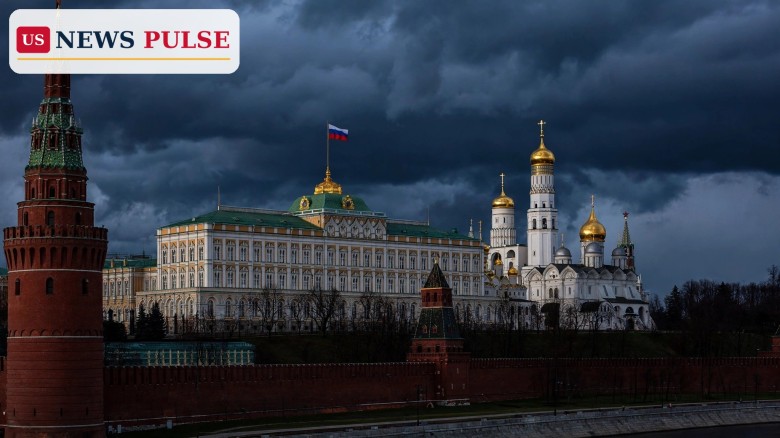
Moscow — Former Russian president Dmitry Medvedev has warned that Russia could carry out a "preventive nuclear attack", arguing that Ukraine and its NATO allies have already created the conditions that could push Moscow to consider using nuclear weapons. In an article published on Monday, November 23, 2026, in the Moscow Journal of International Law, Medvedev — now deputy chairman of Russia's Security Council — said a massive conventional attack causing catastrophe could make such a strike possible, and that any secret Western delivery of nuclear weapons to Kyiv would provoke a "legitimate" preventive attack.
Key Points
- Medvedev wrote that "the massive use of non-nuclear means that cause catastrophes makes a preventive nuclear attack by the Russian Federation possible".
- He warned that "secret or hidden supplies of nuclear weapons from the West to Kyiv will provoke a legitimate preventive nuclear attack by Russia".
- He said Kyiv and its allies "must remember that the Russian Federation not only has the right, but in various situations has the obligation to use nuclear weapons".
- He argued Ukraine and NATO have "already created situations" in which Russia considers a nuclear strike possible, but said Moscow has not used nuclear weapons because it has not considered them necessary so far.
- The final decision rests solely with President Vladimir Putin, and the warning came days after Trump, Putin and Xi met in Shenzhen on November 19 and reaffirmed that a nuclear war cannot be won and must never be fought.
What Happened
The warning appeared in an article titled "State Sovereignty and Nuclear Weapons: International Legal Aspects of Ensuring National Security", published on Monday in the Moscow Journal of International Law and excerpted by the state news agency TASS. Medvedev, Russia's president from 2008 to 2012 and later prime minister under Putin, has become one of Moscow's most outspoken voices on nuclear escalation since the invasion.
Medvedev argued that while Russia's nuclear doctrine does not explicitly authorise preventive nuclear strikes, certain scenarios — catastrophic conventional attacks or the transfer of nuclear arms to Ukraine — could justify preemptive action. He cited a 1996 International Court of Justice advisory opinion, contending that international law does not categorically prohibit nuclear use when a state's survival is at stake. He also criticised NATO's nuclear-sharing and accused the United States of double standards toward Iran.
Background and Context
The warning lands in a week of escalating Russian rhetoric toward NATO. Just days earlier, Western intelligence agencies warned that Russia could launch a nuclear-armed satellite within 60 days, a satellite known as "Sputnik-S" designed to carry a nuclear warhead. Moscow dismissed those reports.
The essay also follows the collapse of the latest push for a settlement. President Vladimir Putin rejected key parts of the US peace plan for Ukraine, and Russia has revived its demand that NATO pull back to its 1997 borders in any Ukraine deal. On Monday, Moscow also accused Estonia of hostile actions "on the verge of triggering open war" after Tallinn announced the closure of its land border with Russia from December 1.
Medvedev's Preventive Nuclear Attack Warning: What He Actually Said
Medvedev did not say Russia will use nuclear weapons, or that it has decided to. He said the conditions for considering one have, in Moscow's view, already been created — and that the final call belongs to one man. "In making such decisions, the Russian president is always guided by a complete analysis of all factors and the proportionality between the actual damage caused and the retaliatory measures," he wrote.
He was equally clear that the threshold has not yet been met. "Obviously, so far the course of events in the Ukrainian crisis has not created a state of direct necessity to use nuclear weapons," he wrote. He added that the decision "was not taken due to the lack of a direct necessity to do so". The warning is conditional — but the conditions he names are broad, and he says some of them already exist.
Reactions
Medvedev closed with a direct warning to Kyiv and its backers. "The Kyiv regime and its sponsors must not harbor dangerous illusions," he wrote. "If the scenarios mentioned above were to occur, the head of state not only has the right, but also the obligation to use nuclear weapons. All those who are currently fanning the flames must fully realize this."
The timing sharpened the message. The article appeared within days of President Donald Trump meeting Putin and Chinese President Xi Jinping on November 19 in Shenzhen, where the three nuclear powers agreed to pursue talks on reducing nuclear risks. While the summit produced no major breakthrough, the leaders reaffirmed that a nuclear war cannot be won and must never be fought — a principle Medvedev's essay now sits uneasily alongside. Estonia plans to close all of its border crossings with Russia from December 1.
Why It Matters
The essay matters because of who wrote it, where it appeared, and when. Medvedev is the deputy chairman of Russia's Security Council and a former president, and publishing the argument in a law journal, with citations to the International Court of Justice, gives it a formal weight his social media posts do not carry. By saying Ukraine and NATO have "already created" those situations, he argues the threshold is not in the future — it is behind us.
What Happens Next
Attention now turns to whether Putin himself echoes the warning, and whether the Kremlin treats the essay as official doctrine or as Medvedev speaking in his own voice — a distinction Moscow has used before to distance itself from his sharpest threats. NATO capitals will watch for any formal response, and for whether the warning changes the terms of the arms-control talks agreed in Shenzhen.
Frequently Asked Questions
Who is Dmitry Medvedev?
Medvedev was Russia's president from 2008 to 2012 and later prime minister under Vladimir Putin. He is now deputy chairman of Russia's Security Council and one of Moscow's most outspoken voices on nuclear escalation since the invasion of Ukraine.
What exactly did Medvedev warn?
He wrote that a massive conventional attack causing catastrophe could make a "preventive nuclear attack" possible, and that secret Western supplies of nuclear weapons to Kyiv would provoke a "legitimate" preventive attack.
Has Russia used nuclear weapons in the war in Ukraine?
No. Medvedev himself wrote that "so far the course of events in the Ukrainian crisis has not created a state of direct necessity to use nuclear weapons".
Who decides whether Russia uses nuclear weapons?
According to Medvedev, the final decision rests solely with President Vladimir Putin, who weighs the damage inflicted against the retaliatory measures.
How is this different from the Sputnik-S satellite report?
The Sputnik-S story was an intelligence report about a possible nuclear-armed satellite launch within 60 days. This is a separate doctrine essay by Medvedev in a law journal — an argument about when Russia could strike, not a report about a weapon in orbit.
© 2026 US News Pulse. All rights reserved.
 Print
 Save