
Federal Judge Orders Andrew Kozak Held Without Bond in Peoria Bomb Plot
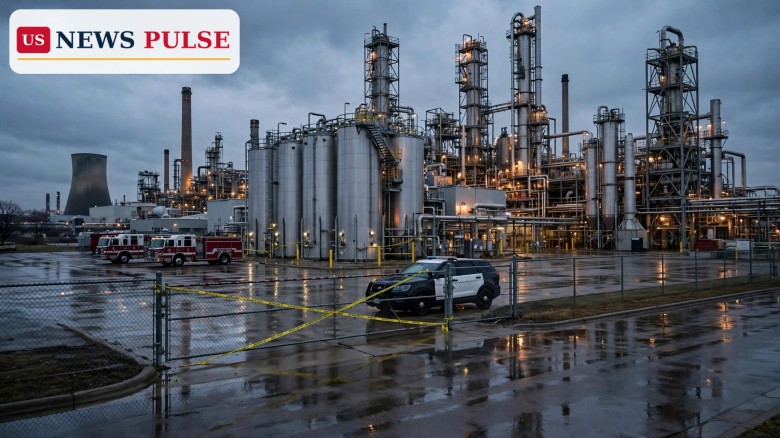
PEORIA, Illinois — A federal judge has ordered Andrew Kozak held without bond until trial, ruling that the ethanol plant worker accused of planting a bomb at the BioUrja Renewables plant in Peoria is a danger to the public and a flight risk.
At a detention hearing on Friday, November 20, prosecutors laid out the evidence they say ties Kozak to the device and to the threat that forced about 2,500 homes and businesses to evacuate.
Key Points
- Magistrate Judge Ronald L. Hanna ordered Andrew M. Kozak, 41, of Chillicothe, Illinois, held without bond until trial at a hearing on Friday, November 20, 2026.
- A November 16 search of his home found batteries, copper sheeting, wiring and tape matching parts of a device found near a tank at the plant.
- A laptop without its hard drive was found at home; the drive was later recovered in his vehicle with a plant map and files on shaped-charge explosives.
- Prosecutors tied Kozak to the November 13 threat email, sent from a "Jake Armitage" account created minutes earlier on a grocery store's Wi-Fi, with cameras placing him there.
- Kozak, a BioUrja employee for about 10 months, was indicted November 17 on two federal counts and pleaded not guilty. He faces up to 15 years.
What Happened
A week after the threat shut down a wide area of Peoria, Judge Hanna heard the case. Prosecutors argued the evidence was strong and Kozak posed a danger to the community, and the judge agreed, ordering him held without bond until trial.
The hearing was the first time prosecutors had laid out in court how they say Kozak built the device and sent the threat. Until then, the public record held only the outline: a threat email on November 13, a device found that night, an arrest on November 16 and an indictment on November 17. He has pleaded not guilty, and trial is set for January 11, 2027.
Background: The November 13 Threat and the Evacuation
The case began on Friday, November 13, 2026, when BioUrja Renewables received an email claiming multiple bombs had been planted at its ethanol plant at 1 Edmund Street in Peoria. Sent at 10:16 a.m. with the subject "severe site security risk", it warned devices would "blow in 12 hours, good luck finding them all".
A suspicious package had arrived at about 2 p.m., and by early evening police had found a device inside the facility. Mayor Rita Ali confirmed it late that night. Police ordered a mandatory evacuation of about 2,500 homes and businesses within a one-mile radius, into downtown Peoria and across the river into East Peoria.
The device was rendered safe at about 9:15 p.m., but the evacuation stayed in place through Saturday while investigators searched the facility. No more devices were found, and the evacuation was lifted at about 1 p.m. on Saturday, November 14. No one was injured. Kozak was arrested on Monday morning, November 16, and indicted the next day.
Andrew Kozak Held Without Bond: The Evidence Prosecutors Presented
The centrepiece was the November 16 search of Kozak's home. Agents found AA rechargeable batteries, copper sheeting, wiring and white tape — parts matching the partially damaged device found near a tank at the BioUrja plant. It contained a powdery substance and used timers or remote-control parts, prosecutors said.
The judge warned it was a working device that could have killed people and caused major damage, with strong evidence Kozak had placed a shaped charge against an ethanol tank hoping for a secondary explosion. Ethanol plants hold large volumes of flammable material.
Agents also found a laptop at his home with its hard drive removed. The drive was later recovered in his vehicle with a map of the BioUrja facility. Its files covered shaped-charge explosives, a blasting cap well and a video about copper-based explosives, and prosecutors pointed to searches for ethanol tank blast videos and a 2023 ethanol plant explosion investigation.
Then prosecutors connected Kozak to the threat email: it was sent from an account under the name "Jake Armitage", created at 10:04 a.m. on November 13 — twelve minutes before the email went out — on a grocery store's public Wi-Fi. Cameras showed Kozak at the store, and his wife told the FBI he had used the alias on Facebook.
Reactions and Quotes
Judge Hanna's ruling was blunt: Kozak would stay in custody as a danger to the public and a flight risk. The judge warned the device was a working one that could have killed people and caused major damage, and said the evidence that Kozak placed a shaped charge against an ethanol tank was strong.
Mayor Ali confirmed the gravity of the situation, saying: "A device has been identified. We know it's a credible threat. We know it's a bomb." Chief Brad Dixon said no more devices were found. US Attorney Gregory Gilmore announced the two-count indictment on November 17.
Why It Matters
For the people of Peoria and East Peoria, the hearing answers the question hanging over the city since November 13: how close did this come to a catastrophe? The judge's warning — that the device was working and could have killed people — makes the stakes plain. A shaped charge against an ethanol tank could have turned a bomb scare into a disaster.
It also matters for industrial safety: ethanol plants are high-hazard sites, and the one-mile evacuation radius shows how seriously the authorities took the threat. The case tests how the federal system handles a workplace insider accused of turning his own plant into a target.
What Happens Next
Kozak stays in federal custody until trial. Trial is scheduled for January 11, 2027, in the Central District of Illinois. He has pleaded not guilty to both counts, which together carry up to 15 years. The FBI and ATF investigation continues.
Frequently Asked Questions
Who is Andrew Kozak?
Andrew M. Kozak, 41, of Chillicothe, Illinois, is the former BioUrja employee accused of planting a bomb at the company's Peoria ethanol plant.
Why was he held without bond?
At a detention hearing on Friday, November 20, 2026, Magistrate Judge Ronald L. Hanna ruled Kozak a danger to the public and a flight risk, after prosecutors presented bomb-making files, a facility map and parts matching the device.
What did prosecutors find at his home?
Agents found batteries, copper sheeting, wiring and tape matching the device, plus a laptop with its hard drive removed. The drive was later found in his vehicle with a plant map and files on shaped-charge explosives.
What happened on November 13?
BioUrja received a threat email at 10:16 a.m. claiming multiple bombs had been planted. A device was found that night and rendered safe, and about 2,500 homes and businesses within a mile were evacuated. No one was hurt.
What happens next?
Kozak remains in custody without bond. He has pleaded not guilty, and trial is set for January 11, 2027. He faces up to 15 years if convicted.
Image: An ethanol plant in Illinois at dusk. (US News Pulse)
Related: Andrew Kozak Indicted in Peoria Biofuels Plant Bomb Threat, Faces 15 Years | Bomb Found at Peoria Ethanol Plant Forces One-Mile Evacuation in Illinois
© 2026 US News Pulse. All rights reserved.
 Print
 Save