
NASA Seeks Bids to Build Lunar Reactor-1, First Nuclear Reactor on the Moon
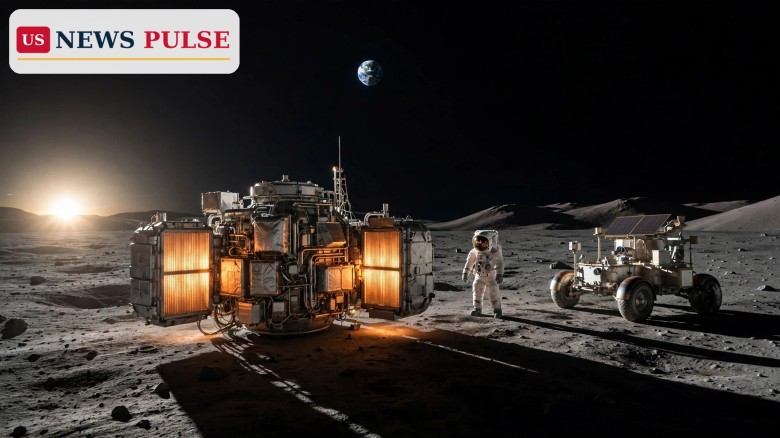
WASHINGTON — NASA has asked American industry to design the first reactor ever built to generate electricity on the Moon. The NASA Lunar Reactor-1 project, announced on Monday, November 23, 2026, would put a small fission system on the lunar surface to keep a future Moon base running through the long, freezing lunar nights.
Known as LR-1, it would generate 20 kilowatts — enough for about 16 average American homes for a year — and run habitats, communications, rovers and instruments at a permanent lunar outpost, with a launch-ready system by 2030 and at least five years of operation.
Key Points
- NASA announced on Monday, November 23, 2026, a Request for Proposals seeking industry partners to design Lunar Reactor-1 (LR-1), the first reactor built to generate electricity on the Moon.
- LR-1 will be a small fission system producing 20 kilowatts, enough for about 16 average US households a year, powering habitats, communications, rovers and instruments.
- Unlike solar power, fission generates electricity continuously, including during the Moon’s two-week nights.
- NASA aims for a launch-ready system by 2030, operating on the lunar surface for at least five years.
- Proposals are due December 21, 2026, and the reactor must meet Department of Energy safety standards.
What Happened
NASA issued the request under its Space Power and Reactor Capabilities solicitation, inviting companies to design the reactor and the systems that would deliver, deploy and operate it on the lunar surface. It follows a draft proposal released in August and an industry day in September at the Ohio Aerospace Institute in Cleveland.
It is a formal step, not a contract award. Companies have until December 21, 2026, to submit proposals; NASA will then evaluate the designs and select partners. The reactor must meet Department of Energy safety standards. Solar arrays can power a base during the roughly two weeks of daylight, but the night lasts just as long, with temperatures below minus 170 degrees Celsius. Batteries cannot bridge a fortnight of darkness for a crewed outpost; a fission reactor produces steady power day and night.
Background: Why the Moon Needs Nuclear Power
Nuclear power in space is not new, but it has never worked on another world. The United States flew small radioisotope generators on Apollo missions and on probes such as Voyager and Perseverance, which use decaying plutonium’s heat to make electricity — but those produce only hundreds of watts, enough for a spacecraft, not a base. NASA and the Department of Energy have developed fission technology for two decades, including the Kilopower project, tested in the Nevada desert in 2018. Lunar Reactor-1 is the first attempt to turn that research into a flight system for the Moon.
The timing matters. NASA’s Artemis programme aims to return astronauts to the Moon and build a lasting presence there, with a base at the south pole, where water ice sits in shadowed craters. That ice could become drinking water, oxygen and even rocket fuel, but mining it and keeping a crew alive through the polar night demands power that does not depend on the Sun. China and Russia have announced plans for a joint nuclear-powered lunar base in the 2030s, so the race for a permanent presence at the south pole is now as much about energy as rockets.
Lunar Reactor-1: A 20-Kilowatt Power Station for the Moon
At 20 kilowatts, LR-1 is modest by Earth standards, where a single wind turbine produces hundreds of times more. On the Moon, however, it would be transformative: enough for about 16 average American households for a year, used very differently — heating habitats, running water-extraction equipment, charging rovers and keeping communications alive.
NASA’s Space Reactors Division will manage the reactor with the Department of Energy, which brings decades of experience in designing, testing and licensing nuclear systems. The solicitation asks industry for the full picture, not only the reactor: how it would be transported to the Moon, deployed, started up remotely and monitored from Earth. Safety is built in from the start: the reactor would not be switched on until safely on the lunar surface, and it is designed to survive a launch failure without releasing radioactive material.
Reactions and Quotes
LR-1 programme manager Brian Giblin said the request marks a turning point. “It represents an important step forward as NASA partners with industry to establish an enduring human presence on the lunar surface,” he said.
The announcement fits a wider push to put nuclear power to work beyond Earth. The Department of Energy is developing a parallel system, Space Reactor-1, known as SR-1 Freedom, due to launch in 2028 carrying three SkyFall helicopters to Mars to demonstrate nuclear electric propulsion — a reactor powering an electric drive that could shorten the journey to the Red Planet.
Why It Matters
For NASA, LR-1 is the difference between visiting the Moon and living there. Every previous American lunar mission, from Apollo to the planned Artemis landings, lasted days. A permanent base needs power that never sleeps, and on a world where night lasts two weeks, only fission can provide it. Without a reactor, a lunar outpost would have to shut down for half of every month.
For the wider space industry, it is a major commercial opening: designing a flight-ready fission reactor is one of the hardest jobs in the business, and the winners will gain experience for Mars missions and deep-space probes. For the public, it shows how far lunar exploration has come — within a decade, the Moon could have a working nuclear power station and a base with permanent residents, a vision that was science fiction when the first astronauts walked on the Moon in 1969.
What Happens Next
Companies have until December 21, 2026, to submit proposals. NASA will evaluate the designs and select partners, aiming for a launch-ready system by 2030 and five years of operation on the surface. The Department of Energy will continue work on SR-1 Freedom ahead of its planned 2028 launch to Mars, and NASA will press ahead with the Artemis missions that set the stage for a permanent lunar base.
Frequently Asked Questions
What is Lunar Reactor-1?
NASA’s planned small fission reactor for the Moon, producing 20 kilowatts — enough for about 16 average US homes — to support a future Moon base.
Why does the Moon need a nuclear reactor?
The lunar night lasts about two weeks, when solar panels produce no power. A fission reactor generates electricity continuously, day and night.
When will it be ready?
NASA aims for a launch-ready system by 2030, operating at least five years. Industry proposals are due December 21, 2026.
Is it safe?
It must meet Department of Energy safety standards. It would not switch on until safely on the lunar surface, and is designed to survive a launch failure without releasing radioactive material.
What else is NASA doing with nuclear power in space?
The Department of Energy is developing Space Reactor-1 (SR-1) Freedom, due to launch in 2028 with three SkyFall helicopters to Mars to demonstrate nuclear electric propulsion.
Related: ULA Vulcan Rocket Anomaly Ends Amazon Leo Launch | Voyager 1 Went Silent, Then Answered on Its Own | NASA: 65-Pound Asteroid Chunk Lit Up New York Sky
© 2026 US News Pulse. All rights reserved.
 Print
 Save