
Chicago Cubs Sign Trevor Rogers to Five-Year, $120 Million Deal to Bolster Rotation
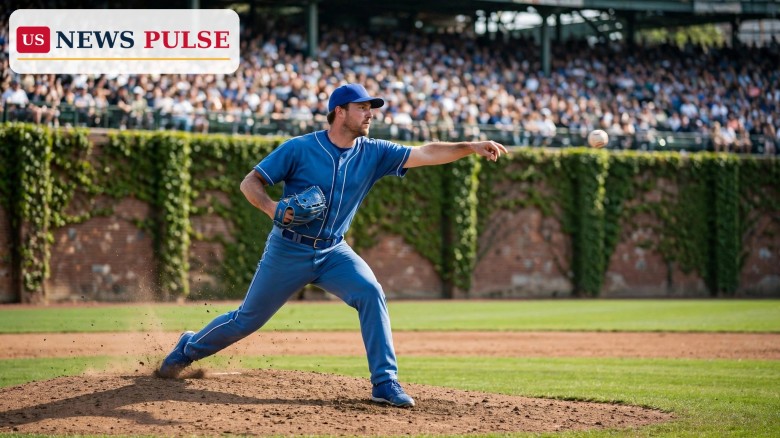
The Chicago Cubs have their first big move of the offseason. The club agreed to a five-year, $120 million contract with left-hander Trevor Rogers, ESPN's Jeff Passan first reported on Monday, November 23, 2026, and the Associated Press confirmed through a person with direct knowledge of the deal. The deal is pending a physical. Rogers, 29, gives Chicago a durable left-handed arm for a rotation that needs rebuilding after the Cubs were swept by San Diego in the first round of the playoffs.
Key Points
- The Cubs agreed to a five-year, $120 million contract with free-agent left-hander Trevor Rogers, first reported on Monday, November 23, 2026; pending a physical, with deferrals.
- Rogers, 29, went 10-11 with a 4.03 ERA in 30 starts for Baltimore in 2026, with a career-high 169 2/3 innings and 157 strikeouts.
- He was the second-best left-handed starter available, signing a day after Tarik Skubal agreed to a nine-year, $450 million deal with the Mets.
- Chicago's rotation is in flux: Boyd, Imanaga, Gausman, Holmes and Peterson are all free agents after the playoff sweep by San Diego.
- Rogers rebuilt his value in Baltimore, going 9-3 with a 1.81 ERA in 18 starts in 2025 and earning a fifth-place AL Cy Young vote.
What Happened
Passan first reported the agreement on Monday, and the Associated Press confirmed it through a person with direct knowledge, speaking anonymously because the move was pending a physical. The pact makes Rogers the Cubs' first major addition of the winter and their opening answer to a rotation facing heavy turnover.
The timing was no accident. The signing came one day after Skubal, the top pitcher available, agreed to his nine-year, $450 million deal with the Mets. With Skubal off the board, Rogers was perhaps the best left-hander left, and the Cubs moved quickly before the market heated up.
Background: Rogers' Winding Road to $120 Million
Rogers' path to a nine-figure contract was anything but straight. He broke in with the Miami Marlins and was a National League All-Star as a rookie in 2021, going 7-8 with a 2.64 ERA in 25 starts. But his form dipped, and Miami traded him to Baltimore during the 2024 season for prospects Kyle Stowers and Connor Norby.
The move started badly: a 7.58 ERA in four starts, and he finished the 2024 season at Class AAA. As recently as 2025 he was optioned to the minors. But he returned from injury around midseason in 2025 and went 9-3 with a 1.81 ERA in 18 starts, earning a fifth-place vote in the American League Cy Young race despite not pitching before late May.
He carried that momentum into his platform year, going 10-11 with a 4.03 ERA for Baltimore in 2026, with 30 starts and 169 2/3 innings, the second-most on the team and a personal record, with 157 strikeouts. His ERA stood above 6.00 in early June, but he pitched well in the second half, posting a 2.86 ERA and a 2.80 FIP over his final 17 starts. For his career, Rogers is 34-48 with a 3.88 ERA in 132 starts.
Trevor Rogers: What the Cubs Are Getting
Chicago is getting a 29-year-old left-hander coming off the heaviest workload of his career, whose underlying numbers were better than his ERA suggests. His 3.45 FIP in 2026 points to a pitcher hurt by the defence and ballpark behind him, and his second-half form, a 2.86 ERA over 17 starts, is the version the Cubs are paying for.
USA Today described Rogers as a legitimate No. 2 or No. 3 starter, and that is the role he is expected to fill in Chicago. He is not an ace, and at $24 million a season on average he is not priced like one. He is a durable mid-rotation left-hander who steadies a staff across 30 starts. For a club that needs several starters, that profile is the foundation of the rebuild, not its finishing piece.
Reactions
The reaction framed the signing as sensible business for both sides. Rogers cashes in after betting on himself through a difficult stretch, turning a demotion to the minors and a midseason injury return into a $120 million guarantee. The Cubs land the second-best left-hander available without paying ace money, a day after the market's top arm set the price at $450 million.
The loss is significant for Baltimore: the Orioles now likely need two starters to replace Rogers and veteran Chris Bassitt. For the Cubs, the signing might only be the beginning: they still need to fill several rotation spots left by the potential departures of Gausman, Imanaga, Boyd and Peterson, and more moves are expected before spring training.
Why It Matters
The deal shows how quickly the pitching market is moving, and how the Cubs intend to play it. Skubal's $450 million deal set the ceiling on Monday; Rogers' $120 million deal set the price for the next tier on Tuesday. Chicago secured its man early rather than waiting for the market, putting a floor under a rotation that lost its shape after the playoff sweep.
It also matters for the National League Central race. The Cubs were swept out of the first round by San Diego, and their rotation was the clearest weakness on the roster. A durable left-hander who threw nearly 170 innings last season, with a second half like a front-line starter, changes the shape of that staff. If Rogers repeats his late-season form, the contract will look like value. Related coverage: the Mets' record $450 million deal for Tarik Skubal, Pete Crow-Armstrong's unanimous NL MVP season, and the 2026 BBWAA award finalists led by Ohtani and Crow-Armstrong.
What Happens Next
The next step is the physical. Once Rogers passes it, the Cubs are expected to announce the deal formally, introducing the left-hander as the first piece of their rebuilt rotation. Chicago is then expected to keep shopping: with as many as five rotation spots to address, Rogers is unlikely to be the last pitcher added this winter. Baltimore must replace two starters, and the market will keep moving as teams react to the Skubal and Rogers deals. Rogers will report to spring training in February as a Cub, with his first start at Wrigley Field set to be an early storyline of the 2027 season.
Frequently Asked Questions
How much is Trevor Rogers' contract with the Cubs?
Five years and $120 million, pending a physical, with deferrals that slightly reduce its net present value.
What were Trevor Rogers' stats in 2026?
He went 10-11 with a 4.03 ERA in 30 starts for Baltimore, with a career-high 169 2/3 innings and 157 strikeouts.
Why did the Cubs sign Trevor Rogers?
Chicago's rotation needs rebuilding after a first-round sweep by San Diego, with Boyd, Imanaga, Gausman, Holmes and Peterson all reaching free agency.
Who did Trevor Rogers play for before the Cubs?
He began with the Miami Marlins, a 2021 All-Star there, and was traded to Baltimore during the 2024 season.
How does Rogers' deal compare with Tarik Skubal's?
Skubal agreed to nine years and $450 million with the Mets one day earlier. Rogers was the second-best left-handed starter left.
© 2026 US News Pulse. All rights reserved.
 Print
 Save