
California King Tides Smash November Record as Floods Swamp Marin Homes
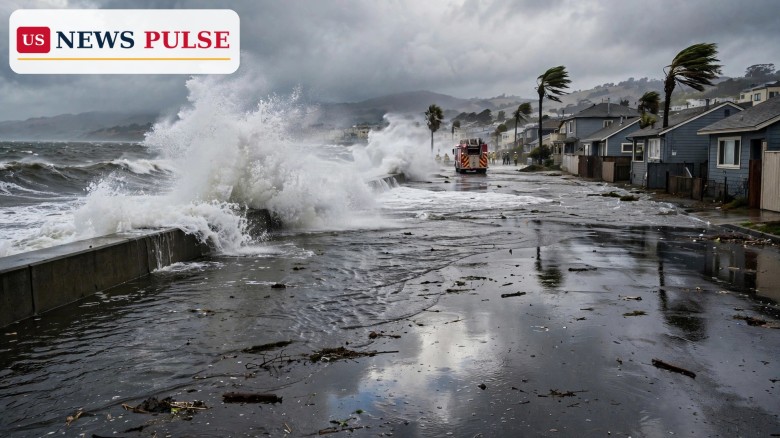
California's coastline made history on Tuesday, November 24, 2026, when king tides pushed San Francisco Bay to its highest November water level in more than four decades. A tidal gauge at Crissy Field near the Presidio registered 8.23 feet at 10:06 a.m., smashing the previous November record of 7.97 feet set on November 30, 1982. Floods swamped homes in Marin County, closed roads across the Bay Area and forced firefighters to rescue a woman stranded in rising water, with forecasters warning that Wednesday's peak could climb even higher, days before Thanksgiving travel.
Key Points
- San Francisco Bay reached 8.23 feet at Crissy Field, breaking the November record of 7.97 feet set in 1982.
- Firefighters rescued a woman in Mill Valley as roads closed in Corte Madera, Larkspur and Sausalito.
- Humboldt County ordered evacuations, and Ventura County issued warnings for six beach communities.
- Wednesday's tides could run 2.8 feet above normal, near the all-time 2.9-foot mark, with 20- to 30-foot waves.
- A super El Niño and record-warm ocean water are amplifying the surge, threatening Thanksgiving travel.
What Happened
The record fell late on Tuesday morning. The National Weather Service said the Crissy Field gauge hit 8.23 feet at 10:06 a.m., beating a November mark held since November 30, 1982. The Bay had already been running high: the National Oceanic and Atmospheric Administration measured 7.9 feet on Monday morning, against a typical high tide of about 6.6 feet.
The worst flooding struck Marin County, just north of the Golden Gate. Firefighters rescued a woman stranded in floodwaters in Mill Valley, where a parking lot was swallowed. Roads closed across three communities: Lucky Drive in Corte Madera, Creekside Drive and Riviera Drive in Larkspur, and a flooded bus stop on California Highway 1 in Sausalito. Several Bay homes were flooded by the afternoon.
Damage spread far beyond the Bay Area. In Humboldt County, the sheriff ordered evacuations in a small coastal community on Monday after buildings flooded. In Ventura County, police issued evacuation warnings for Silver Strand, Hollywood Beach, Pierpont, Faria, Solimar and Rincon, until noon on Thursday. In Malibu, waves battered oceanfront homes, while in Huntington Beach the tide reached 8.1 feet and seawater breached seawalls around Sunset Island. Santa Cruz closed its beaches and wharf from Tuesday night.
Background: A Record 44 Years in the Making
King tides are the highest tides of the year, arriving when the sun, moon and Earth line up to pull hardest on the oceans. They return every winter, but this year's event has been supercharged by an ongoing super El Niño and record-warm ocean water, which lifts sea levels and turns an ordinary seasonal peak into a record-breaker.
NOAA's San Francisco tidal records stretch back to June 29, 1854. The previous November best, 7.97 feet, had survived since 1982. The all-time Bay record is 8.66 feet, set when tides ran 2.9 feet above normal on January 27, 1983 — a mark Wednesday could approach, with tides expected up to 2.8 feet above normal. US News Pulse reported on Sunday that San Francisco was bracing for king tides never seen before, and on Monday that they were nearing the all-time record. Tuesday turned those warnings into reality, with the record falling and rescues under way.
Why California King Tides Are Getting More Dangerous
The danger is not the tide alone. It is the combination: exceptionally high tides colliding with a large Pacific swell, storm-driven surge and breaking waves of 20 to 30 feet. The National Weather Service warned that parts of Northern California could experience major to extreme coastal flooding, raising the threat of flooding, shoreline erosion and dangerous beach conditions. A coastal flood warning covers Monterey from 6 a.m. to 4 p.m. on Wednesday, with flooding up to 2.7 feet above ground level, and San Diego County remains under a coastal flood warning through 1 p.m. on Friday.
Reactions and Official Response
Emergency services moved quickly as the water rose. Central Marin Police published the road closures, while firefighters in Mill Valley carried out the rescue and patrolled flooded streets. Ventura police set the evacuation warning for six beach communities, with the worst expected on Wednesday and Thursday. Officials urged beachgoers to stay off rocks and jetties, and warned drivers against going around barricades or crossing flooded roads.
The travel system braced for impact. San Francisco and Oakland airports remained under coastal flood warnings because of their shoreline locations. Oakland's airport raised its perimeter dike, tested its pumps and cleared storm drains ahead of about 250,000 passengers expected over the Thanksgiving travel period. United Airlines offered passengers flying via San Francisco on Wednesday free changes, and Mayor Daniel Lurie had driverless Waymo vehicles pulled from service after several stalled in floodwater last week.
Why It Matters
The timing could hardly be worse. The record tide arrived at the start of the busiest travel week of the year, with two Bay Area airports under flood warnings and airlines already waiving change fees. Beyond the holiday disruption, Tuesday was a warning about the California coast's future: when a super El Niño and record-warm water meet the year's highest tides, a predictable seasonal event becomes a record-breaker that floods homes, closes highways and forces evacuations. Coastal cities built at the water's edge, from Marin to Malibu, felt that in a single morning.
What Happens Next
Wednesday brings the bigger test. The highest tides are forecast between 7 a.m. and 11 a.m., and the morning peak could exceed Tuesday's record. The Monterey coastal flood warning runs from 6 a.m. to 4 p.m., Ventura's evacuation warning stays in place until noon on Thursday, and San Diego's coastal flood warning continues through Friday afternoon. Santa Cruz expects its wharf to reopen on Wednesday at 4 p.m. and its beaches on Thursday at 5 a.m. Residents along the coast are urged to check the next tide cycle before travelling and keep clear of seawalls and flooded roads.
Frequently Asked Questions
What are king tides?
King tides are the highest tides of the year, caused when the sun, moon and Earth align. They return each winter, but El Niño and warm ocean water can push them to record levels.
How high did the water get in San Francisco?
The Crissy Field gauge registered 8.23 feet at 10:06 a.m. on Tuesday, beating the November record of 7.97 feet from 1982. The all-time record is 8.66 feet, from January 27, 1983.
Which areas were evacuated?
Humboldt County ordered evacuations in a small coastal community. Ventura County issued warnings for Silver Strand, Hollywood Beach, Pierpont, Faria, Solimar and Rincon, until noon Thursday.
Will the tides be higher on Wednesday?
Possibly. Wednesday's peak is expected between 7 a.m. and 11 a.m., with Bay Area tides up to 2.8 feet above normal and waves of 20 to 30 feet.
How will this affect Thanksgiving travel?
San Francisco and Oakland airports are under coastal flood warnings, United is waiving change fees for Wednesday San Francisco flights, and flooded coastal roads could slow journeys.
© 2026 US News Pulse. All rights reserved.
 Print
 Save