
Top US Gunmakers and Bass Pro Sued Over Alleged Price-Fixing Conspiracy
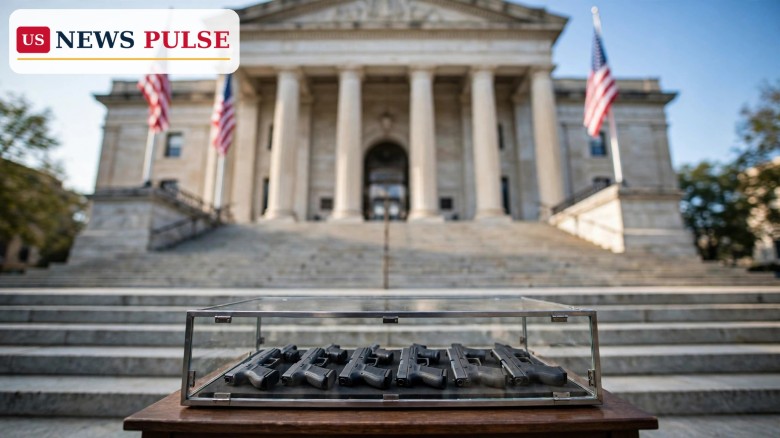
Six of America's biggest gunmakers and two of its largest firearms retailers have been sued for allegedly conspiring for a decade to keep gun prices artificially high. The gunmakers price-fixing lawsuit, filed on Monday, November 23, 2026, in federal court in New Hampshire, accuses Sig Sauer, Smith & Wesson, Sturm, Ruger & Co., Glock, FN Firearms and Beretta of working with Bass Pro Shops and Cabela's to impose minimum advertised pricing policies that stopped retailers from competing on price. They are accused of inflating what millions of Americans paid for firearms since 2015.
Key Points
- Sig Sauer, Smith & Wesson, Ruger, Glock, FN Firearms and Beretta, plus Bass Pro Shops and Cabela's, are named as defendants.
- Filed Monday in New Hampshire federal court, it alleges a conspiracy to inflate gun prices nationwide since 2015.
- Alabama gun owner William Foster brought the case for potentially millions of US firearm buyers.
- The complaint cites Guns Down America research and says about 200 million firearms were sold in the period covered.
- The allegations are unproven, and the companies did not immediately respond to requests for comment.
What Happened
Reuters reported on Tuesday that Alabama gun owner William Foster filed the lawsuit on behalf of a proposed class of potentially millions of firearm purchasers in the United States. The case, William Foster v. Sig Sauer Inc et al, No. 1:26-cv-00995, brings three counts under federal antitrust, state antitrust and consumer protection law, plus a claim of unjust enrichment.
At the centre of the complaint are minimum advertised pricing policies, known in the industry as MAP. According to the lawsuit, the manufacturers conspired with Bass Pro Shops and Cabela's to impose those policies and other restrictions limiting retailers' ability to compete on price. The result, the complaint says, was that customers paid artificially higher prices for firearms for more than a decade.
The complaint alleges the scheme was enforced with warnings, suspension of shipments, loss of authorised-dealer status and, in the most serious cases, termination of a reseller's access to the manufacturers' products. It says firearms executives illegally collaborated on pricing through trade associations and supplier meetings, and cites Guns Down America's July 2026 report "The Price is Wrong".
Background and Context
Minimum advertised pricing is common across American industries, from electronics to sporting goods. Under a MAP policy, a manufacturer sets a floor price below which retailers may not advertise a product, although they can often still sell it for less in the shop. Manufacturers say the policies protect brand value. But when rival manufacturers agree among themselves to impose the same restrictions, antitrust lawyers say, that line can be crossed.
That is the argument the plaintiffs will have to prove. Under the Sherman Act, the federal antitrust law at the heart of the case, an agreement among competitors to fix prices or restrain trade is unlawful. The complaint must show not merely that the manufacturers each used similar pricing policies, but that they agreed together to do so.
The scale makes the stakes enormous. The complaint says about 200 million firearms were sold during the period covered, generating billions of dollars in revenue. If the class is certified and the plaintiffs win, damages could be substantial, and the case also seeks a court order to boost competition. Price-fixing cases elsewhere have produced huge settlements — Teva settled a generic-drug case in principle after a decade, following claims by 45 states, and Intel was sued by its own shareholders after a 29% plunge wiped out $140 billion.
The Gunmakers Price-Fixing Lawsuit: What the Complaint Alleges
The complaint's central claim is simple: that the six manufacturers and the two retailers worked together to make sure no retailer could advertise a gun below a price the manufacturers had set. For ordinary gun buyers, the alleged harm is equally direct. A hunter in Alabama or a sport shooter in Ohio who bought a pistol or rifle at any point since 2015 may have paid more than the weapon would have cost in a genuinely competitive market.
The filing also draws on the Guns Down America research, which argued that coordinated pricing kept firearm prices high even as costs fell and sales rose. The plaintiffs will need documents, messages or testimony showing the companies actually coordinated.
Reactions and Quotes
Greg Asciolla, of DiCello Levitt, which filed the case with other firms, framed the lawsuit as a fight for ordinary gun owners. "Gun owners should not have to pay artificially inflated prices to protect corporate profit margins, especially when those profits help pay for predatory marketing," Asciolla said. DiCello Levitt acts for the plaintiffs with Mastando & Artrip.
The companies named in the suit did not immediately respond to requests for comment, Reuters reported, and no appearances for the defendants had yet been filed in the New Hampshire court.
Consumer advocates argue MAP policies can quietly raise prices across a whole market when every major brand uses them at once. Industry groups defend them as protection for independent gun shops. That debate now moves into a federal courtroom.
Why It Matters
If the allegations are proven, the case could reshape how firearms are sold in the United States. A court order forcing manufacturers to drop coordinated pricing restrictions would open the door to genuine price competition between retailers, potentially lowering handgun and rifle prices for millions of buyers. And a damages award, spread across a class that could number in the millions, could run into the billions of dollars.
The case also matters beyond the gun counter. Antitrust enforcement is now a central battleground in American economic policy, from pharmaceuticals to technology. For gun owners, the irony is sharp: the people who say they were overcharged are the industry's own customers, not its critics.
What Happens Next
The defendants are expected to appear in the New Hampshire federal court in the coming weeks, and their lawyers will almost certainly ask the judge to dismiss the case, arguing that the complaint shows no actual agreement between the companies. If the case survives, the next battle will be over class certification — whether millions of gun buyers can sue together, or each must prove their own losses separately.
Discovery, in which each side must hand over internal documents and emails, could be the most revealing phase, as the plaintiffs seek communications showing coordination on pricing. The case is likely to take years to reach a verdict, and a settlement remains a real possibility.
Frequently Asked Questions
Who is being sued? Six manufacturers — Sig Sauer, Smith & Wesson, Sturm, Ruger & Co., Glock, FN Firearms and Beretta — and retailers Bass Pro Shops and Cabela's, in a proposed class action in New Hampshire.
What are the companies accused of? Conspiring since 2015 to impose minimum advertised pricing policies that stopped retailers competing on price, so customers paid artificially higher prices.
Who filed the lawsuit? Alabama gun owner William Foster, for a proposed class of potentially millions of US buyers. The case is William Foster v. Sig Sauer Inc et al, No. 1:26-cv-00995.
What does the lawsuit seek? Unspecified monetary damages and a court order to boost competition in the firearms industry. The allegations have not been proven in court.
© 2026 US News Pulse. All rights reserved.
 Print
 Save