
Trump Offers Philippines $2.4 Billion Defence Deal — But Only for US Weapons
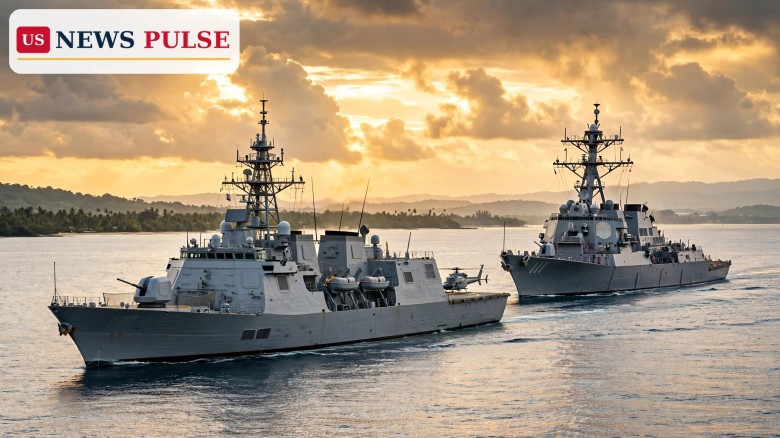
Washington has put a $2.4 billion price tag on its promise to stand with the Philippines in the South China Sea — with one firm condition. The package unveiled by the White House as President Donald Trump wrapped up his visit to Manila last week combines $2 billion in American military financing with a $400 million grant, but the money can only buy American weapons. Philippine Defence Secretary Gilberto Teodoro Jr. confirmed on Tuesday that Washington will sell Manila sensitive defensive systems it does not offer to other countries, without naming them. It is the largest US security commitment to its oldest Asian ally in years, landing as Chinese pressure keeps rising.
Key Points
- The US will provide $2 billion in foreign military financing plus a $400 million Maritime Defense Allocation grant.
- Defence Secretary Gilberto Teodoro Jr. confirmed the US will sell sensitive weapons exclusively to the Philippines: some are "not freely sold to other countries".
- The financing binds Manila to buy American defence equipment only, even as the package aims to build self-reliance.
- A $100 million grant and $50-60 million for a "Super Intelligence" programme on the Philippine defence cloud are also included.
- Analysts note much of the funding was already approved under earlier commitments.
What Happened
The package was set out in a White House fact sheet released as Trump concluded his Manila visit on November 18, a week in which the president also announced more than $17 billion in commercial deals. The centrepiece is $2 billion in foreign military financing Manila can draw on to buy weapons under a security-sector road map agreed by both governments, plus a $400 million Maritime Defense Allocation grant for road-map items.
Teodoro gave the clearest public account on Tuesday, November 24, confirming exclusive sales of sensitive defensive weapons. "Some of those are not freely sold to other countries," he said, declining to name the systems — leaving analysts guessing about coastal missile batteries, air defences and surveillance gear. The package also funds the digital side: $100 million plus $50-60 million for the "Super Intelligence" programme on the Department of National Defense–Armed Forces of the Philippines cloud.
Background and Context
The Philippines is the United States' oldest treaty ally in Asia, bound by the 1951 Mutual Defense Treaty, and the two countries have spent a decade rebuilding a defence partnership that frayed under former president Rodrigo Duterte. The Enhanced Defence Cooperation Agreement, signed in 2014, gives the US access to nine Philippine military bases, several facing the South China Sea and the Taiwan Strait. The new money is meant to strengthen those bases.
China claims almost the entire South China Sea, including waters inside the Philippines' exclusive economic zone, and its coast guard and maritime militia have repeatedly blocked and water-cannoned Philippine resupply missions to the disputed Second Thomas Shoal. A 2016 tribunal ruled China's claims have no legal basis; Beijing rejects the verdict. Manila's navy remains far outmatched, and it has leaned on Washington for ships, aircraft and surveillance systems. The package is less a sudden gift than the packaging of a relationship accelerating for years — alongside a trade deal Trump called the biggest ever between the two countries and more than $17 billion in commercial deals, including a $12 billion Boeing 787 sale.
Philippines Defence Deal: What the $2.4 Billion Buys
On paper, the package has three parts: $2 billion in foreign military financing for capability purchases under the road map; a $400 million grant paying for road-map items outright; and smaller grants for cloud infrastructure and AI-enabled systems.
What is missing is as striking as what is in it. Neither government has said which weapons the exclusive sales cover, how fast they will arrive, or the terms of the $2 billion. Teodoro's remark suggests Manila is being offered capabilities normally reserved for America's closest partners. But until the list is published, its real military value cannot be judged. The exclusivity clause has drawn the sharpest scrutiny: supporters say it guarantees compatibility with US forces; critics warn it deepens dependence on American parts and maintenance even as the package claims to build self-reliance.
Reactions and Quotes
Teodoro's confirmation was the most detailed official statement since the White House fact sheet, which framed the package as strengthening the Philippine military's reach and deterrence in the South China Sea and the West Philippine Sea. His quoted line — that some weapons are "not freely sold to other countries" — was the headline; he gave no delivery timetable. Analysts were more cautious, noting much of the funding had already been approved under earlier commitments, so the announcement consolidates old pledges as much as it breaks new ground. Others warned the exclusivity condition could leave Manila dependent on Washington for parts and upgrades for decades. No fresh public response from Beijing was reported.
Why It Matters
The deal matters first as deterrence: a Philippines that can see and shoot further changes China's calculations around the reefs where the two sides confront each other almost weekly. It matters second as a regional signal — Japan, Australia and Taiwan watch Manila as a measure of how far Washington will go for a smaller ally facing a much larger neighbour. Third, for the bargain itself: the exclusivity clause makes the Philippines more dependent on the United States at the very moment the package claims to build self-reliance. For Manila, the question is whether the weapons are worth the dependence; for Washington, whether the Philippines can still defend itself if American politics one day turns away.
What Happens Next
The next step is detail: which systems, which bases, which delivery dates, and the terms of the $2 billion, which will face scrutiny in the Philippine Congress. The cloud and "Super Intelligence" grants will move first, since software arrives faster than ships and missiles. Then the calendar will test the package — the next Chinese coast guard operation around Second Thomas Shoal, the next resupply mission, the next joint patrol — and show whether new money means new capability, or mostly restates what was already promised.
Frequently Asked Questions
How much is the Philippines defence package worth?
It totals $2.4 billion: $2 billion in US foreign military financing plus a $400 million Maritime Defense Allocation grant, with smaller grants of $100 million and $50-60 million for a defence cloud programme.
What weapons will the Philippines receive?
That has not been disclosed. Defence Secretary Gilberto Teodoro Jr. confirmed exclusive sales of sensitive weapons, including some "not freely sold to other countries", but named no systems.
Why must the Philippines buy only American weapons?
The $2 billion is tied to American equipment. Washington says that guarantees compatibility with US forces; analysts warn it deepens Manila's dependence on US hardware, parts and maintenance.
What is the Maritime Defense Allocation grant?
A $400 million US grant for items on the two governments' security-sector road map, aimed at strengthening the Philippine military's reach and deterrence in the South China Sea.
Does the package change the US-Philippines alliance?
It deepens it, funding EDCA bases and AI-enabled systems, reinforcing a treaty alliance dating to 1951 — though much of the funding was already approved.
© 2026 US News Pulse. All rights reserved.
 Print
 Save