
Alice Huang-Linked Firms Listed $270 Million in AI Servers in China, Records Show
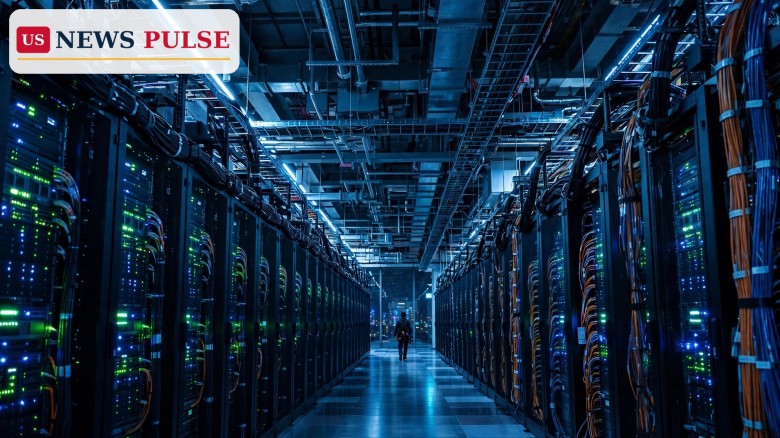
Companies linked to Alice Huang listed as much as $270 million worth of powerful artificial intelligence servers in China, according to dozens of filings in a Chinese central-bank credit registry reviewed by Reuters and published on Tuesday, November 25, 2026. The documents identify up to 764 AI servers and computing modules, plus $31 million in equipment used to connect them into large computing networks. Much of the hardware was listed at the Yangtze River Delta AI supercomputing centre in Shanghai, a $6.3 billion complex.
Key Points
- Firms linked to Alice Huang listed up to 764 AI servers and modules valued at $270 million, Reuters found.
- A further $31 million in networking equipment was pledged to link the machines into large clusters.
- Much of the hardware sat at the Yangtze River Delta AI supercomputing centre in Shanghai.
- The central firm was Century Litong, an Nvidia cloud partner, with five leasing deals worth $200 million.
- The records do not show the servers held chips banned from export to China.
What Happened
Reuters reviewed dozens of filings in the credit registry of the People's Bank of China, published on Tuesday, November 25, 2026. The filings list computing equipment pledged as collateral against loans. In total, they identify up to 764 AI servers and modules valued at $270 million, plus $31 million of networking equipment.
The largest cluster centred on Century Litong, an Nvidia preferred cloud partner. Five leasing deals covered up to 512 servers valued at 1.42 billion yuan, about $200 million, between May and December 2024. One deal covered 128 servers holding 1,024 graphics processors, rated at 989 PFLOPs and valued at up to $450,000 apiece. A second covered another 128 servers worth $57 million, financed by an arm of AVIC, the state-backed Chinese aviation group.
A separate filing shows Wuhu Century Longteng pledged 252 AI computing modules to Ping An Bank for a $70 million loan in April 2026. Corporate records link Century Litong, Century Longteng and Century Huatong to Huang Yu, Alice Huang's sister, and her husband Kang Wei.
Background and Context
Alice Huang was a top executive of Megaspeed, a Singapore-based firm US authorities have concluded was a Chinese intelligence asset. Her relationship with Nvidia chief executive Jensen Huang became the centre of a corporate and political storm. Nvidia's board opened a formal investigation into whether Jensen Huang had been targeted by a foreign intelligence operation. He resigned on November 12 and was reinstated on November 23, after pressure from Silicon Valley leaders and backing from President Donald Trump.
On Monday, November 24, the US Commerce Department added Megaspeed to its Entity List, blacklisting it from receiving American technology. Senate Democratic Leader Chuck Schumer has accused Jensen Huang of violating US export-control law. The Information reported on November 10 that a network linked to Alice Huang, her husband and her sister secured about 240,000 Nvidia chips worth at least $7.5 billion for Chinese firms. A New York Times investigation on November 20 found about $3.6 billion in Chinese government funding flowed through companies linked to Huang's relatives and partners.
Alice Huang AI Servers in China: What the Filings Show
The centrepiece of the filings is the Yangtze River Delta AI supercomputing centre in Shanghai, a $6.3 billion complex developed by Century Huatong. Much of the $270 million in listed hardware was recorded there. Century Huatong counts Tencent as a roughly 10 percent shareholder, but Tencent said it never owned or operated the centre.
The computing power is striking. One deal for 128 servers holding 1,024 graphics processors was rated at 989 PFLOPs, with individual servers valued at up to $450,000. That is the hardware used to train large AI models, and the class of equipment US export controls are meant to keep out of China.
Yet the records carry an important limit, which Reuters states plainly. The filings do not establish that the servers contained chips prohibited from export to China, or show how or when the equipment entered the country. The filings prove the network assembled enormous computing capacity. They do not, on their own, prove a crime.
Reactions and Quotes
Tencent moved quickly to distance itself from the Shanghai centre, saying it never owned or operated it and has no commercial relationship with Megaspeed, despite its 10 percent stake in Century Huatong. Megaspeed has denied wrongdoing and says Alice Huang left the company in August 2025.
Beijing has rejected the espionage claims at the heart of the affair, calling them "purely a smear". Nvidia says it has no reason to believe sensitive information was exposed, and says it never supplied H200 chips to the Century Litong subsidiary and has stopped shipping H200s to China.
In Washington, the reaction has been sharper. Schumer's accusation puts Jensen Huang's conduct under scrutiny. Trump, who backed Huang's return, has also left open the possibility of pardoning him. The White House has not commented on the new Reuters records.
Why It Matters
The filings matter because they turn a spy story into a numbers story. For weeks, the Huang affair has been argued over in relationships and intelligence assessments, all hard to verify from the outside. Credit-registry filings are different: formal documents that put a price on the hardware — $270 million in servers, $31 million in networking gear, $70 million borrowed against 252 modules.
It also tests the export-control system. The United States has spent years tightening rules on advanced AI chip sales to China, and Commerce has now blacklisted Megaspeed. If a network linked to a suspected intelligence asset could still assemble hundreds of high-end servers at a flagship Shanghai centre, lawmakers will ask whether the controls are being enforced or evaded.
What Happens Next
The Commerce Department is expected to face fresh questions from Congress about how the equipment reached China and whether more firms in the network should be blacklisted. The Senate Intelligence Committee has already pressed Lutnick on Megaspeed, and the new figures give lawmakers a specific dollar amount to ask about.
More records may also emerge. The filings reviewed by Reuters are only a sample of the network's financing, and further filings could show whether the hardware kept growing after 2024. For now, $270 million stands as the clearest public measure of the computing power at the centre of the Huang affair.
Frequently Asked Questions
What did Reuters find?
Firms linked to Alice Huang listed up to 764 AI servers and modules valued at $270 million, plus $31 million in networking equipment, much of it at a Shanghai supercomputing centre.
Who is Alice Huang?
A former top executive of Megaspeed, a Singapore firm US authorities call a Chinese intelligence asset. Her relationship with Nvidia chief executive Jensen Huang is at the centre of the affair.
What is Century Litong?
A Shanghai firm described as an Nvidia cloud partner, with five leasing deals covering up to 512 servers worth about $200 million.
Do the records prove banned chips reached China?
No. Reuters states the filings do not establish that the servers contained chips prohibited from export to China, or show how the equipment entered the country.
What happens next?
Congress is expected to press the Commerce Department, and Nvidia's board investigation continues.
© 2026 US News Pulse. All rights reserved.
 Print
 Save