
Court Urges Prosecutors to Drop Netanyahu Bribery Charge in Corruption Trial
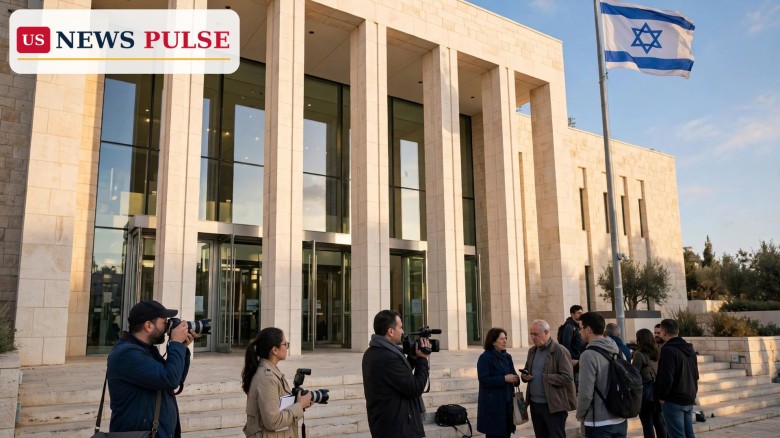
Judges in Jerusalem delivered the most serious blow yet to the corruption case against Benjamin Netanyahu on Wednesday, urging prosecutors to drop the bribery charge at the heart of the Netanyahu corruption trial and warning that a conviction is unlikely. Presiding Judge Rivka Friedman-Feldman told Attorney General Gali Baharav-Miara, summoned to the hearing in a rare move, that there was "serious doubt" the evidence could support the allegation. It was the third time the judges have urged the charge to be abandoned, but the public statement went further than before: the court said it does not envisage a conviction at all.
Key Points
- Judges urged the attorney general to drop the bribery charge in Case 4000, the most serious of three cases against Netanyahu.
- Judge Rivka Friedman-Feldman said the chances of conviction are low and the evidentiary foundation is in serious doubt.
- The court also urged prosecutors to reconsider Case 2000 and to seek a deal in Case 1000.
- The recommendations are not a judgment, but the judges said they do not envisage a conviction at all in Case 4000.
- Attorney General Gali Baharav-Miara said she would "carefully review" the recommendations before deciding.
What Happened
On Wednesday, November 25, 2026, the three judges hearing the trial at the Jerusalem District Court made their recommendations in open court, with the attorney general herself present. Baharav-Miara had been summoned in an unusual step, underlining how seriously the court views the state of the case.
On the bribery charge in Case 4000, Friedman-Feldman was blunt: "The chances of conviction are low," she told the attorney general, adding that "there is serious doubt as to whether the evidentiary foundation supports this allegation." On Case 2000, the court said it has "serious doubts as to whether the conduct described in the indictment actually constitutes a criminal offense." On Case 1000, the judges urged the two sides to reach an agreement, saying it seemed able to be "brought to a conclusion." Baharav-Miara said she would "carefully review" the recommendations and that "there are only two ways to bring the case to a conclusion: a verdict or an appropriate plea agreement."
Background and Context
Netanyahu was indicted in January 2020, and the trial began in May that year, making him the first sitting Israeli prime minister to stand trial. He has denied wrongdoing in all three cases and began testifying in his own defence in December 2024.
Case 4000, the bribery case, is the centrepiece of the prosecution. Prosecutors allege Netanyahu gave regulatory benefits worth more than 1 billion shekels — about $300 million — to the telecom company Bezeq, owned by his friend Shaul Elovitch, in exchange for favourable coverage on the Walla! news site, which Elovitch also owned. In that case Netanyahu faces bribery plus fraud and breach of trust.
Case 2000 concerns an alleged deal with Arnon Mozes, publisher of Yedioth Ahronoth, under which Netanyahu is accused of offering to limit a rival paper's circulation in return for favourable coverage. Case 1000 concerns gifts — cigars and champagne — prosecutors say he received from Hollywood producer Arnon Milchan and billionaire James Packer.
The trial has run alongside a turbulent political period: Netanyahu lost his parliamentary majority in the October 27 election but remains caretaker prime minister, while Gadi Eisenkot has been tasked with forming the next government. Last December, Netanyahu formally requested a pardon from President Isaac Herzog, and a month earlier Donald Trump wrote to Herzog asking for a full pardon.
Netanyahu Corruption Trial: Why the Bribery Charge Matters Most
The bribery charge is the most serious allegation Netanyahu faces, and the only one built around an alleged exchange of official favours for media coverage. A bribery conviction would carry the heaviest penalty and the greatest political damage, which is why the prosecution made Case 4000 the centrepiece of its case — and why the judges' recommendation to drop it is so consequential.
If she follows it, the trial would continue in much narrower form: fraud and breach of trust charges would remain, but the allegation that defined the case — a prime minister trading regulatory power for friendly headlines — would be gone.
Reactions and Quotes
The judges' words were the hearing's headline. Friedman-Feldman's assessment that "the chances of conviction are low," and her warning of "serious doubt" about the evidence, were reported by CNN, Haaretz and the Times of Israel as a severe blow to the prosecution.
The attorney general gave little away. Her promise to "carefully review" the recommendations, and her observation that "there are only two ways to bring the case to a conclusion: a verdict or an appropriate plea agreement," left open both a negotiated end and a decision to fight on. Her presence was itself notable: attorneys general are rarely summoned before a trial court in person.
Why It Matters
The recommendation lands at a moment when the trial and Israeli politics are deeply entangled. Netanyahu remains caretaker prime minister after losing his majority, and a successor government is being formed while the trial continues. Dropping the bribery charge would remove the most damaging allegation against a leader who has insisted for six years that the cases are politically driven, and reshape the argument over his legacy.
It also matters for the principle the trial was meant to test: whether a serving prime minister can be prosecuted, and convicted, in an Israeli court. The trial was historic when it opened in 2020 precisely because no sitting prime minister had faced criminal charges before.
What Happens Next
The next move belongs to Baharav-Miara. She must decide whether to drop the bribery charge, press ahead despite the judges' view, or use their recommendation as the basis for a plea agreement — which would need Netanyahu's agreement.
Watch, too, for movement on the other cases: the court's call to reconsider Case 2000 and seek an agreement in Case 1000 points toward a negotiated end to the whole trial rather than a verdict on every charge.
Frequently Asked Questions
What did the judges recommend?
They urged the attorney general to drop the bribery charge in Case 4000, to reconsider Case 2000, and to seek a deal in Case 1000.
Does this end the corruption trial?
No. The recommendations are not a judgment, and fraud and breach of trust charges would remain even if the bribery charge is dropped.
What is Case 4000 about?
Prosecutors allege Netanyahu gave Bezeq regulatory benefits worth over 1 billion shekels, about $300 million, for favourable Walla! coverage.
Has the court recommended this before?
Yes — in chambers in June 2023 and again in the summer of 2026. Wednesday's public statement went further, saying the judges do not envisage a conviction at all.
What happens if the bribery charge is dropped?
The trial would continue in narrower form on the remaining charges, unless a plea deal ends the case.
Related: Herzog tasks Eisenkot to form Israel's next government, passing over Netanyahu | Huckabee casts doubt on Trump's pledge to end Israel military aid this year | Trump presses Netanyahu to advance Gaza peace plan after Israel election
© 2026 US News Pulse. All rights reserved.
 Print
 Save