
No Evidence China Directed Alice Huang to Spy on Nvidia CEO, US Officials Say
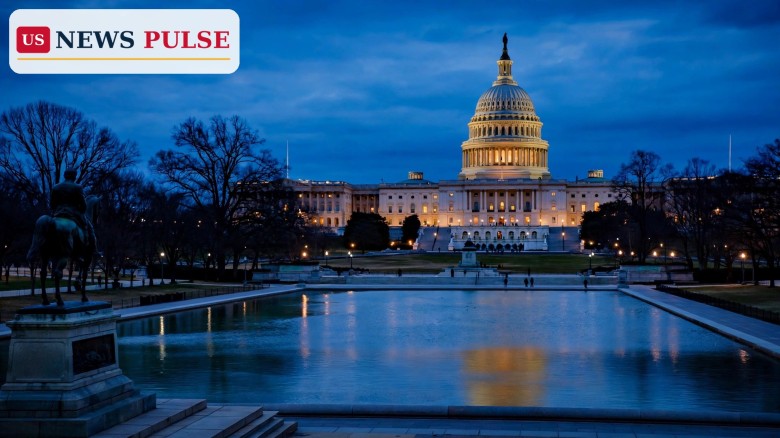
United States officials told congressional staffers in a highly classified briefing on Tuesday that they have found no evidence that China directed Alice Huang to spy on Nvidia chief executive Jensen Huang, the Wall Street Journal reported on Wednesday. It is the clearest official assessment yet that the affair that forced Huang out of the company he built may have been personal, not a Chinese intelligence operation. The briefing came a day after Huang was reinstated as chief executive following a pressure campaign by President Donald Trump.
Key Points
- US officials told Congress in a classified briefing on Tuesday, November 24, that there is no evidence China directed Alice Huang to spy on Nvidia CEO Jensen Huang.
- The evidence suggests the relationship may have been amorous, not a coordinated play by China.
- China's Ministry of State Security approached Alice Huang for information, and she was in contact with the agency during the affair.
- But the US has no indications she disclosed significant intelligence to the agency.
- It came a day after Huang was reinstated as Nvidia chief executive.
What Happened
The Wall Street Journal reported on Wednesday, November 25, 2026, that US officials delivered the assessment in a classified briefing the day before. The briefers laid out the evidence on Alice Huang, a former top executive at Megaspeed International, a Nvidia partner accused of smuggling the chipmaker's products into China in violation of American export controls.
The officials said the evidence suggests the relationship may have been amorous rather than a coordinated operation directed by Beijing.
The briefers did not present Alice Huang as untouched by Chinese intelligence. They said the ministry approached her for information, as Chinese law compels, and she was in contact with the agency during the affair. But the US has no indications she disclosed intelligence of significance.
Background
Huang resigned on Thursday, November 12, after 33 years running Nvidia, days after reports of his affair with Alice Huang, suspected of links to China's Ministry of State Security. Nvidia's board had been investigating since November 8, and Megaspeed stood accused of diverting $7.5 billion in Nvidia chips to China.
On November 12, CNN reported the material on Alice Huang did not prove she was a spy for Beijing, and officials disagreed over whether she had been recruited. Intelligence officials called the spy label "not entirely accurate" and "over-torqued", while the CIA was unconvinced the intercepts proved she knowingly passed information to Beijing. Attorney General Todd Blanche said there were "no conclusions reached" about who she is. Related coverage: US intel was divided over whether Alice Huang was a Chinese spy.
The political pressure then reversed Huang's fate. Trump backed calls for his return, saying "I would certainly not mind seeing that. He could return." On November 23, Nvidia reinstated Huang and its shares jumped 31 percent. The next day, Senate Democratic leader Chuck Schumer accused Huang of shipping "extremely advanced chips to China, violating US export control law". Related coverage: Schumer accuses Huang of violating US export control law. Records also show firms linked to Alice Huang listed $270 million in AI servers in China. Related coverage: Alice Huang-linked firms listed $270 million in AI servers in China.
Alice Huang and the Espionage Question
Tuesday's briefing does not settle every question. Being approached by the ministry and staying in contact with it is not the same as being directed by it, but it is also not nothing, and the distinction is likely to be argued over in Congress for weeks.
The finding also leaves open what, if anything, Alice Huang told the ministry. The briefers said the US has no indications she passed on intelligence of significance, wording that reflects the evidence today, not a final verdict. For Nvidia, the distinction matters: a chief executive compromised by a foreign intelligence service is a national security problem; one who had an affair with a woman who had contacts with that service is a governance scandal.
Reactions
President Trump had already cast doubt on the espionage claim before Tuesday's briefing, saying of Alice Huang: "Nobody's proven that she's a spy. She may not be a spy." He has also said he did not think Huang's actions jeopardised US national security.
Not everyone in Washington is ready to accept the new assessment. Schumer's accusation on Tuesday shows that, for Huang's critics, the chip-diversion question matters more than the spy question. Republican Senator Kevin Cramer said on CNBC that more guardrails were needed and that "We might even have to put a babysitter on Jensen Huang", while Republican Representative Pat Harrigan said on Monday that Huang's reinstatement "is a mistake". Representative Jim Himes, the ranking Democrat on the House Intelligence Committee, said after an earlier briefing that he left unsure of the nature of Huang's relationship with the Chinese government.
Why It Matters
The briefing deflates the most explosive allegation in the Nvidia saga: that the head of America's leading AI chipmaker was the target of a directed Chinese espionage operation. If that allegation does not hold, the case for treating Huang as a security risk weakens considerably, and his reinstatement looks less like a political favour and more like a correction.
It does not end the affair's consequences. The chip-diversion investigation into Megaspeed is separate and continues regardless of what Alice Huang told Chinese intelligence. The briefing answers the spy question, not the smuggling question. For the wider US-China technology rivalry, an espionage claim that collapses under scrutiny can undermine the enforcement effort it was meant to support.
What Happens Next
Huang is due to face lawmakers directly in the coming days: a closed-door briefing on December 1 with three House panels, followed by a public hearing on December 3 before the Senate Banking Committee. Both sessions are now likely to focus less on whether Alice Huang was a spy and more on how Nvidia's chips reached China and what controls failed. Congress will also test Tuesday's finding, and Nvidia's own investigation, led by former prosecutor Joon Kim, continues.
Frequently Asked Questions
What did US officials tell Congress about Alice Huang?
In a classified briefing on Tuesday, November 24, they said there is no evidence China directed Alice Huang to spy on Nvidia CEO Jensen Huang.
Did Alice Huang have contact with Chinese intelligence?
Yes. Briefers said the ministry approached her for information, as compelled under Chinese law, and she was in contact with the agency during the affair. But the US has no indications she disclosed significant intelligence.
Why did Jensen Huang resign, and why did he return?
Huang resigned on November 12 after reports of the affair and the espionage suspicions. He was reinstated on November 23 after a pressure campaign by President Trump, and Nvidia shares jumped 31 percent.
Does this finding end the Megaspeed investigation?
No. The investigation into whether Megaspeed smuggled Nvidia chips to China is separate, and the Commerce Department is still moving to add the firm to the Entity List.
What happens next?
Huang faces a closed-door briefing with three House panels on December 1 and a public Senate Banking Committee hearing on December 3, focused on export controls and how Nvidia chips reached China.
© 2026 US News Pulse. All rights reserved.
 Print
 Save