
LNG Carrier Explodes After Hitting Naval Mine in Strait of Hormuz, Iran Says
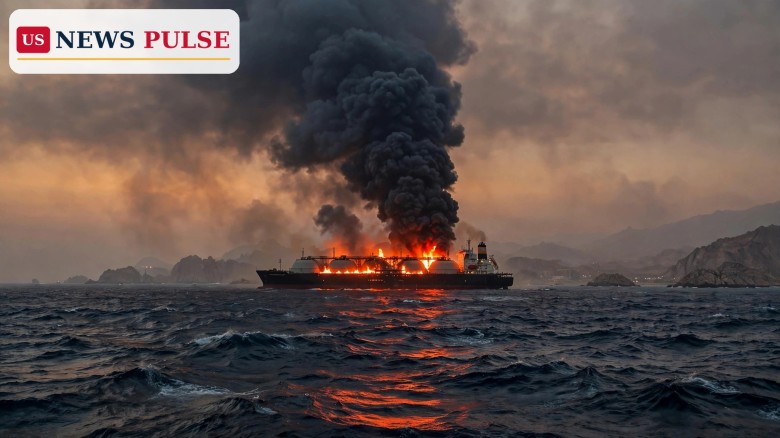
A liquefied natural gas carrier exploded and caught fire in the Strait of Hormuz on Wednesday evening, November 25, after striking a naval mine, Iran's Revolutionary Guards Navy said, in the latest attack on commercial shipping in the world's most important oil and gas chokepoint. The LNG carrier explosion in the Strait of Hormuz came hours after two oil tankers hit mines and burst into flames in the same waterway earlier in the day, and it pushed Brent crude to between $91 and $92 a barrel. The vessel was not named, with no flag, crew or casualty details given.
Key Points
- Iran's Revolutionary Guards Navy said an LNG carrier struck a naval mine, exploded and caught fire in the Strait of Hormuz on Wednesday evening.
- The Guards said the carrier had switched off its positioning systems and was on an unauthorised route, as they called it; the vessel was not named.
- It came hours after two oil tankers hit mines and caught fire in the strait, with a third striking a mine in a restricted zone.
- Reuters could not independently verify the report, carried by Iranian state media with Guards video of the burning ship.
- Brent crude rose to $91-$92 a barrel on the day.
What Happened
Iran's Revolutionary Guards Navy announced on Wednesday evening that a liquefied natural gas carrier had struck a naval mine in the Strait of Hormuz, exploded and caught fire. Iranian state media, including Mehr, carried the announcement, and the Guards released video of the burning vessel, also carried by Roya News and Sepah News.
According to the Guards, the carrier had switched off its positioning and GPS systems and was transiting via what it called an unauthorised, US-Israeli-fabricated route. The Guards gave no name, flag, crew or casualty details, and Reuters said it could not independently verify the report.
Two oil tankers struck naval mines, exploded and caught fire in the strait earlier on Wednesday, and a third tanker hit a mine in a restricted zone, making the LNG carrier the fourth vessel hit by a mine in the strait in a single day.
Background: A Waterway Under Attack for Months
The Strait of Hormuz, the narrow passage between Iran and Oman, carries a large share of the world's seaborne oil and liquefied natural gas and has been the centre of a shipping war for months. Commercial vessels have been hit by mines, projectiles and drones in a campaign that has widened from oil tankers to gas carriers and container ships.
Wednesday's blast was not the first of its kind. An LNG tanker hit a naval mine and exploded in the strait on Friday, November 13, also on what Iranian state media called an unauthorised route, and the LNG carrier Al Mayeda was attacked near the strait earlier this month. A container ship hit a mine near Hormuz on Tuesday, November 24, a day after International Maritime Organization chief Arsenio Dominguez said transiting the strait remains unsafe and ships should avoid the route.
The United States has escorted commercial vessels through the strait and struck Iranian targets around the waterway, while Iran has warned repeatedly that ships defying its rules are at risk. Every transit is now a calculation of risk for shipowners, insurers and energy markets.
LNG Carrier Explosion in the Strait of Hormuz
What sets Wednesday evening's blast apart is the cargo. Until now the mine campaign has fallen mainly on oil tankers, but a gas cargo is harder to replace quickly, its loss hits different buyers, and a fire aboard a gas carrier carries its own dangers for the crew and any rescue effort. That the Guards publicised the strike with video, hours after the oil-tanker attacks, suggests it was meant as a message as much as an attack.
The Guards' claim that the carrier had switched off its positioning systems is also significant, because it is the explanation Iran has used before. Ships in the strait have gone dark before, sometimes to avoid detection and sometimes, owners say, because of electronic interference. Iran presents the switched-off transponder as proof the vessel chose its own route outside the lanes it recognises, but the claim has not been independently confirmed and no other source has identified the vessel.
Reactions
The Guards Navy's Strait of Hormuz Traffic Control Center warned that vessels violating Iran's regulations and choosing unauthorised routes were at risk of striking sea mines. The warning states the rule Iran says it is enforcing: follow its instructions and stay safe, or sail at your own risk.
Iran's army added that it has deployed new systems and upgraded its surveillance and control of the waterway, a claim offered without evidence. The International Maritime Organization's position was already on the record: Secretary-General Arsenio Dominguez said on Tuesday, November 24, that transiting the strait remains unsafe.
The markets reacted first. Brent crude rose to $91-$92 a barrel on Wednesday, reflecting the accumulation of incidents over the past month. Each new strike on a different class of vessel widens the range of cargoes at risk.
Why It Matters
The blast matters because it extends the mine campaign to liquefied natural gas, the fuel that heats homes and powers industry across Asia and Europe in winter. Gas carriers move through the same narrow waterway as oil tankers, and a sustained threat to gas shipments would reach different countries and different prices.
It also matters because of the warning that came with it. Iran is telling shipowners openly that vessels on routes it does not authorise risk hitting mines, turning a military campaign into a regulatory claim, and each new attack tests whether the American naval presence can keep the waterway open.
What Happens Next
The first question is the identity of the vessel. Until the ship is named, its flag, owner and crew cannot be confirmed, and no one can know who was aboard or whether anyone was hurt. Maritime authorities and tracking firms are likely to identify it from the Guards' video and shipping records.
The second question is the response. The United States and its allies have answered earlier attacks with escorts, boardings and strikes, and Wednesday's double blow is likely to bring fresh consultations in Washington and the Gulf capitals, while shipowners weigh a dangerous transit against a costly diversion around Africa.
Frequently Asked Questions
What happened in the Strait of Hormuz on Wednesday evening?
The Revolutionary Guards Navy said an LNG carrier struck a naval mine, exploded and caught fire. The vessel was not named.
Was anyone hurt?
It is not known; the Guards gave no casualty information and the report has not been independently verified.
Which ship was it?
It has not been identified; the Guards said it had switched off its positioning systems and was on what it called an unauthorised, US-Israeli-fabricated route.
What happened earlier on Wednesday?
Two oil tankers struck mines, exploded and caught fire, and a third tanker hit a mine in a restricted zone.
Is the Strait of Hormuz safe for shipping?
No, according to the International Maritime Organization, whose Secretary-General, Arsenio Dominguez, said on November 24 that transiting the strait remains unsafe and ships should avoid the route.
© 2026 US News Pulse. All rights reserved.
 Print
 Save