
North Korea Tactical Nuclear Weapons: Kim Jong Un Orders Wider Deployment
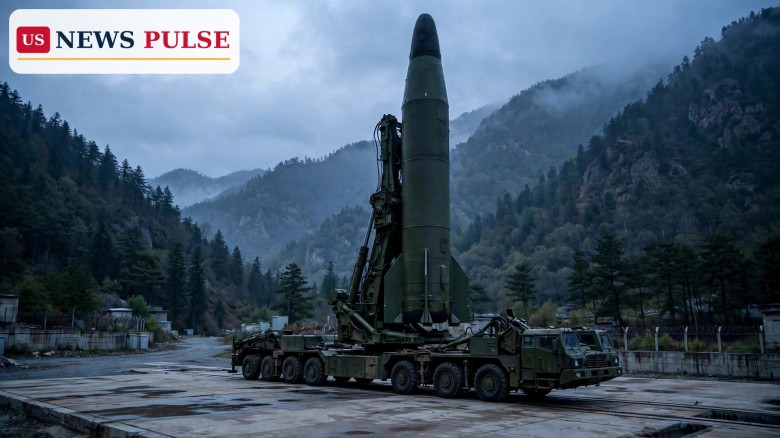
North Korean leader Kim Jong Un has ordered a wider deployment of his country's tactical nuclear weapons and warned that any attempt to deny North Korea's status as a nuclear-weapons state would be treated as "an open declaration of war", state media reported on Thursday. The announcement came during Kim's inspection of nuclear facilities on Wednesday, his bluntest statement yet that Pyongyang will not give up its arsenal, as dialogue with Washington remains stalled.
Key Points
- Kim inspected nuclear-material production and weapons-research facilities on Wednesday, November 25, 2026, KCNA reported on Thursday.
- He said the country should deploy tactical nuclear weapons "across multiple domains for different missions", calling their diversified use an "important and urgent task".
- He declared North Korea's status as a nuclear-weapons state "absolutely inviolable", warning that denying it would be regarded as "an open declaration of war".
- KCNA said nuclear-material production capacity is being systematically expanded, but did not name the facilities or say where they are.
- It was Kim's fourth visit to such facilities since September 2024, seen as a signal Pyongyang will not negotiate away its nuclear weapons while dialogue stalls.
What Happened
According to KCNA, Kim visited the facilities on Wednesday to inspect nuclear-material production and weapons development and set the programme's direction. He said North Korea should deploy tactical nuclear weapons "across multiple domains for different missions" — delivery systems on land, at sea and in the air — and called their diversified use an "important and urgent task".
The sharpest language came in Kim's declaration that North Korea's status as a nuclear-weapons state is "absolutely inviolable", and that any attempt to deny it would be regarded as "an open declaration of war". It was his fourth visit of this kind, after trips in September 2024, January 2025 and June 2026. Kim justified the build-up by citing growing nuclear threats from the United States and its allies.
Background: An Arsenal That Keeps Growing
The visit fits a pattern of steady expansion. The Wall Street Journal reported on Saturday, November 21, that North Korea's arsenal has grown to about 60 warheads since Kim last met President Donald Trump in June 2019, when it was estimated at 20 to 30. Kim wants Washington to recognise North Korea as a nuclear power; in February he said the United States could win peaceful coexistence by accepting the programme, or face "eternal confrontation".
The hardware has kept pace. On October 31, North Korea tested a cluster warhead for tactical ballistic missiles, and on November 4 it test-fired a new air-defence missile and staged a cruise-missile strike drill. On November 18, the International Atomic Energy Agency warned that an extension to the uranium-enrichment facility at Yongbyon was externally complete by late October, calling the expansion "a cause for serious concern".
Diplomacy, meanwhile, has gone nowhere. Trump said on November 16 that he "may meet with Kim Jong Un also" in China during his Asia trip, but no meeting took place. On November 4, Kim's sister Kim Yo Jong said there was no need for dialogue.
North Korea Tactical Nuclear Weapons: What Wider Deployment Means
Tactical nuclear weapons are designed for battlefield use against military targets in a region, rather than the strategic missiles aimed at distant cities. A wider deployment would put more of them in the hands of more units, on more kinds of launchers, and closer to where a conflict would actually be fought — land-based missile units, sea-launched systems and possibly air-delivered weapons, each sized for a specific target.
The order fits the systems North Korea has been testing. The October 31 cluster-warhead test was for a tactical ballistic missile, and the short-range Hwasong-11 class is built for exactly this role. Spreading tactical weapons across more units makes the arsenal harder to destroy in a first strike. For South Korea and Japan, the message is direct: the threat is not only the missiles that can reach America, but the ones already pointed at them.
Reactions and Quotes
Kim's own words, as carried by KCNA, set the tone. He called the diversified use of tactical nuclear weapons an "important and urgent task", declared his country's nuclear-weapons status "absolutely inviolable", and warned that denying it would be "an open declaration of war". The visit was framed as a working inspection, but its message was political: the programme is expanding.
The White House says its position is unchanged: North Korea must give up its weapons — a demand Pyongyang has now answered with a deployment order.
Why It Matters
The announcement matters because it closes, for now, the door Washington has been trying to reopen. Trump raised the idea of another meeting with Kim during his Asia trip this week. But Kim's visit, his fourth to nuclear facilities in just over two years, says the programme is moving the other way: more material, more weapons, more units able to use them.
It also matters for the region. A tactical arsenal spread across multiple domains is harder for the United States, South Korea and Japan to track and deter, and it lowers the threshold at which nuclear weapons enter a conflict on the Korean Peninsula. With about 60 warheads estimated and Yongbyon still expanding, the status quo is becoming more dangerous.
What Happens Next
Watch for what follows the visit. KCNA often publishes detailed accounts of Kim's inspections, and any follow-up may name the facilities or show the systems involved. A missile test would be the next clear signal, as North Korea has often paired announcements with launches. For now, the direction is clear: North Korea is building more nuclear weapons, spreading them more widely, and telling the world it will not be talked out of them.
Frequently Asked Questions
What did Kim Jong Un announce? He ordered a wider deployment of North Korea's tactical nuclear weapons, calling their diversified use an "important and urgent task".
What did he mean by "an open declaration of war"? He said denying North Korea's status as a nuclear-weapons state would be regarded as "an open declaration of war".
Why is he doing this now? Kim cited growing nuclear threats from the United States and its allies, and the visit is seen as a signal Pyongyang will not discuss giving up its weapons while dialogue stalls.
How big is North Korea's nuclear arsenal? The Wall Street Journal reported on November 21 that it has grown to about 60 warheads, up from an estimated 20 to 30 in June 2019.
Will Trump meet Kim again? Trump said on November 16 he might meet Kim in China, but no meeting took place, and a US official said no efforts have been made to broker one.
Related coverage: Kim Jong Un Ghosted Trump as North Korea's Nuclear Arsenal Grew; IAEA Warns North Korea Completed Yongbyon Uranium Enrichment Expansion; Trump Says He May Meet Kim Jong Un in China.
© 2026 US News Pulse. All rights reserved.
 Print
 Save