
American Airlines Flight 1494 Diverted to Phoenix After Passenger Tries to Open Door
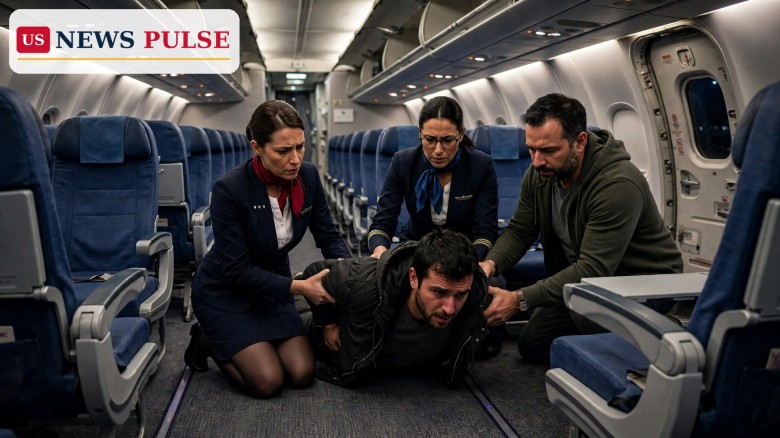
American Airlines Flight 1494 was diverted to Phoenix early on Wednesday, November 25, 2026, after a passenger tried to open a cabin door while the aircraft was in flight, forcing the San Diego-to-Chicago service to land at Phoenix Sky Harbor International Airport so law enforcement could remove him. The flight had taken off from San Diego at 10:53 p.m. Pacific time on Tuesday, November 24, and landed safely in Phoenix at about 1 a.m. Arizona time. Flight attendants and several passengers restrained the man after he ignored repeated crew instructions to return to his seat, and no other passengers or crew members were injured.
Key Points
- American Airlines Flight 1494, travelling from San Diego to Chicago, was diverted to Phoenix Sky Harbor after a passenger tried to open a cabin door in mid-flight.
- The aircraft took off at 10:53 p.m. Pacific time on Tuesday, November 24, 2026, and landed safely in Phoenix at about 1 a.m. Arizona time on Wednesday, November 25.
- Flight attendants and several passengers restrained the man, who had left his assigned seat, moved toward the front of the aircraft and refused repeated crew orders to sit down.
- Law enforcement officers met the aircraft in Phoenix and took the passenger into custody; he suffered a minor injury and was taken to hospital for evaluation.
- The Federal Aviation Administration described the event as a "passenger disturbance" and will investigate, and the FBI has been notified. Airlines have reported more than 1,500 unruly passenger incidents so far in 2026.
What Happened
Flight 1494 departed San Diego late on Tuesday night, bound for Chicago. As the aircraft flew near the Arizona-California border, a passenger left his assigned seat and moved toward the front of the cabin. Crew repeatedly told him to return to his seat. He refused, then tried to open or manipulate a cabin door while the plane was still in the air.
Flight attendants intervened, and several passengers helped restrain the man. Video recorded by a passenger shows him pinned on the floor near the door. The pilots diverted, and the aircraft landed safely at Phoenix Sky Harbor at about 1 a.m. on Wednesday. Officers boarded and took the passenger into custody; he had a minor injury and was taken to hospital. The flight then continued to Chicago.
Background and Context
Interfering with an aircraft door is among the most serious disturbances a crew can face, even though a cabin door cannot realistically be opened at cruising altitude. At altitude, cabin pressure holds the door firmly shut, far beyond what a person can force. The danger comes from the struggle itself and the distraction to the crew.
It is the latest in a long run of unruly passenger cases: airlines have reported more than 1,500 such incidents so far in 2026, according to the FAA. The FAA's zero-tolerance policy means passengers who interfere with crew can face civil fines of up to $37,000 per violation and referral to federal prosecutors.
Phoenix Sky Harbor is a frequent diversion point for transcontinental flights crossing Arizona, and the flight was operating on the eve of Thanksgiving, one of the busiest travel periods of the year, when any disruption ripples through tightly packed schedules.
American Airlines Flight 1494 and the Cabin Door Incident
The passenger tried to open or manipulate a cabin door while the aircraft was flying near the Arizona-California border, according to Phoenix police, speaking through local station 12News. The door was not opened, the aircraft remained pressurised, and the flight landed normally. The airline has called the man only a "disruptive customer" and has not released his name or any motive.
Attempting to interfere with a door is treated very differently from an ordinary refusal to follow instructions, and it is why the pilots diverted rather than continue to Chicago with the passenger on board.
Reactions and Quotes
American Airlines confirmed the diversion in a statement provided to The Arizona Republic. "American Airlines flight 1494 diverted to Phoenix (PHX) due to a disruptive customer. Upon arrival, law enforcement met the aircraft and assisted with deplaning the customer before the flight continued to its destination," the airline said.
"The safety and security of our customers and team members is our top priority," the statement continued. "We thank our team members for their professionalism and our customers for their assistance and understanding."
The FAA called it a "passenger disturbance", said the aircraft landed safely and confirmed it will investigate. The FBI has been notified, standard practice when a passenger interferes with a flight crew. Phoenix police told 12News the passenger had tried to open a cabin door and had refused crew orders to return to his seat.
Why It Matters
The diversion shows how a single passenger can force an entire aircraft off its route, delay hundreds of people and trigger a federal investigation. For the other travellers, a routine overnight journey to Chicago became an unscheduled stop in Phoenix in the middle of the night, on one of the busiest travel weeks of the year.
It also shows why crews act fast when a passenger moves toward a door: the risk of a violent struggle in a crowded cabin is real. With more than 1,500 incidents already reported this year, each high-profile diversion renews pressure for tougher deterrents, from heavier fines to prosecution and bans.
What Happens Next
The FAA will examine the crew's account and the airline's handling of the diversion, and can impose a civil penalty. The FBI will decide whether federal charges apply for interfering with a flight crew. No charges had been announced by Wednesday. American Airlines will conduct its own review, and the passenger is likely to face a ban. The aircraft continued to Chicago; no damage was reported.
Frequently Asked Questions
What happened on American Airlines Flight 1494?
The San Diego-to-Chicago flight was diverted to Phoenix early on Wednesday, November 25, 2026, after a passenger refused crew orders and tried to open a cabin door mid-flight. Crew and passengers restrained him, and police took him into custody.
Was anyone hurt in the incident?
No other passengers or crew were injured. The passenger sustained a minor injury during the restraint and was taken to hospital.
Can a passenger actually open an aircraft door mid-flight?
At cruising altitude, cabin pressure holds the door firmly shut, far beyond what a person can force. The danger comes from the struggle and the disruption to the crew.
What will happen to the passenger now?
The FAA can fine him up to $37,000 per violation, the FBI will decide on federal charges, and the airline is likely to ban him.
How common are unruly passenger incidents?
Airlines have reported more than 1,500 unruly passenger incidents so far in 2026, according to the FAA. The agency operates a zero-tolerance policy and can fine offenders and refer cases for prosecution.
Related: an American Airlines flight declared mayday in Phoenix days earlier, and Congress agreed an ADS-B In mandate for civilian aircraft.
© 2026 US News Pulse. All rights reserved.
 Print
 Save