
Russia Hits Two Grain Ships Near Odesa as Black Sea Exports Grind to a Halt
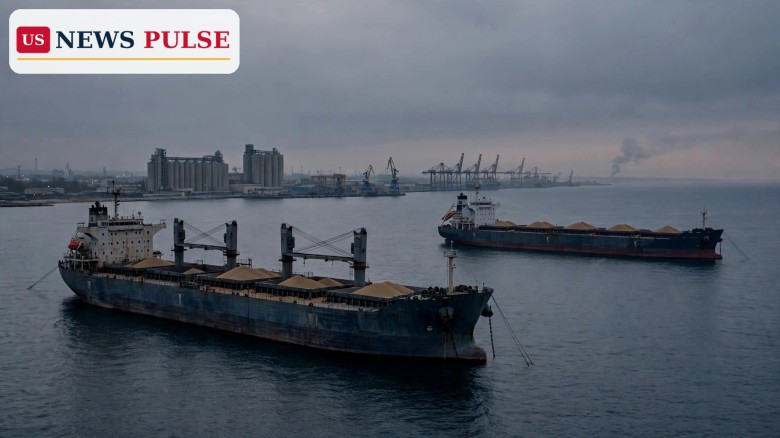
Russia attacked two foreign cargo ships carrying more than 100,000 metric tons of grain overnight near Ukraine's Black Sea port of Odesa, Ukrainian Prime Minister Sergiy Koretskyi said on Thursday, in the latest strike on the merchant shipping that once carried the bulk of Ukraine's farm exports. The attack shows how a months-long Russian campaign against grain terminals and merchant vessels has all but shut down shipments from the three ports around Odesa, which before the escalation handled about 90 percent of Ukraine's agricultural and metallurgical exports. Kyiv has not formally closed the ports, but shipowners are staying away and soaring insurance costs are deterring traders.
Key Points
- Russia struck two foreign grain ships carrying over 100,000 metric tons near Odesa, Prime Minister Sergiy Koretskyi said Thursday.
- Grain shipments from Odesa ports have all but stopped since late July, after Russia sharply intensified attacks on grain terminals and merchant vessels.
- Before the escalation, the three Odesa-hub ports handled about 90 percent of Ukraine's farm and metals exports.
- Ukraine has exported 7.6 million tons of grain so far in 2026/27, down from 11.5 million tons a year earlier.
- Russia says it struck a dry cargo vessel carrying military and dual-use goods; it denies targeting civilians.
What Happened
Koretskyi announced the overnight attack on Thursday, saying Russian forces had hit two foreign cargo ships carrying more than 100,000 metric tons of grain near the Odesa ports. He did not say where the grain originated or where the vessels had loaded, and neither account published so far gave details of casualties or damage. The strike fits a pattern that has made the waters around Odesa among the most dangerous for merchant shipping in the world. Since late July, Russia has sharply intensified attacks on grain terminals and merchant vessels, and grain shipments from Ukraine's key Black Sea ports have all but stopped. Kyiv has not formally banned port operations, but shipowners avoid the ports over security risks while soaring insurance costs deter traders.
Background: How Odesa's Grain Trade Ground to a Halt
For years the three ports of the Odesa hub were the workhorse of Ukraine's farm trade, handling about 90 percent of the country's agricultural and metallurgical exports before the current escalation. Grain loaded at Odesa sailed through the Black Sea to buyers across the Middle East, Africa and Asia, and the route was one of the main arteries of the global food trade. That flow has now slowed to a trickle. President Volodymyr Zelenskiy said earlier this year that shipments from the Odesa ports were taking place only intermittently, while Agriculture Minister Taras Vysotskiy has said no exports were moving through them at all. Ukraine does not publish official data on Black Sea port shipments, saying exports have been redirected to Danube River ports or moved by rail across land borders with eastern European countries. The rail figures tell their own story: consultancy APK-Inform reported this week that 429 grain wagons were dispatched towards Odesa between November 12 and 18, four times the level a week earlier, a sign grain still moves towards the coast even as the ships stay away. Official data show Ukraine has exported 7.6 million tons of grain so far in the 2026/27 season, down from 11.5 million tons a year earlier, a fall of about a third.
Grain Ships Near Odesa: A Lifeline Under Fire
The attack matters far beyond the Black Sea because Ukraine is one of the world's largest exporters of wheat, corn and sunflower oil, and the Odesa route was the cheapest and fastest way to get that grain to market. When the ships stop sailing, the grain does not simply find another road: Danube barges and cross-border rail can carry only a fraction of the volume, at higher cost and with longer delays, and every extra week of disruption tightens supply for the import-dependent countries that rely on Ukrainian grain. By hitting merchant vessels rather than only port infrastructure, Russia is raising the cost and risk for any shipowner willing to trade with Odesa, and the insurance market is responding as intended, with premiums that make many voyages uneconomic before a ship ever leaves port.
Reactions
Koretskyi's announcement was the first official word of the attack, framed as a straightforward account of a strike on civilian shipping: two foreign vessels, more than 100,000 tons of grain, hit overnight near Odesa. Russia offered a different account. Its Defence Ministry said its forces had struck a dry cargo vessel southeast of Odesa overnight, alleging it carried military equipment and dual-use goods to Ukraine. Moscow has consistently maintained that it does not attack civilian targets, a position it restated as news of the grain ships spread. Ukrainian officials have made no such distinction in their public statements about the Odesa campaign, pointing instead to the months of strikes on grain terminals and merchant vessels that have emptied the ports.
Why It Matters
The stakes are measured in food as much as in freight. Ukraine's grain feeds millions far from the Black Sea, and every month the Odesa route stays shut is a month in which that grain must travel slower, costlier routes or not travel at all. For Ukraine itself, the ports were a vital source of export earnings in a wartime economy under immense strain. The campaign also sets a precedent beyond this war: merchant ships carrying food are being treated as targets, and the insurance and shipping markets will remember that long after any ceasefire.
What Happens Next
Attention now turns to whether Kyiv answers with new measures to protect shipping, and whether the Danube and rail alternatives can absorb more of the grain now stranded inland. Traders will watch insurance rates and the next weekly export figures for any sign the Odesa ports are reviving or sliding towards a full stop. Diplomatic reaction is also likely, given the ships were foreign-flagged and the grain was bound for world markets.
Frequently Asked Questions
What happened near Odesa? Russia attacked two foreign cargo ships carrying over 100,000 metric tons of grain overnight near Odesa, Prime Minister Sergiy Koretskyi said Thursday, November 26, 2026.
How much grain was on the ships? More than 100,000 metric tons combined, according to Koretskyi. He did not say where the grain originated or where the vessels had loaded.
Why have grain shipments from Odesa stopped? Russia sharply intensified attacks on grain terminals and merchant vessels from late July. Kyiv has not formally banned port operations, but shipowners avoid the ports and soaring insurance costs deter traders.
How much has Ukraine's grain trade fallen? Ukraine has exported 7.6 million tons of grain so far in 2026/27, down from 11.5 million tons in the same period a year earlier.
What does Russia say? Its Defence Ministry said it struck a dry cargo vessel southeast of Odesa, alleging it carried military equipment and dual-use goods. Russia says it does not attack civilian targets.
Read more on Black Sea shipping: Black Sea drone attacks kill at least 30 mariners in deadliest shipping surge, Russian missiles slam Kyiv overnight, injuring two, days before Abu Dhabi talks and Four tankers hit by explosions in Strait of Hormuz.
© 2026 US News Pulse. All rights reserved.
 Print
 Save