
Bangkok Refinery Explosion Injures Nine as Bangchak Shuts All Production
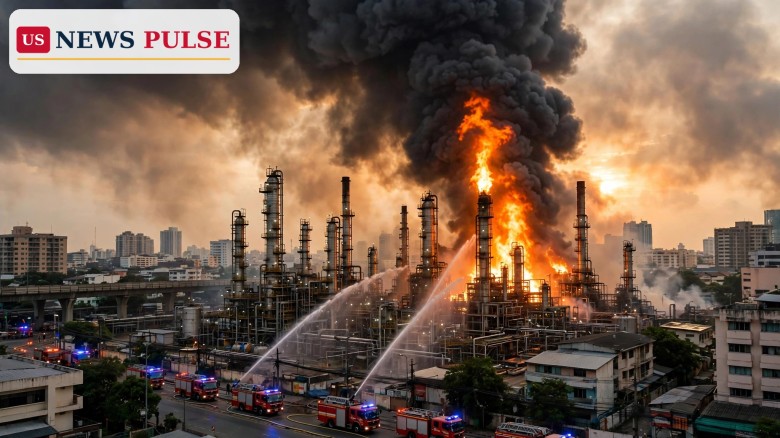
A huge explosion rocked the Bangchak oil refinery in Bangkok on Thursday afternoon, injuring at least nine people and forcing the company to shut down all production at the plant. The blast struck the refinery in the city's Phra Khanong district at around 2:45 p.m. local time, sending a column of flames and thick black smoke into the sky and rattling doors kilometres away.
Key Points
- An explosion at the Bangchak oil refinery in Bangkok's Phra Khanong district injured at least nine people on Thursday, November 26, 2026.
- Four of the injured were seriously hurt, including three in critical condition.
- Bangchak shut down all production units; the fire was under control within about 30 minutes and extinguished by around 3:15 p.m.
- A preliminary investigation points to the hydrocracking unit, with the fire apparently starting at a distillation tower about 100 metres from oil storage.
- The refinery, Thailand's fifth largest at 120,000 barrels a day, is the only one in an urban area and accounts for nearly 41% of Bangchak's refining capacity.
What Happened
The explosion struck at around 2:45 to 3 p.m. local time on Thursday, November 26, 2026 (0745-0800 GMT), at the Bangchak refinery in Phra Khanong, eastern Bangkok. Agence France-Presse reporters at the scene saw a column of flames followed by thick black smoke rising over the plant, and residents said the blast rattled doors several kilometres away. Residents nearby were briefly evacuated.
Nine people were injured, four of them seriously. Three were reported in critical condition. Bangchak moved to shut down all production units, and firefighters had the blaze under control within about 30 minutes. The fire was extinguished at around 3:15 p.m., roughly half an hour after the explosion.
A preliminary investigation found the incident occurred at the refinery's hydrocracking unit, which turns heavy oil into lighter fuels such as petrol and diesel. Energy Minister Akanat Promphan said the fire appeared to have started at a distillation tower about 100 metres (330 feet) from the oil storage, a distance that limited the damage and kept the flames from the fuel tanks.
Background: Bangkok's Only Urban Refinery
The Bangchak refinery is a fixture of Bangkok's industrial landscape, and its location makes any accident there more dangerous than at most plants. With a maximum capacity of 120,000 barrels a day, it is Thailand's fifth biggest refinery, and the only one in the country in an urban area, surrounded by homes, offices and busy roads in Phra Khanong. It accounts for nearly 41% of Bangchak's refining capacity.
That urban setting is why Thursday's explosion drew such a swift response and a brief evacuation of nearby residents, even though the fire was brought under control quickly. A blast of this size at a plant ringed by homes and businesses raises fears of a far worse outcome, and the fire's distance from the oil storage was, by the minister's account, what kept it from spreading.
This is not the first serious incident at the site. In July 2012, a previous explosion at the same refinery caused a massive fire, although no injuries were reported. Thursday's blast, by contrast, left nine people hurt and shut the whole plant down, and its cause remains under investigation.
Bangkok Refinery Explosion Shuts Down a Key Fuel Plant
The shutdown is the most immediate consequence of the blast, and it matters well beyond the refinery fence. A plant that handles 120,000 barrels a day and supplies much of the fuel used in and around the Thai capital cannot simply stop without consequences, and the company and the authorities must now assess how long the shutdown lasts and whether fuel supplies are affected.
The minister's early account suggests the damage was contained, with the fire kept away from the oil storage area. That is encouraging for a quick restart, but the hydrocracking unit is a core part of the refining process, and repairs there can take time. Bangchak has not yet said when production might resume.
Reactions
Energy Minister Akanat Promphan said after the fire was extinguished that the blaze appeared to have started at a distillation tower about 100 metres from the oil storage, limiting the damage. His account, based on the preliminary investigation, pointed to the hydrocracking unit as the site.
Bangchak shut down all production units and worked with firefighters to bring the blaze under control within about 30 minutes. Residents nearby were briefly evacuated as a precaution, and the company has said the cause is under investigation.
Witnesses described doors rattling several kilometres from the plant. AFP reporters at the scene described a column of flames followed by thick black smoke rising over the refinery, visible across much of eastern Bangkok on Thursday afternoon.
Why It Matters
An explosion at a refinery in a city of more than 10 million people is a serious event by any measure. Nine people were injured, three of them critically, and a plant that supplies a large share of Bangkok's fuel was shut down entirely. The outcome could have been far worse if the fire had reached the oil storage, and the distance between the distillation tower and the tanks was the margin that mattered.
The incident also raises questions about safety at a plant that had a serious explosion before, in 2012, and sits in a densely populated district. Phra Khanong residents and Thailand's energy industry will watch the investigation closely.
What Happens Next
The investigation is under way, and Bangchak and the authorities are expected to give a fuller account once the damaged hydrocracking unit has been inspected. The company will also have to say when the refinery can restart, and whether Bangkok's fuel supplies will be affected while it is shut down.
Attention will also turn to the three people in critical condition, and to the safety review likely to follow at a plant that has now had two major explosions in 14 years.
Frequently Asked Questions
What happened at the Bangchak refinery in Bangkok?
A huge explosion struck the Bangchak oil refinery in Bangkok's Phra Khanong district on Thursday, November 26, 2026, at around 2:45 p.m. local time, injuring nine people and shutting down all production.
How many people were injured?
At least nine people were injured, four of them seriously, including three in critical condition.
How long did the fire last?
Firefighters brought it under control within about 30 minutes, and it was extinguished at around 3:15 p.m., roughly half an hour after the explosion.
What caused the explosion?
The cause is under investigation. A preliminary investigation found the incident occurred at the refinery's hydrocracking unit, and the energy minister said the fire appeared to start at a distillation tower about 100 metres from oil storage.
How big is the Bangchak refinery?
It has a maximum capacity of 120,000 barrels a day, making it Thailand's fifth largest refinery. It is Thailand's only refinery in an urban area and accounts for nearly 41% of Bangchak's refining capacity.
Related coverage: the smoke plume over the Ras Tanura refinery after a Houthi strike, an LNG carrier that exploded after hitting a naval mine in the Strait of Hormuz, and oil tankers hit by mines again in the Strait of Hormuz.
© 2026 US News Pulse. All rights reserved.
 Print
 Save