
Houthi Strike on Aramco's Jazan Refinery Kills One Worker, Forces Shutdown
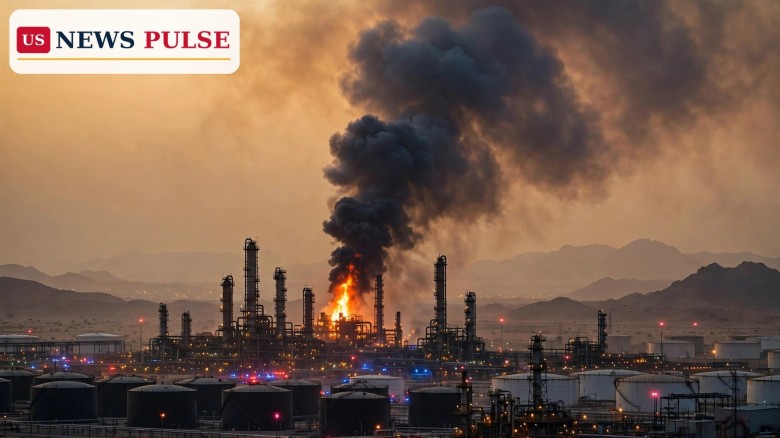
A Houthi strike hit Saudi Aramco's Jazan refinery in southwestern Saudi Arabia on Thursday, November 26, 2026, killing one Nepali worker, injuring several workers of different nationalities, starting a fire and forcing a partial shutdown of some operations, the Saudi-led coalition confirmed. The attack, on a plant built to process up to 400,000 barrels of crude oil a day near the Yemeni border, was the first fatal strike on a Saudi refinery in the current round of escalation, and it pushed Brent crude to $94.71 a barrel.
Key Points
- Yemen's Houthis attacked Aramco's Jazan refinery on Thursday, November 26, 2026, the Saudi-led coalition confirmed.
- One Nepali worker was killed and several others were injured; a fire broke out and some operations closed.
- The coalition said it destroyed a missile launch platform in Hodeidah used in the attack.
- The strike came a day after the Houthis claimed attacks on Ras Tanura and Riyadh's financial district.
- Brent crude rose to $94.71 a barrel on Thursday as Middle East tensions persisted.
What Happened
The strike hit the Jazan refinery, a major Aramco facility in Saudi Arabia's far southwest, close to the border with Yemen. The Saudi Press Agency, citing the energy ministry, reported that the attack killed one Nepali worker and injured several workers of different nationalities. A fire broke out at the site, and the refinery temporarily shut down some of its operations while emergency crews responded.
The Saudi-led coalition said its forces had destroyed a ballistic missile launch platform in Hodeidah, the Yemeni port city on the Red Sea, which it said the Houthis had used in the attack. Coalition spokesman Turki al-Malki warned that targeting civilians and civilian infrastructure would be met with what he called a firm military response.
The same day brought wider attacks and interceptions. The coalition said it intercepted four drones over Ras Tanura, home to Saudi Arabia's largest refinery, while defences destroyed a drone near Jeddah Islamic Port and two ballistic missiles aimed at Riyadh overnight. Jazan was the only attack of the day reported to have caused a death.
Background and Context
Jazan is one of Aramco's newest and largest refineries, built to process up to 400,000 barrels of crude a day and to anchor an industrial zone on Saudi Arabia's Red Sea coast, a short distance from Yemen. Its location has made it a recurring target in the long-running conflict between the Saudi-led coalition and the Houthis, who control much of northern Yemen, including Hodeidah.
Saudi air defences have intercepted Houthi missiles and drones aimed at the southern region for weeks. On November 3, the coalition said it had shot down a ballistic missile fired toward the south, and on November 21 it reported intercepting a missile and five drones in a Friday barrage. Neither attack caused reported casualties or damage. The Jazan strike changes that record: it is the first in this round to kill someone and force part of a refinery offline.
The attack also fits a wider pattern of pressure on Gulf energy and shipping. A day earlier, the Houthis claimed strikes on Ras Tanura and Riyadh's financial district, followed by reports of smoke over Ras Tanura. Shipping through the Strait of Hormuz has also come under repeated attack, while the United States weighs its options over Iran, which backs the Houthis, as a nine-month war grinds on.
Jazan Refinery Strike Raises Oil Market Fears
Oil traders reacted quickly. Brent crude, the global benchmark, rose to $94.71 a barrel on Thursday, reflecting concern that attacks on Gulf refineries could disrupt fuel supplies even if crude exports are untouched. A refinery shutdown cuts petrol, diesel and jet fuel supplies to regional markets and can take days or weeks to repair. Aramco has not said how long the partial shutdown will last or which units were affected, and traders will watch for a second strike or signs the damage is worse than first reported.
Reactions and Quotes
The Saudi-led coalition confirmed the attack and moved quickly to answer it, saying its forces had destroyed the launch platform in Hodeidah that it said was used in the strike. Spokesman Turki al-Malki warned that targeting civilians and civilian infrastructure would be met with a firm military response, a message aimed as much at the Houthis' backers as at the group itself. The Saudi Press Agency, citing the energy ministry, reported the casualty toll and the fire, and said some operations had been temporarily shut down, without giving a timetable for restoring them.
The dead worker's nationality drew India's government into the story: the Gulf's refineries employ many migrant workers from South Asia, and attacks on them endanger civilian lives as well as energy infrastructure. The Houthis' own account had not been set out in the reports available at publication.
Why It Matters
This strike crosses a line the recent attacks had not crossed. Interceptions and near-misses can be absorbed; a dead worker, a fire and a shuttered unit cannot. It puts civilian lives at the centre of a campaign fought mostly in the air and over shipping lanes, and raises the political cost for Riyadh of each new attack. For the oil market, the Gulf's refineries and export terminals are the backbone of global energy supply, and every successful strike adds a risk premium to the price of oil. With the US weighing its options over Iran, a fatal strike on Saudi soil adds pressure for a response that could widen the conflict.
What Happens Next
Aramco and the energy ministry are expected to give a fuller account of the damage at Jazan and a timetable for restoring the affected units. The coalition has already answered with the strike on the Hodeidah launch platform, and further retaliatory strikes in Yemen are likely if the attacks continue. Attention will also turn to whether the Houthis claim the strike and threaten more, and whether Saudi air defences can prevent a repeat.
Frequently Asked Questions
What happened at the Jazan refinery?
Yemen's Houthis attacked Saudi Aramco's Jazan refinery on Thursday, November 26, 2026, killing one Nepali worker, injuring several others, starting a fire and forcing a temporary, partial shutdown.
Where is the Jazan refinery?
In Jazan province in southwestern Saudi Arabia, near Yemen, on the Red Sea coast. It processes up to 400,000 barrels of crude a day.
How did Saudi Arabia respond?
The coalition said it destroyed a missile launch platform in Hodeidah used in the attack. Spokesman Turki al-Malki warned of a firm military response.
Why did oil prices rise?
Brent rose to $94.71 a barrel on fears of disrupted fuel supplies. A refinery shutdown cuts petrol, diesel and jet fuel output, even when crude exports are unaffected.
Was this the first attack on a Saudi refinery?
No. The Houthis claimed attacks on Ras Tanura the day before, and Saudi defences intercepted missiles and drones on November 3 and 21. Jazan is the first in this round to kill anyone.
Related coverage: Houthis Claim Ras Tanura Refinery Strike as Saudi Defences Down Four Drones, Satellite Images Show Smoke Plume Over Ras Tanura Refinery After Houthi Strike, Saudi Houthi Missile Intercept: Air Defences Down Missile and Riyadh Drones.
© 2026 US News Pulse. All rights reserved.
 Print
 Save