
Mexico Seeks US Talks on SpaceX Airspace Use After Starship Debris Hits Beach
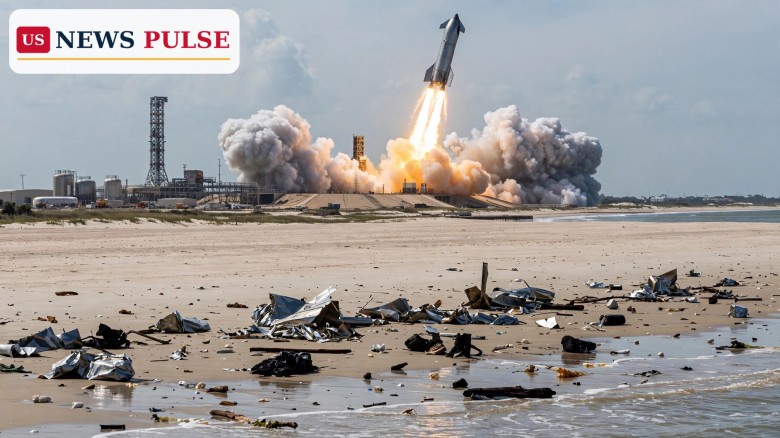
Mexico is seeking talks with the United States over SpaceX's use of Mexican airspace, President Claudia Sheinbaum said on Thursday, November 26, 2026, after Starship debris washed ashore on a Tamaulipas beach. The request turns a long-running environmental dispute between Mexico City and Elon Musk's rocket company into a formal diplomatic question about who controls the skies above the border.
Key Points
- President Claudia Sheinbaum said Mexico is seeking, via the US Embassy, a meeting between US and Mexican space authorities over SpaceX's use of Mexican airspace.
- The talks would cover permission, how often it would be permitted, and, if necessary, relocating the launch site.
- The request follows the November 13 Starship launch from Starbase, Texas, whose Super Heavy booster was destroyed before falling into the sea.
- Debris washed ashore at Playa Bagdad, Matamoros; Mexico's environmental authority recovered about 2 kilograms of fragments.
- SpaceX disputes the debris came from its operations, saying it is "not clearly from SpaceX operations".
What Happened
Speaking at her regular morning press conference on Thursday, Sheinbaum said Mexico wants a formal meeting between the two countries' space authorities to settle the terms under which SpaceX may fly over Mexican territory: permission, frequency, and, if necessary, relocation of the launch site.
The trigger was the November 13 Starship launch from Starbase in Boca Chica, Texas, near the Mexican border. The 15th test flight ended with the Super Heavy booster failing to return to its landing site; it was destroyed before falling into the sea. Days later, debris linked to the launch washed ashore at Playa Bagdad, near Matamoros. Mexico's environmental authority, PROFEPA, recovered about 2 kilograms of fragments on November 17, now stored at a Mexican Navy facility until SpaceX collects them.
It is the second time in a fortnight that a Starship flight has embarrassed SpaceX in Mexico. Starship Flight 15 reached orbit on November 13, but the booster catch was aborted and the Super Heavy exploded over the Gulf of Mexico, while the upper stage deployed its satellites. The launch succeeded in orbit and failed visibly at sea; the debris is now a diplomatic file.
Background and Context
SpaceX's Starbase complex sits on the Gulf coast at the southern tip of Texas, a few miles from Matamoros. It is the only site from which the company flies Starship, the largest rocket ever built, so every launch happens within sight — and sometimes within reach — of Mexican territory.
Mexico has complained before. After Starship test failures in May and June 2025, similar debris washed up on Mexican beaches, and the government accused SpaceX of contamination. Mexico has also raised concerns about airspace disruptions from unagreed launches. The company, meanwhile, is central to American space policy: its rockets carry astronauts and military satellites, and SpaceX caught a Starship upper stage in its launch tower for the first time earlier this year.
Mexico SpaceX Airspace Talks and the Question of Permission
At the heart of Sheinbaum's request is a simple question: does SpaceX have permission to use Mexican airspace, and on what terms? Her framing suggests Mexico believes the answer is not settled. She asked for a meeting to establish permission, frequency, and, if necessary, relocation — language that treats the current arrangement as informal at best.
The mention of relocation is the sharpest part of the message. Starbase is SpaceX's only Starship launch site, and moving it would be vast and expensive. But Sheinbaum raised it deliberately, signalling Mexico is prepared to ask for a fundamental change if the talks fail. It also puts Washington in an awkward position: the Federal Aviation Administration licenses SpaceX launches, and any Mexican demand now lands on American regulators too. For Matamoros, the stakes are immediate: the town lives with the noise and debris of launches it did not ask for, while the jobs stay in Texas.
Reactions and Quotes
Sheinbaum set out the request in her own words. "What we're seeking through the Embassy is a meeting between the US and Mexican space authorities to establish permission for the use of Mexican airspace, how often that would be permitted, and, if necessary, the relocation of the launch site," she said. "And then there's the issue of the debris," she added.
SpaceX has pushed back against contamination reports before, and it disputes that the Playa Bagdad fragments came from its operations. The company said its partners found very little debris and that it is "not clearly from SpaceX operations", and cited independent tests confirming Starship materials pose no chemical, biological or toxicological risks. Neither the State Department nor SpaceX responded immediately; the US Embassy referred Reuters to the State Department.
Why It Matters
Starship is not a side project. It is the rocket NASA chose to land astronauts on the Moon, the vehicle SpaceX wants for Mars, and the centrepiece of its plan to launch thousands of satellites. Every restriction at Starbase ripples through those programmes, and a formal Mexican challenge to the site's airspace arrangements is the most serious version of that problem yet.
For Mexico, the issue is sovereignty. The country has spent years insisting that is not negotiable in dealings with Washington, from migration to security. A rocket company dropping debris on its beaches tests that principle in a new domain, and Sheinbaum's decision to raise it publicly shows she wants it on the record. As commercial spaceflight grows, more countries will find themselves under flight paths they did not choose.
What Happens Next
The immediate question is whether the United States agrees to the meeting, and how quickly. The request has gone through the US Embassy in Mexico City; the State Department has not yet responded. If Washington agrees, the Federal Aviation Administration and its Mexican counterparts must agree on airspace rules before the next Starship launch.
SpaceX must also decide whether to collect the 2 kilograms of fragments at the Mexican Navy facility, a step that would acknowledge some responsibility even while it disputes their origin. Each new flight adds pressure to settle the dispute before another booster fails over the Gulf. Musk has said every child in America will receive two SpaceX shares, a sign of how central the company has become, and how far its reach extends across a border it may soon have to negotiate.
Frequently Asked Questions
What is Mexico asking for?
A meeting between US and Mexican space authorities to set permission for SpaceX to use Mexican airspace, how often, and, if necessary, relocating the launch site.
What debris washed ashore in Mexico?
Fragments linked to the November 13 Starship launch washed up at Playa Bagdad in Matamoros, Tamaulipas. PROFEPA recovered about 2 kilograms on November 17.
What does SpaceX say about the debris?
SpaceX disputes the debris came from its operations, saying it is "not clearly from SpaceX operations", and cites tests confirming no chemical, biological or toxicological risks.
Has this happened before?
Yes. Similar debris washed up after Starship test failures in May and June 2025, and Mexico previously accused SpaceX of contamination and environmental impacts.
What happens next?
Mexico's request has gone through the US Embassy. The State Department has not yet responded, and no date has been set for the meeting.
© 2026 US News Pulse. All rights reserved.
 Print
 Save