
Trump Backs Iraq PM al-Zaidi's Crackdown on Oil Smuggling and Militias
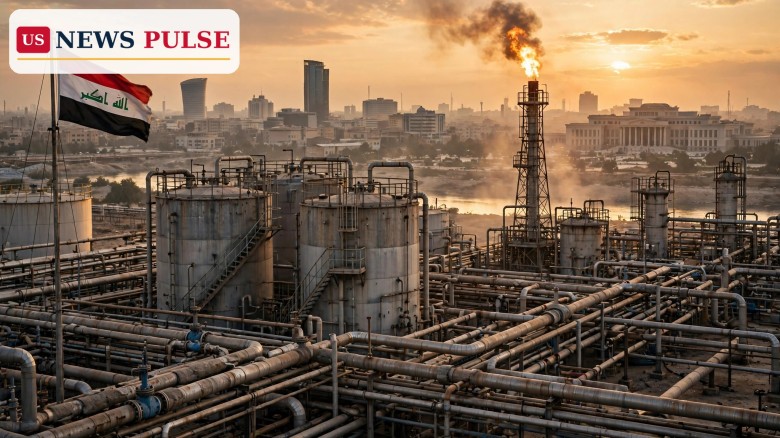
President Donald Trump has thrown his full weight behind Iraqi Prime Minister Ali al-Zaidi's campaign to bring Iraq's oil trade and its armed groups under state control, endorsing a crackdown Baghdad says is aimed at ending years of smuggling that cost the country an estimated $100 billion. In a Truth Social post on Friday, November 27, Trump said the United States supports al-Zaidi's efforts "to assert state authority throughout Iraq, stop the smuggling of Iraqi oil, end corruption, and bring all weapons under the exclusive control of the state." The endorsement comes as Baghdad moves to seize Kurdish-run border crossings and oilfields.
Key Points
- Trump said the US supports al-Zaidi's drive to assert state authority, stop oil smuggling, end corruption and bring all weapons under state control.
- Baghdad estimates Iraq lost $100 billion to oil smuggling through Kurdistan between 2008 and 2025.
- Federal authorities moved this week to take over Kurdish-run crossings and oilfields, closing al-Waleed with Syria and Bashta with Iran on Thursday.
- Iraq's Federal Supreme Court ruled on Wednesday that Baghdad may deploy federal forces along all international borders, including in Kurdistan.
- Thousands of Kurds protested on Thursday, and the army is preparing to enter Jurf al-Sakhar.
What Happened
Trump's backing came in a Truth Social post on Friday, in which he also voiced support for building "a united, prosperous, and strong Iraq that makes its own political decisions." On Tuesday, November 24, al-Zaidi ordered federal authorities to take over Kurdish-run border crossings and oilfields in Kirkuk, Nineveh, Salahuddin and Diyala. On Wednesday, the Federal Supreme Court ruled Baghdad may deploy federal forces along all international borders, including inside the Kurdistan region. On Thursday, Iraq closed two Kurdish-run crossings, al-Waleed with Syria and Bashta with Iran, and thousands of Kurds protested.
A week earlier, al-Zaidi ordered the army to prepare to enter Jurf al-Sakhar, a town south of Baghdad that the government accuses Iran-aligned Kataib Hezbollah of using as a base for a smuggling operation. The group agreed to let soldiers enter. Spokesman Haider al-Aboudi said crude exports bypassing state marketer SOMO count as smuggling because the proceeds never reach the treasury.
Background: Iraq's Long Fight Over Oil and Guns
Oil funds almost the entire federal budget, and control of it has been disputed between Baghdad and the Kurdistan Regional Government for two decades. The Kurdish authorities have long exported crude independently, arguing the constitution gives the region rights over its own resources. Baghdad insists all exports must pass through SOMO, the state oil marketing organisation, and that any sale outside it is smuggling. The $100 billion figure, if accurate, is one of the largest alleged thefts of state resources in the region's history.
The weapons question is just as sensitive. Since the war against the Islamic State, Iraq has lived with armed groups, many aligned with Iran, operating outside full state control. Kataib Hezbollah is among the most powerful, and Jurf al-Sakhar has long symbolised the problem: a town federal forces have been unable to enter freely for years. Al-Zaidi's demand that all weapons come under the exclusive control of the state is a direct challenge to the militias, and Trump's endorsement puts Washington squarely behind it. Al-Zaidi, 41, is a multimillionaire businessman and political novice who came to power in a compromise deal just six months ago. The backdrop is the US-Iran war, now in its ninth month.
Why Trump Backs Iraq's Crackdown Now
Trump's post ties the crackdown to a broader American interest in a stable, sovereign Iraq that is not a corridor for Iranian influence or illicit oil. Washington recently pushed Venezuela and Iraq to leave OPEC, according to Reuters, and has been squeezing the flow of sanctioned oil across the region. A Baghdad that controls its own exports and borders fits that strategy, and a prime minister willing to confront both Kurdish smuggling and Iran-aligned militias is, from Washington's point of view, an ally worth backing publicly.
Reactions
Trump's own words were the clearest statement of the American position. "We support Iraqi Prime Minister Ali al-Zaidi's efforts to assert state authority throughout Iraq, stop the smuggling of Iraqi oil, end corruption, and bring all weapons under the exclusive control of the state," he wrote, adding his support for building "a united, prosperous, and strong Iraq that makes its own political decisions."
The reaction in Kurdistan has been anger. Thousands of Kurds protested on Thursday, and Kurdish officials have long argued the region's oil sales are lawful under the constitution. Kataib Hezbollah agreed to let soldiers into Jurf al-Sakhar, suggesting the group is, for now, avoiding a direct clash with the army. No formal response had come from Tehran by Friday.
Why It Matters
The stakes go well beyond one week's headlines. If Baghdad succeeds in channelling all oil exports through SOMO, it would recover revenue that could transform Iraq's finances. If it brings the militias' weapons under state control, it would settle the question that has defined Iraqi politics for a decade: who really holds power, the elected government or the armed groups. If it fails, the confrontation could deepen the rift with Kurdistan and hand Iran-aligned factions a reason to escalate.
What Happens Next
The immediate test is Jurf al-Sakhar, where the army is preparing to enter a town long held by Kataib Hezbollah, and the closed crossings at al-Waleed and Bashta, where federal forces must establish control without provoking Kurdish security forces. Kurdish leaders must decide whether to challenge the Supreme Court's ruling in court, on the streets, or through negotiation, and the militias must decide whether Jurf al-Sakhar is a one-off concession or the start of a wider retreat.
Frequently Asked Questions
Who is Ali al-Zaidi?
Iraq's prime minister, a 41-year-old multimillionaire businessman and political novice who took power in a compromise deal six months ago.
What is the $100 billion figure?
Baghdad estimates Iraq lost $100 billion to oil smuggling through the Kurdistan region between 2008 and 2025, per the Federal Board of Supreme Audit.
Why is Kurdistan involved?
The Kurdistan Regional Government has exported crude independently for years. Baghdad says all exports must go through state marketer SOMO.
What is Jurf al-Sakhar?
A town south of Baghdad that the government accuses Iran-aligned Kataib Hezbollah of using as a smuggling base. The army is preparing to enter it.
What did Trump actually say?
On Truth Social on Friday, he wrote that the US supports al-Zaidi's efforts "to assert state authority throughout Iraq, stop the smuggling of Iraqi oil, end corruption, and bring all weapons under the exclusive control of the state."
Related coverage: Iraqi forces enter Kataib Hezbollah stronghold Jurf al-Sakhar after oil probe; Drone attack halts Iraq's Khor Mor gas field, cutting two-thirds of Kurdistan power; US pushed Venezuela and Iraq to leave OPEC, Reuters reports, MBS intervened.
© 2026 US News Pulse. All rights reserved.
 Print
 Save