
Justice Department Apologizes to the Judge in Ilhan Omar Home Search Case
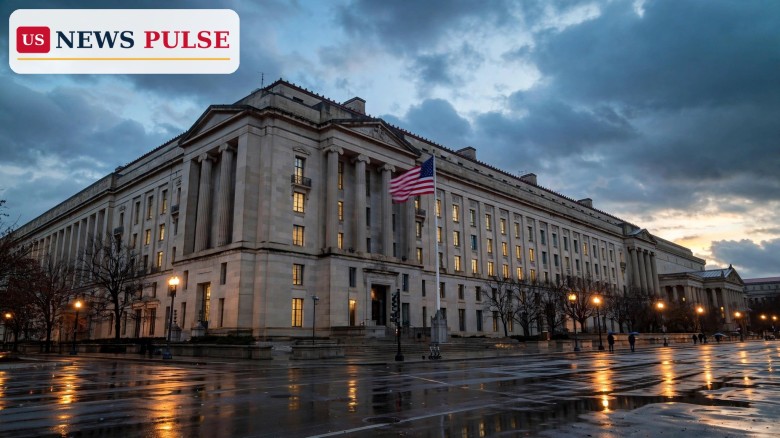
The United States Department of Justice has apologized to a federal judge after telling the court something untrue about the House of Representatives' top lawyer and the search of Rep. Ilhan Omar's Washington home. In a filing submitted Tuesday, November 24, 2026, prosecutors admitted they misstated the position of House General Counsel Matthew Berry, conceding he "took no position" on whether the Constitution's Speech or Debate Clause protects a lawmaker's private home. The apology came a day after a judge ordered 169 heavily redacted pages of search records released.
Key Points
- The Justice Department told a court that House General Counsel Matthew Berry had "refused to be involved" in the search of Rep. Ilhan Omar's home and agreed the Speech or Debate Clause did not protect it.
- Berry called that account "categorically false," saying his October 11 email took no position on the clause.
- In a November 24 filing, prosecutors conceded Berry "took no position" and wrote: "The United States apologizes for this inadvertent misunderstanding."
- The apology came one day after a judge ordered 169 heavily redacted pages of search-warrant records unsealed.
- Omar has not been charged with any crime as of November 25, although a federal grand jury has been empanelled in Washington.
What Happened
The apology came in a filing submitted November 24, 2026, by Peter Pfaffenroth and Alessandra Serano, senior officials in the U.S. attorney's office for the District of Columbia. It corrected an account prosecutors had given the court about Berry, the House's lawyer since 2023. They had told the court he had "refused to be involved" in the search and agreed with the administration that the Speech or Debate Clause does not protect a lawmaker's private home.
Berry, a Republican appointee, called that account "categorically false." His October 11 email said only that his office does not represent targets of criminal investigations; it took no position on the clause. The new filing accepted his version, conceded he "took no position," and apologized. The correction matters because the House counsel's office is the institutional voice of the House in court, and a statement attributed to it carries weight with a judge deciding whether the search was lawful.
Background: The Search of Omar's Home
Homeland Security Investigations agents searched Omar's Washington home on October 12, 2026, as part of an investigation into potential violations dating back to 1980. The search of a sitting member of Congress's home is an extraordinary step, and it raised immediate questions about the Speech or Debate Clause, which protects lawmakers from being questioned about their legislative acts. Omar, a Democrat representing Minnesota's 5th District, was re-elected to a fifth term on November 3.
At a hearing on November 17, Chief U.S. District Judge James Boasberg said he would order the search warrant and related records unsealed in part. On November 23, he ordered 169 heavily redacted pages released. The apology followed the next day, and Boasberg is still weighing whether more records should be released. The New York Post also reported that week that a federal grand jury has been empanelled in Washington to consider evidence from the U.S. attorney's offices in Washington and Minnesota.
Justice Department Apologizes Over Ilhan Omar Home Search
The apology was brief but unambiguous. The filing did not dispute Berry's account, offer another reading of his email, or suggest the error was deliberate. It called it an "inadvertent misunderstanding" and corrected the record. That matters for two reasons. First, lawyers before a federal court must be accurate about other parties' positions, and a misattribution involving the House's own lawyer is not minor. Second, the clause is central to the dispute: whether it protects a lawmaker's home could decide which materials seized on October 12 prosecutors may use. Berry's real position was narrow and institutional: his office does not represent investigation targets, so it would not join Omar's defence. The filing was signed by Pfaffenroth and Serano, senior officials in the Washington U.S. attorney's office, signalling that the correction came from the office's leadership.
Reactions
Berry's response was blunt: he called the account "categorically false," leaving no room for a difference of interpretation. His objection was not to the administration's view of the clause, but to the claim that he shared it. For the House's lawyer, whose job is to speak for the institution rather than any one member, being cast as having taken a side in a criminal investigation of a sitting representative was a serious misrepresentation. The department conceded the point in full. It closes the dispute over what Berry said, even as the larger fight over the search continues.
Why It Matters
The apology touches the constitutional protections around Congress's work. The Speech or Debate Clause, in Article I, shields lawmakers from being questioned elsewhere about their speeches, debates and legislative acts, so the executive cannot use criminal process to punish members for their work. Whether it protects a lawmaker's private home is an open, consequential question: if it does, some material seized from Omar's home may be off limits to prosecutors; if not, the search stands on firmer ground. The episode is also a test of the Justice Department's credibility with the courts.
What Happens Next
Judge Boasberg is still weighing whether more search records should be released, and further unsealing orders could follow in the coming weeks. Each release is likely to be heavily redacted while the investigation continues, but even partial disclosures could shed light on what investigators sought on October 12. The federal grand jury in Washington will keep considering evidence from the U.S. attorney's offices in the District of Columbia and Minnesota; its proceedings are secret, so there may be no public sign of its work until it acts. Omar has not been charged, and there is no public timetable. A judge ordered the search-warrant records unsealed on November 23, and a federal grand jury is hearing evidence in the Minnesota probe.
Frequently Asked Questions
Why did the Justice Department apologize?
It told a court that House General Counsel Matthew Berry had "refused to be involved" in the search of Rep. Ilhan Omar's home and agreed with the administration on the Speech or Debate Clause. Berry called that "categorically false," and the department conceded he "took no position."
What did it originally tell the court?
That Berry had refused to be involved and agreed the clause does not protect a lawmaker's private home. Berry said his October 11 email only noted his office does not represent investigation targets.
What is the Speech or Debate Clause?
An Article I provision protecting members of Congress from being questioned outside Congress about their speeches, debates and legislative acts. Whether it shields a lawmaker's home is central to this dispute.
Has Ilhan Omar been charged?
No. As of November 25, Omar had not been charged, although a federal grand jury in Washington has been empanelled to consider evidence from Washington and Minnesota prosecutors.
What happens to the search records?
Judge James Boasberg ordered 169 heavily redacted pages unsealed on November 23 and is weighing whether to release more. Further orders could follow as the investigation continues.
Related coverage: Senate confirms Judge Daniel Domenico to the Tenth Circuit 51-46.
© 2026 US News Pulse. All rights reserved.
 Print
 Save