
Tesla Moves to Acquire German Robotics Supplier EMAG to Power Its Optimus Humanoid Robots
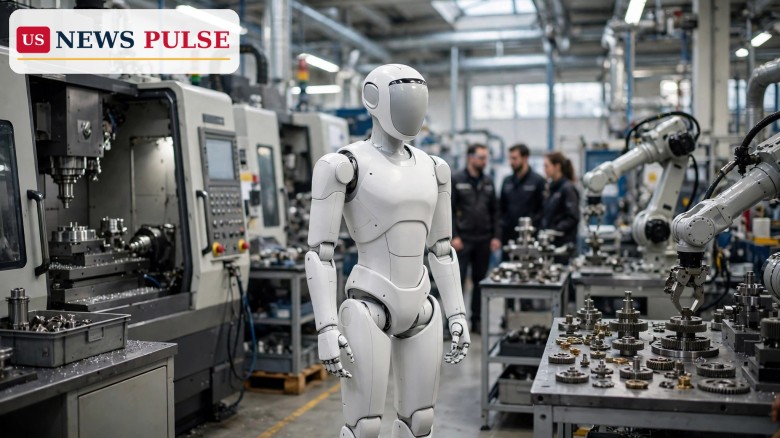
Tesla has filed plans to acquire EMAG, a German manufacturing systems supplier whose machines make the precision drive parts at the heart of its Optimus humanoid robot. A filing with Germany's antitrust authority, the Bundeskartellamt, published on Friday, November 27, 2026, showed Tesla's plan to take over the Salach-based company, according to Reuters. The Tesla EMAG acquisition would deepen Tesla's manufacturing footprint in Germany and hand it the machines and engineers behind the flexsplines, wave generators and planetary gears that let a humanoid robot move.
Key Points
- Tesla filed plans with Germany's Bundeskartellamt on Friday, November 27, 2026, to acquire EMAG, a manufacturing systems supplier based in Salach, near Stuttgart.
- EMAG builds machines for high-volume production of humanoid-robot drive parts: flexsplines, wave generators and planetary gears.
- No financial terms were disclosed, and neither Tesla nor EMAG has issued an official statement.
- Tesla has registered Tesla Machining Technologies Management SE at EMAG's Salach headquarters, with 120,000 euros in share capital.
- Local media report about 220 EMAG employees could transfer to Tesla if the deal goes ahead.
What Happened
The plan emerged in a filing with the Bundeskartellamt, Germany's federal cartel office, published on Friday and first reported by Reuters. It shows Tesla intends to acquire EMAG, a privately held supplier of manufacturing systems headquartered in Salach, near Stuttgart in Baden-Württemberg. The filing discloses no price, and neither company has commented publicly.
Tesla has also set up a new German entity, Tesla Machining Technologies Management SE, registered at EMAG's Salach headquarters with share capital of 120,000 euros. Local media report around 220 EMAG employees could move to Tesla if the deal proceeds. EMAG is financially strained, restructuring and looking for investors — which helps explain why a takeover is on the table.
Background: Why Robot Joints Are the Hard Part
Tesla's Optimus programme is the company's bet that humanoid robots will one day be as important as its cars. The robot is designed for repetitive or dangerous work in factories and, eventually, in homes, and Tesla says it wants to build the robots in large numbers at its own plants.
The hardest part is not the robot's software, but the hardware inside its joints. A humanoid robot needs dozens of compact, powerful actuators, each depending on precision gearing — flexsplines, wave generators and planetary gears — machined to micron tolerances. Only a handful of specialist suppliers in Germany and Japan can produce the machines that make them at volume.
Germany is the natural place to buy that capability: the Stuttgart region is the heart of the country's machine-tool industry. Tesla already has a manufacturing base there and has bought German know-how before, acquiring assets and staff from Manz AG. The EMAG move follows the same playbook — buy the machines and the people who run them — and would give the strained EMAG a deep-pocketed owner and a guaranteed customer in Optimus.
What the Tesla EMAG Acquisition Means for Optimus
For Optimus, the deal is about control of the supply chain. Tesla has spoken openly about wanting to produce humanoid robots at scale, and the drive system is the component most likely to limit how fast it can do that. Owning EMAG would let Tesla set its own production schedules, protect its designs and keep the most specialised manufacturing knowledge in-house.
It also signals how seriously Tesla takes the robot's timeline. Buying a machine-tool maker is a long-term investment: integrating EMAG's equipment and roughly 220 employees would take months. But it removes a dependency that could otherwise have slowed Optimus for years, and the Salach plant would become a small but strategic part of Tesla's global network — a German engineering base feeding an American robot programme.
Reactions
Neither company has said anything publicly. Tesla has issued no statement and EMAG has not commented either — the only public trace of the plan is the Bundeskartellamt filing and the registration of the new Tesla entity at EMAG's address. That silence is normal: filings are published before a deal is final, and companies often say nothing until the regulator's review is under way.
Local media in the Stuttgart region report that about 220 EMAG employees could transfer to Tesla. For a company in restructuring, that matters: a transfer would preserve skilled jobs in Salach rather than leaving them exposed if EMAG were wound down or sold in pieces.
The filing now goes through the Bundeskartellamt's review of whether a takeover would harm competition. As EMAG is a specialist supplier and Tesla is buying manufacturing capacity rather than a rival carmaker, the review is not expected to be the main obstacle — but the authority has not said when it will decide, and no closing date has been announced.
Why It Matters
The deal matters because it shows where the humanoid robot race will be won: not in software demonstrations, but in factories. The companies that can make precision drive parts at volume will be the ones that can ship robots at volume, and Tesla is moving to own that capability outright.
It also matters for Germany. The Stuttgart region's machine-tool makers are the quiet backbone of European industry, and a Tesla takeover would put one of them under American ownership while Berlin debates how open it should be to foreign buyers of industrial technology. The fate of EMAG's 220 employees will be watched closely in Baden-Württemberg.
For Tesla's investors, the move fits a wider pattern: the company is spending to control more of its own supply chain, from batteries to robots. It comes as Tesla's other bets keep moving — its Cybercab robotaxi has gone on sale, Cybertruck production is winding down in favour of robotaxis, and merger talks with SpaceX are advancing — and Optimus is next in line to come in-house.
What Happens Next
The Bundeskartellamt will review the filing, and Tesla and EMAG are expected to say more once the regulator's process is under way. Watch for a purchase price, which has not been disclosed; for confirmation of how many EMAG employees would transfer; and for any statement about what the Salach plant will make first. If the deal is cleared, integrating the plant and its workforce is the next step — the first test of whether Tesla can turn a German machine-tool maker into the engine room of Optimus.
Frequently Asked Questions
What is Tesla buying?
Tesla has filed plans to acquire EMAG, a German manufacturing systems supplier based in Salach, near Stuttgart, which makes machines for high-volume production of humanoid-robot drive parts.
How much is Tesla paying for EMAG?
No financial terms have been disclosed, and neither Tesla nor EMAG has issued an official statement about the deal.
What does EMAG make for Optimus?
EMAG builds the machines that produce the precision gearing inside a humanoid robot's joints — flexsplines, wave generators and planetary gears.
What happens to EMAG's employees?
Local media report about 220 EMAG employees could transfer to Tesla if the deal goes ahead; Tesla has registered a new company at EMAG's Salach headquarters.
Does the deal need approval?
Yes. The filing is with Germany's antitrust authority, the Bundeskartellamt, which will review whether the takeover would harm competition. No decision date has been announced.
© 2026 US News Pulse. All rights reserved.
 Print
 Save