
Wall Street Closes Best Week in Over a Year as Tech Stocks Lead Friday Rally
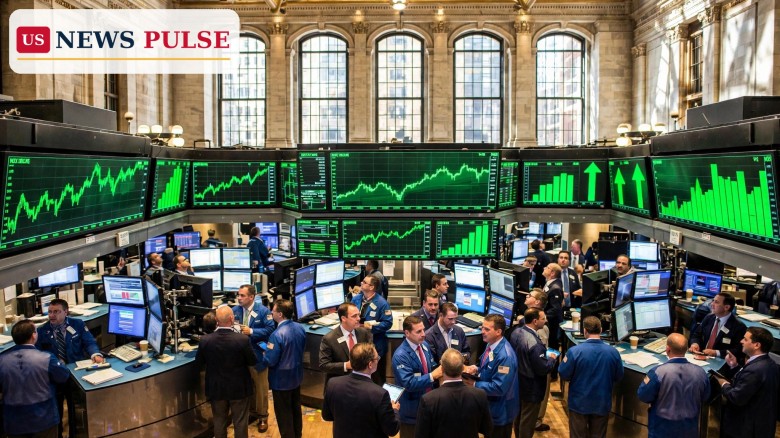
Stocks jumped on Wall Street on Friday, November 27, 2026, closing out the market's best week in more than a year after several days of erratic swings. The S&P 500 rose 1.6 percent to 7,297.49, the Dow Jones Industrial Average gained 591.99 points, or 1.2 percent, to 50,774.94, and the Nasdaq Composite climbed 2.3 percent to 24,129.50 in a holiday-shortened session that ended at 1 p.m. Eastern time.
For the week, the S&P 500 rose 5.6 percent, its strongest weekly gain since April 2025, the Dow added 5.5 percent for its best week since 2022, and the Nasdaq surged 6.7 percent. Four out of five S&P 500 stocks rose on Friday, led by technology, in a sharp turnaround from last week, when the index finished more than 10 percent below its all-time high.
Key Points
- The S&P 500 rose 1.6 percent on Friday to 7,297.49, up 5.6 percent for the week, its best week since April 2025.
- The Dow Jones Industrial Average gained 591.99 points to 50,774.94, up 5.5 percent for the week, its best week since 2022.
- The Nasdaq Composite rose 2.3 percent to 24,129.50, up 6.7 percent for the week.
- Technology led the rally: Micron and Marvell each rose more than 7 percent, Intel and AMD about 5 percent, and Broadcom about 4 percent, while SanDisk soared 16 percent.
- Nvidia finished Friday up 0.8 percent after falling nearly 3 percent early, and remains about 37 percent below its early-October record high.
What Happened
Friday's rally was broad and fast. Trading was thin because of the Thanksgiving holiday, but buyers were in control from the open. Chip stocks did most of the heavy lifting: memory maker Micron and Marvell Technology both jumped more than 7 percent, Intel and Advanced Micro Devices rose roughly 5 percent, and Broadcom added about 4 percent. Chip ETFs gained nearly 5 percent, and a memory-chip ETF surged 8 percent.
SanDisk was the day's standout in the S&P 500, soaring 16 percent, while rivals Western Digital and Seagate each climbed more than 7 percent. Anthropic, the AI lab behind last week's largest IPO ever, jumped 12 percent to just under $92 a share, after closing below its $83 IPO price the previous two sessions. Amazon climbed 4 percent to lead Dow advancers, Meta added 3 percent, and SpaceX and Tesla each rose about 5 percent.
Background and Context
The week opened with a huge Monday rally after Nvidia announced that Jensen Huang was returning as chief executive, a move that lifted the whole market. Stocks then came under pressure for two straight days heading into the Thanksgiving break, before Friday's surge completed the turnaround. The rebound recouped much of the previous week's losses, driven by doubts about AI spending.
Those doubts have not gone away. In recent weeks the Nvidia saga has unnerved investors, and concerns persist about whether the AI-related gains that have powered the market's record-setting run in recent years can be sustained. Just a day earlier, the picture looked very different: Wall Street had tumbled, with the Dow dropping 1,101 points in its sixth straight loss. The S&P 500 and Nasdaq had not had a week this strong since the spring of 2025, amid tariff swings, and the Dow not since 2022.
Wall Street Best Week Caps a Volatile Month for Investors
The best week in more than a year does not erase the damage of the past month, but it changes the shape of it. The S&P 500 is still below the record it set last month, and the Nasdaq remains well off its peak after the October sell-off in AI stocks. Friday stopped the slide and restored confidence after a week in which the market had seemed to be falling apart. With four out of five S&P 500 stocks rising, the rally was not just a handful of giant technology names dragging the indexes higher: chipmakers, memory producers, software companies and consumer names all moved up together, and even Anthropic jumped back above $90.
Reactions
The market's reaction was visible in the parts of the market that had been hit hardest. Memory-chip stocks led the way, with SanDisk, Western Digital and Seagate posting some of their biggest single-day gains of the year, and the semiconductor ETF's near-5-percent jump showed buyers returning to the sector that had driven the sell-off. Anthropic's 12 percent rebound mattered too: its shares had fallen below the $83 IPO price after last week's debut, despite reaching $115 on day one. The rally did not settle the debate over AI spending, though, and gold's jump to $3,635 an ounce, off a 14-month low, showed plenty of investors are still hedging.
Why It Matters
For most Americans, the week matters because it shows up in retirement accounts: the S&P 500 sits at the heart of most 401(k) plans, so a 5.6 percent weekly gain repairs a visible chunk of last week's losses. A steadier market also supports holiday shopping: Black Friday online spending already reached $82.5 billion. It also matters for the Federal Reserve: the 10-year Treasury yield rose to 4.94 percent on Friday, and the next test comes with the December jobs data and the Fed's final meeting of the year. The rally also comes against a nervous backdrop: US equity funds suffered $30.57 billion in outflows in their worst week in 11 weeks, a sign many fund investors were exiting even as the market turned.
What Happens Next
Markets return to a full session on Monday, and the first test will be whether Friday's gains hold once trading volumes return to normal. Investors will watch Nvidia: Huang is due at its GTC DC conference on December 1, plus congressional briefings that week, a closed House session December 1 and a public Senate Banking hearing December 3. December brings the monthly jobs report, the Fed's final rate decision of the year, and Anthropic's first full month as a public company. If the AI spending debate flares up again, the best week in over a year could prove a pause, not a turning point.
Frequently Asked Questions
How much did the S&P 500 rise this week?
The S&P 500 rose 5.6 percent for the week, its best weekly gain since April 2025, closing Friday at 7,297.49 after a 1.6 percent rise on the day.
Why did stocks rise so sharply on Friday?
Technology led the way: chipmakers and memory producers surged, Anthropic rebounded 12 percent, and Amazon, Meta and Tesla all rose, following Monday's surge after Nvidia announced Jensen Huang's return as chief executive.
Is the stock market back at its record high?
No. The S&P 500 is still below the all-time high it set last month, and last week it finished more than 10 percent below that peak. Nvidia remains about 37 percent below its record high from early October.
What should investors watch next?
Monday's full session, Nvidia's GTC DC conference and congressional briefings in early December, the jobs report, and the Fed's final rate decision of the year.
© 2026 US News Pulse. All rights reserved.
 Print
 Save