
EPA Finds No Lead in Iowa Drinking Water After Lead Azide Blast, Lab Results Show
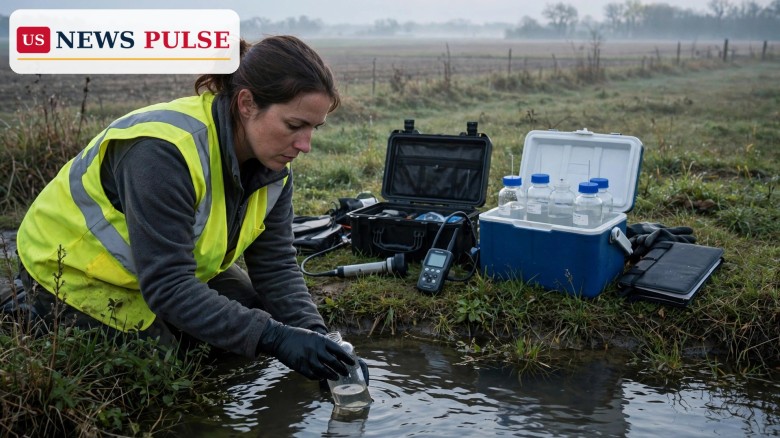
The Environmental Protection Agency has found no lead in the drinking-water sources tested after the Army's controlled detonation of nearly five tons of degraded lead azide in Iowa, the first laboratory results from the blast show. The agency said on Saturday, November 28, 2026, that none of the 38 post-detonation samples at public water supplies contained lead, covering drinking water and untreated water at the intake. It is the second clean bill of health in three days, after EPA air monitors recorded zero airborne lead for 30 consecutive hours.
Key Points
- The EPA found no lead in 38 post-detonation water samples at water supplies in Iowa, Illinois and Missouri.
- The samples covered finished treated drinking water and untreated water at the intake.
- Four pre-blast samples showed low lead, 1.13 to 2.12 parts per billion, well below the EPA's 15 ppb action level.
- More than 3,200 samples collected; post-detonation sampling is complete at 88 percent of homes sampled before the blast.
- Tap water, soil and dust results are still pending, to be posted at epa.gov/IowaData.
What Happened
The EPA released the initial water-source lab results on Saturday, November 28, three days after the Army detonated 68 barrels of unstable lead azide at the Iowa Army Ammunition Plant on Wednesday, November 25. The finding was unambiguous: the detonation did not elevate lead in water bodies that serve as sources of drinking water.
Before the blast, the EPA sampled 35 drinking-water sources across Iowa, Illinois and Missouri to set a baseline. None was within the plume's actual path, and all were untreated source water; the agency is sharing the data publicly for transparency. Four pre-detonation samples did contain low lead: Mark Twain Lake in Missouri at 1.62 parts per billion, the Illinois River at 1.13 ppb, and the Mississippi River in Illinois at 1.36 ppb and 2.12 ppb. All four are far below the EPA's 15 ppb lead action level, and treatment should reduce lead further before it reaches taps. The lead was present before Wednesday's detonation, so it was not caused by the explosion.
Background: The Long Road to Wednesday's Blast
The Army first planned to detonate 68 barrels, nearly 9,500 pounds, of the unstable explosive, stored for more than 20 years and too dangerous to move. The plan was postponed after a lawsuit and public outcry, the Eighth Circuit blocked it, and President Donald Trump ordered the Army to halt the blast until the court agreed. When the court cleared the way, the Army detonated the barrels on Wednesday, November 25, in a blast Major General Eric P. Shirley called "tremendously successful".
The EPA's air monitoring gave the first reassurance. Its real-time Xact monitors reported 0.0 micrograms per cubic metre of airborne lead for 30 consecutive hours after the blast, and EPA Administrator Lee Zeldin called it a "best case scenario" in a Fox News interview on Friday, November 27: "We only have measurements of 0.0, sometimes referred to as zero detect, sometimes referred to as non detect." Then, on Thursday, The New York Times reported that Army records show the service knew the deteriorating lead azide was dangerous as far back as 2009, not March 2026 as the Army had claimed. The White House has opened an inquiry into why senior officials were not told sooner.
EPA Finds No Lead in Iowa Drinking Water: What the First Lab Results Mean
Water was always the second fear after air. When the Army first announced the detonation, it warned of a toxic lead-dust plume that could travel up to 100 miles, and the Iowa Army Ammunition Plant sits in the Mississippi River watershed, where the drinking-water intakes of towns across three states draw their supply. A clean air result would have meant little if the blast had washed lead into those rivers and lakes.
The clean result is real, but it is also narrow. It covers water sources, not the taps inside people's homes, nor the soil and dust that may have settled around Middletown: tap water, soil and dust results are still being validated and will be posted at epa.gov/IowaData. The four pre-blast detections are a reminder that low levels of lead already exist in American waterways. What the new results settle is the question that mattered most after Wednesday: the detonation itself did not add lead to the drinking-water sources.
Reactions
The agency states plainly that the detonation did not elevate lead in drinking-water sources, and it is publishing the baseline data even for locations outside the plume's path to ensure transparency. It also notes that it cannot determine the original source of the low-level lead in the four pre-blast samples.
For Middletown residents, the water result is the second piece of good news in three days. The Army has pointed to the blast's success, with Major General Shirley calling it "tremendously successful" on Wednesday. Governor Kim Reynolds has not yet commented on the water results.
Why It Matters
Drinking water is the fear that lingered after the air cleared: a plume can be measured in real time, but lead in a river is invisible, and it is the water people drink. That is why the EPA sampled before the blast as well as after it: without a baseline, the results would have proved nothing. The 38 clean post-detonation samples, set against the four low pre-blast readings, prove the explosion did not contaminate the water supply.
It also matters for trust. The detonation was fought in court and carried out over residents' objections. Publishing the full baseline, including the four detections that predate the blast, is the transparency that makes the clean result believable. But the story is not finished: until the tap water, soil and dust results arrive, the all-clear covers the sources, not the homes.
What Happens Next
The next results will come from the labs in the coming days, as the EPA receives, validates and releases post-detonation data on water from taps, soil and dust at epa.gov/IowaData. Sampling teams have completed post-detonation sampling at 88 percent of the homes sampled before the blast, with 187 structures re-sampled so far, along with 27 parks, schools, daycares and churches. The White House inquiry into why senior officials were not told sooner about a danger known since 2009 will be the next focus.
Frequently Asked Questions
Did the Iowa lead azide blast contaminate drinking water?
No. The EPA found no lead in any of the 38 post-detonation water samples at public water supplies.
Was any lead found in the water at all?
Yes, before the blast: four pre-detonation samples showed 1.13 to 2.12 parts per billion, well below the EPA's 15 ppb action level.
How many samples has the EPA collected?
More than 3,200: 1,632 before the detonation and 1,607 after, as of 5:45 p.m. CT on Friday, November 28.
What results are still pending?
Tap water, soil and dust results are still being validated and will be posted at epa.gov/IowaData.
Did the blast release lead into the air?
No. EPA monitors recorded 0.0 micrograms per cubic metre of airborne lead for 30 consecutive hours.
Related coverage: EPA Finds Zero Airborne Lead After Iowa Lead Azide Blast, Iowa Lead Azide Detonation Succeeds as Army Blasts 68 Barrels.
© 2026 US News Pulse. All rights reserved.
 Print
 Save