
Sept. 11 'Poison Pill' Clause Gives Defendants New Opening to Avoid Death Penalty
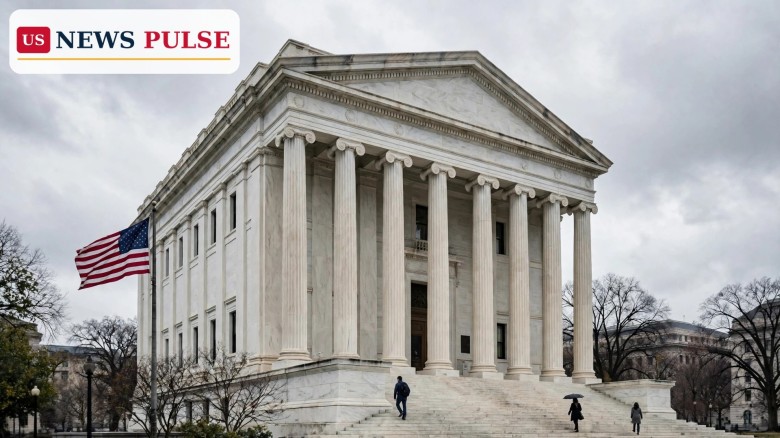
A federal appeals court has handed the three men accused of plotting the September 11 attacks a new opening to escape the death penalty, ruling that a hidden clause in their dead plea deals must be considered by the military judge. The US Court of Appeals for the D.C. Circuit said that it never addressed the so-called "poison pill" clause in the 2024 plea agreements for Khalid Sheikh Mohammed, Walid bin Attash and Mustafa al-Hawsawi. Under the clause, as the defendants read it, if the government breached the deal, the case would go forward without the death penalty, with life in prison as the maximum sentence.
Key Points
- The D.C. Circuit ruled the judge must consider the "poison pill" clause in the dead 2024 plea deals.
- As the defendants read it, the clause caps any sentence at life in prison after a government breach.
- The court did not decide what the clause means; its exact text has never been made public.
- Approved July 31, 2024, the deals were revoked two days later by then-Defense Secretary Lloyd Austin.
- Trial is set for June 5, 2028; five charges carry the death penalty.
What Happened
The D.C. Circuit issued its order this week, reported on November 25, 2026. The court held that it had never addressed the "poison pill" clause, and that the clause could not simply be ignored. The military judge had refused to consider it at all. The appeals court disagreed and sent the question back to the judge.
The ruling is narrow. It did not decide whether the clause means what the defendants say, or whether the government breached the deals. It decided only that the clause must be considered. Its exact wording has never been made public, so the fight over what it says will now take place in court. For the defendants, it reopens a door that had looked closed: the deals have been treated as dead for more than a year. Their argument: even a cancelled deal has consequences — if the government broke it, it cannot seek the death penalty it gave up.
Background: The Sept. 11 Plea Deals and the Death Penalty
Struck in the summer of 2024, the plea deals would have seen Mohammed, bin Attash and al-Hawsawi plead guilty and receive life sentences, with the death penalty off the table. They were approved on July 31, 2024, by the convening authority, Brig. Gen. Susan Escallier. Two days later, then-Defense Secretary Lloyd Austin revoked them, saying the victims' families and the public deserved a trial.
The revocation set off a legal battle now more than two years old. The D.C. Circuit backed Austin in July 2025, ruling 2-1 that he acted within his authority. The Supreme Court declined to intervene on October 19, 2026. Through all of it, the "poison pill" clause was never decided — until now.
The case is one of the longest-running in American legal history. Mohammed, accused of masterminding the September 11, 2001 attacks that killed nearly 3,000 people, and his co-defendants have been held at Guantanamo Bay for years, with pretrial proceedings dragging on through disputes over evidence and interrogation methods. The CIA's interrogation programme has loomed over the case from the start, The base remains a symbol of the post-9/11 detention system: the Pentagon recently spent $81 million holding fewer than 900 migrants there. A guilty plea would have ended the case without a trial. Austin's decision put the death penalty back on the table, and trial was set for June 5, 2028. Five charges in the case carry the death penalty.
Reactions: What Each Side Argues
The defendants say the "poison pill" clause is straightforward: the plea agreements promised that if the government breached the deal, the prosecution would go forward as a non-capital case, with life in prison as the maximum. On that reading, Austin's cancellation is itself the breach that triggers the clause — and the death penalty is already gone.
The government's position, which prevailed in the July 2025 ruling, is that Austin acted lawfully when he revoked the deals, and that a cancelled agreement cannot bind the prosecution. The D.C. Circuit's 2-1 decision last year accepted that the defence secretary had the authority to step in and cancel an agreement approved by the convening authority. The government has not conceded the clause says what the defendants claim; its text has never been made public. The new ruling takes neither side: it says only that the judge must hear the argument — a win for the defence, but not a ruling that the death penalty is off the table.
Why It Matters
The ruling matters because it could decide the most consequential question in the most high-profile capital case in the country: whether the men accused of the September 11 attacks can be executed. More than 25 years after the attacks, there has still been no trial. A ruling that the clause removes the death penalty would turn a capital case into a fight over life sentences.
It matters, too, for the victims' families, who have waited a quarter of a century for a verdict and now face the possibility that the punishment at stake will be decided by a clause they have never seen. It also matters for plea deals in the military commissions: if a clause in a cancelled agreement can still limit the prosecution, it will shape how future agreements are written.
What Happens Next
The case now goes back to the military judge at Guantanamo Bay, who must consider the "poison pill" clause for the first time. The next fight will be over interpretation: what the clause says, whether Austin's cancellation of the deals counts as a breach, and whether a breach strips the death penalty from the case. Either side could appeal the judge's decision back to the D.C. Circuit. That process could take months, and it could put pressure on the trial date of June 5, 2028. Until the clause is interpreted, the central question remains open: will the three defendants face the death penalty, or life in prison at most?
Frequently Asked Questions
What is the "poison pill" clause?
A clause in the dead 2024 plea deals. As the defendants read it, a government breach would make the case non-capital, with life in prison as the maximum. Its exact text has never been made public.
Who are the three defendants?
Khalid Sheikh Mohammed, accused of masterminding the September 11, 2001 attacks, with co-defendants Walid bin Attash and Mustafa al-Hawsawi — all held at Guantanamo Bay.
Why were the plea deals cancelled?
Approved July 31, 2024, they offered life sentences for guilty pleas. Then-Defense Secretary Lloyd Austin revoked them two days later; the D.C. Circuit backed him 2-1 in July 2025.
What did the appeals court actually decide?
Only that the judge must consider the clause. It did not rule on what the clause means or whether the government breached the deals.
When is the trial?
Trial is set for June 5, 2028, before a military commission at Guantanamo Bay. Five charges carry the death penalty, and capital punishment remains in active use.
© 2026 US News Pulse. All rights reserved.
 Print
 Save