
Pentagon Weighs Future of Bahrain Naval Base After $400 Million in Iran Strikes
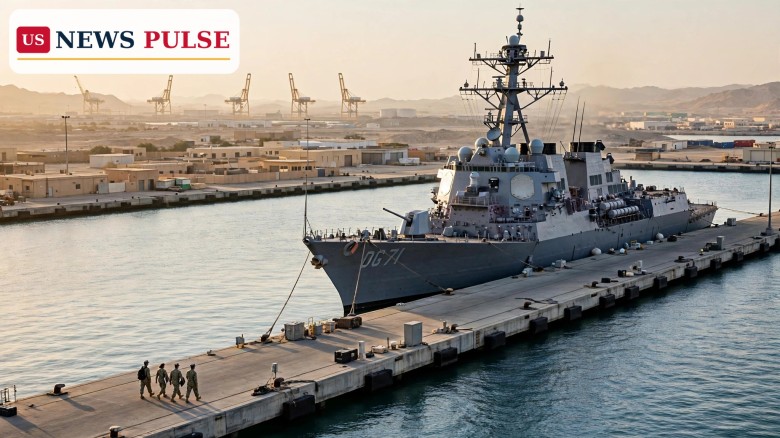
The Pentagon is weighing the future of its naval headquarters in Bahrain after nine months of Iranian missile and drone attacks left the base with at least $400 million in damage, the Washington Post reported on Friday. Naval Support Activity Bahrain, home to US Naval Forces Central Command and the US 5th Fleet, has been largely emptied since the war began in late February, with only a small fraction of the more than 8,000 service members, dependents and civilian contractors who once lived and worked there still on the island. Officials are now weighing a move to Israel or Jordan, or running Middle East operations from the United States, as Tehran resumes its strikes.
Key Points
- The Pentagon is reassessing the future of Naval Support Activity Bahrain, headquarters of the US 5th Fleet, after nine months of Iranian attacks.
- A Congressional Research Service estimate puts damage to the base at $400 million or more, with destruction still visible from nearby highways.
- Only a small fraction of the 8,000-plus personnel, dependents and contractors once based there remain.
- The Pentagon is weighing a move of forces to Israel or Jordan, though no decision has been made.
- Two civilians were killed and dozens wounded in Iranian attacks on Bahrain, including two War Department employees.
What Happened
The Washington Post reported on Friday, November 27, that the Pentagon is reassessing the future of its Bahrain base. The installation has been hit repeatedly by Iranian missiles and drones since the conflict began, and a Congressional Research Service estimate puts the damage at $400 million or more. The destruction is still visible from nearby highways.
Two Navy officials told the newspaper that the service only recently began evaluating its future presence in Bahrain, and that no decision has been made. One option is shifting forces from the Persian Gulf to Israel or Jordan. Another is to direct Middle East operations from the United States without fully rebuilding the base. One official was blunt about the state of the installation: "Until all of this is resolved, we're not going anywhere near there."
Background: The Bahrain Naval Base Under Fire
Bahrain has hosted an American naval command headquarters since 1948, and the base at Manama has grown into the nerve centre of US naval power in the Middle East. It is the headquarters of Naval Forces Central Command and the 5th Fleet, which oversees operations across the Gulf, the Red Sea and the Indian Ocean, including the blockade of Iranian shipping.
The base was among the first targets when the war with Iran began on February 28, 2026. Families were evacuated in March, with roughly 1,250 to 1,450 dependents moved out of the kingdom. The evacuation later drew demands for answers from Democrats in Congress, after reports that families had been left stranded with little support.
The $400 million damage figure has been cited repeatedly in Washington. Acting Navy Secretary Hung Cao acknowledged it at his Senate confirmation hearing on November 17, saying he could not give a full assessment because the area was not safe to visit, months after telling a reporter that Iran had "blew the hell out of Bahrain". Two days later, the Pentagon's deputy comptroller told the Senate the overall war cost had reached $48.3 billion, excluding damage to bases attacked by Iran.
The attacks have not stopped. Iran launched drones at US installations in Bahrain on November 13 and again on November 15, and in recent weeks Tehran has resumed strikes on the kingdom, most recently targeting Patriot air-defence radars at two bases in Bahrain last week. The USS Theodore Roosevelt arrived in the region on November 15 as a third American aircraft carrier in the region.
Reactions: What Officials Are Saying
The Navy officials who spoke to the Post described a service only now coming to grips with the scale of the problem. The evaluation of the base's future began recently, they said, and no decision has been made about whether to rebuild, relocate or run operations from elsewhere. The message was blunt: the base is damaged, the threat remains, and the people who would have to live there are mostly gone.
The Pentagon has not announced a decision, and the options on the table point in very different directions. Moving forces to Israel or Jordan would keep American ships and sailors in the region but shift the centre of gravity away from the Gulf. Directing operations from the United States would be a far bigger break, ending nearly eight decades of a permanent naval headquarters in Bahrain.
Why It Matters
The future of the Bahrain base is about more than one installation. For nearly 80 years it has been the anchor of the American military presence in the Gulf, the place from which the Navy watches the Strait of Hormuz, escorts shipping and enforces the blockade of Iran. If the Pentagon walks away from it, or even scales it back sharply, the balance of power in the region shifts, and America's Gulf allies will read the move closely.
It also matters because the damage is a direct measure of what nine months of war has cost. A $400 million repair bill for a single base, on top of a $48.3 billion war, shows how the conflict has eaten into the Navy's resources at a time when the service says it has only 286 ships against a requirement of 355.
What Happens Next
The Pentagon's review is still at an early stage, and the two Navy officials who spoke to the Post said the service only recently began evaluating its options. A decision is not expected imminently, and much will depend on whether the fighting continues and whether Iran keeps striking the kingdom. If the attacks resume at the pace seen in November, the case for moving will grow stronger.
Watch in the coming weeks whether the Navy shifts ships and staff to other ports in the region, whether the Pentagon seeks reconstruction funding from Congress, and whether Bahrain's government speaks publicly on the future of a base it has hosted since 1948. For now, the 5th Fleet's headquarters sits largely empty, its future undecided.
Frequently Asked Questions
What is Naval Support Activity Bahrain?
It is the headquarters of US Naval Forces Central Command and the US 5th Fleet, the Navy's command for the Middle East, based in Manama, Bahrain. The United States has had a naval command headquarters in Bahrain since 1948.
How much damage has the base suffered?
A Congressional Research Service estimate puts the damage at $400 million or more after nine months of Iranian attacks.
Where would US forces go if they leave Bahrain?
The Pentagon is weighing shifting forces to Israel or Jordan, or directing Middle East operations from the United States. No decision has been made.
How many people are still at the base?
Only a small fraction of the more than 8,000 military personnel, dependents and civilian contractors once based there remain.
Are Iranian attacks on Bahrain continuing?
Yes. Tehran has resumed strikes on Bahrain in recent weeks, most recently targeting Patriot air-defence radars at two bases last week.
© 2026 US News Pulse. All rights reserved.
 Print
 Save