
Iran Rial Hits Record Low Near 3 Million to the Dollar as Sanctions Bite
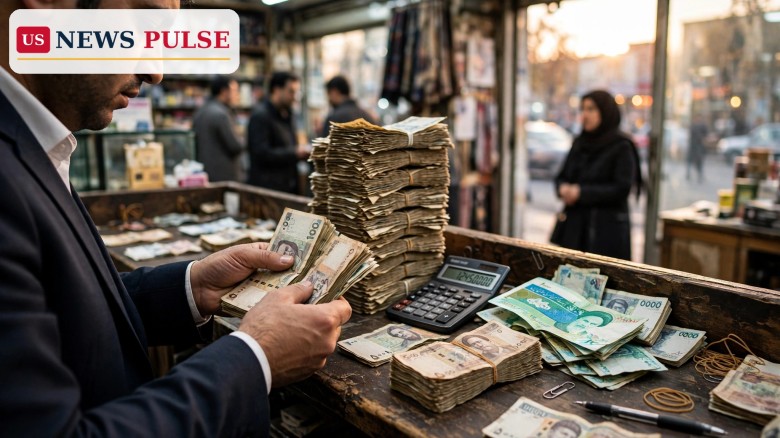
Iran's currency collapsed to a record low on Saturday, approaching the psychological threshold of 3 million rials to the US dollar, as nine months of war, a naval blockade and tightening American sanctions squeeze an economy suffering one of its worst inflation surges in decades. The Iran rial record low came as the dollar sold at around 2.99 million rials on the free market, up from 2.938 million on Friday.
Key Points
- The rial fell to about 2.99 million per dollar on Saturday, November 28, 2026 — a record low, near the 3-million mark.
- Free-market tracker bon-bast.com put the rate at 2.990 million rials, up from 2.938 million on Friday; alanchand.com reported 2.997 million, up 1.77 percent.
- Consumer prices in October were 88.7 percent higher than a year earlier, and food and drink prices rose 112.6 percent, official figures show.
- US Treasury Secretary Scott Bessent said Iran's economy "is underwater, and its leaders are panicking."
- Central bank governor Abdolnaser Hemmati said Iran has enough hard currency for basic goods and medicine for months.
What Happened
Saturday's trading pushed the rial to the edge of a line Iranians have watched with dread for months. The dollar sold at around 2.990 million rials, according to bon-bast.com, a free-market tracker, up from 2.938 million on Friday. A second tracker, alanchand.com, reported 2.997 million rials per dollar, a rise of 1.77 percent in a single day. The currency has now effectively reached the 3-million level.
At the time of the 2015 nuclear deal, the dollar bought about 32,000 rials; eleven years later, it buys nearly a hundred times as many. Each new low feeds the rush by Iranians to convert savings into dollars or gold.
Central bank governor Abdolnaser Hemmati spoke on Saturday as the currency slid, saying Iran had sufficient hard currency to pay for basic goods and medicine for months. But he also admitted the market was affected by psychological factors as well as fundamentals.
Background and Context
The currency crisis is inseparable from the war. The United States launched strikes on Iran alongside Israel on February 28, 2026, and the conflict is now in its ninth month. Washington reimposed its naval blockade on Iranian ports in July, and earlier this month announced Task Force Iron Gate, an operation to restrict weapons and sanctioned materials crossing Iran's land borders and the Caspian Sea. In August, the Treasury Department launched Operation Economic Outcast, aimed at Iran's financial networks, oil exports and access to foreign currency.
The squeeze on oil is at the centre of the strategy. Treasury Secretary Scott Bessent said this month there have been no recent oil loadings at Kharg Island, Iran's main crude export terminal, and that domestic oil production is weakening. The blockade is estimated to have deprived Iran of $3 billion to $4 billion a month in oil revenue. Bessent has predicted Iran's economy could contract by 25 percent by March 2027, calling the campaign "the greatest economic isolation in the history of the world against a single country."
The strain is visible inside Iran. The state utility Tavanir began rolling blackouts on November 22, lasting two hours a day, after strikes damaged natural gas processing facilities. At least three provinces now cap subsidised bread purchases through the digital Nanino card, with residents paying five times the normal price once their monthly quota runs out. Iraq, under pressure from Washington, has closed several border posts with Iran.
The Iran Rial Record Low and the Cost for Ordinary Iranians
Behind the exchange-rate figures is a cost-of-living crisis. Consumer prices in October were 88.7 percent higher than a year earlier, according to the Statistical Centre of Iran, and annual average inflation accelerated to 76.8 percent. Food and beverage prices rose 112.6 percent year on year — the sharpest rise in the household budget, and the one Iranians feel first. Wages set in rials buy less every week, while anything imported is priced against a dollar that costs more rials each day.
Reactions and Quotes
Washington presented the record low as evidence that its strategy is working. Earlier this week, after imposing new sanctions aimed at isolating Iran and disrupting its shadow banking networks, Bessent said: "Iran's economy is underwater, and its leaders are panicking." It came with a fresh round of measures designed to cut off the informal channels through which Tehran moves money.
Tehran's response was defiant but revealing. Hemmati insisted on Saturday that Iran had enough hard currency to pay for basic goods and medicine for months, a message aimed at calming fears of shortages. Yet his concession that psychological factors were moving the market as much as fundamentals was an admission that the central bank is struggling to anchor expectations. When a currency's fall is driven by fear, reassurance alone rarely stops it.
Why It Matters
The 3-million threshold is more than a number. For Iranians, it marks how far the currency has fallen and how little confidence remains in the economy. For Washington, it measures the blockade's bite: the strategy of slowly choking Iran's revenues, which former Defence Secretary Mark Esper called a "very patient, disciplined strategy," is producing visible results. A government that cannot stabilise its currency cannot plan, cannot import reliably and cannot shield its people from rising prices — and each new low makes the economic case for a deal stronger.
What Happens Next
The immediate question is whether the rial crosses 3 million to the dollar in the coming days. Hemmati's promise of hard currency for basic goods will be tested by the winter, when demand for heating fuel rises and the blackouts that began on November 22 bite harder. Enforcement of Task Force Iron Gate will tighten further, and the OPEC+ meeting on Sunday, November 29, will be watched for any signal on oil markets.
Frequently Asked Questions
How low did the Iranian rial fall?
On Saturday, November 28, 2026, the dollar sold at around 2.990 million rials on the free market, according to bon-bast.com, and 2.997 million according to alanchand.com — a record low, near the 3-million threshold.
Why is the rial falling?
Nine months of war, a naval blockade reimposed in July, tightening sanctions, Task Force Iron Gate and a flight into dollars and gold are pushing the currency down.
What is Task Force Iron Gate?
A US operation announced earlier in November 2026 to restrict weapons and sanctioned materials crossing Iran's land borders and the Caspian Sea, extending the naval blockade to overland routes.
How bad is inflation in Iran?
Consumer prices in October were 88.7 percent higher than a year earlier, annual average inflation reached 76.8 percent, and food and drink prices rose 112.6 percent, according to the Statistical Centre of Iran.
What has Iran's central bank said?
Governor Abdolnaser Hemmati said on Saturday that Iran has enough hard currency to pay for basic goods and medicine for months, while admitting the market is driven by psychological factors as well as fundamentals.
Related coverage: Bessent Says Iran Economy Could Shrink 25% by March 2027 in Historic Collapse; Iran Electricity Rationing Hits Bread and Fuel as US Blockade Bites Hard; Iran Iraq Border Crossings Close as Tehran Urges Baghdad to Resist the US.
© 2026 US News Pulse. All rights reserved.
 Print
 Save