
US Navy Taps Raytheon to Advance Nuclear SLCM-N Submarine Cruise Missile
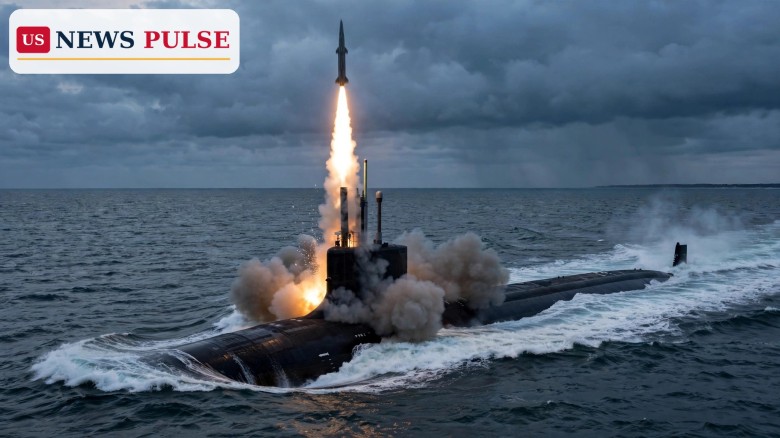
The United States Navy has taken its biggest step yet toward putting nuclear weapons back on its attack submarines, awarding Raytheon a new agreement to push the nuclear-armed SLCM-N cruise missile toward prototype tests. RTX, Raytheon's parent company, announced the deal on Tuesday, November 24, 2026, saying the award will let engineers mature the missile's design, integrate its subsystems and prepare for prototype demonstrations. The SLCM-N nuclear cruise missile is intended to arm Virginia-class attack submarines and the Navy's planned Trump-class battleships, restoring a sea-launched nuclear capability retired with the Cold War Tomahawk TLAM-N.
Key Points
- The US Navy awarded Raytheon an Other Transaction Authority agreement to advance the nuclear-armed SLCM-N, RTX announced on November 24, 2026.
- The missile will arm Virginia-class attack submarines through Virginia Payload Tubes and Modules, and the planned Trump-class battleships.
- A Government Accountability Office report in July put total acquisition cost at $15 billion to $20 billion, with initial operational capability targeted by 2034.
- Fiscal 2026 legislation requires the Navy to be ready for limited operational deployment by September 2032.
- The warhead is a new W80-5 variant, per Sandia National Laboratories; partners include Anduril, Divergent and Williams International.
What Happened
RTX said its Raytheon business had been selected to advance development of the Nuclear-Armed Sea-Launched Cruise Missile, known as SLCM-N, under an Other Transaction Authority agreement from the US Navy. The agreement moves the weapon into a focused development phase, with the stated aims of maturing the design, integrating subsystems and preparing for prototype demonstrations. Neither Raytheon nor the Navy disclosed the value of the new agreement or how long it will run.
The award follows five SLCM-N prototype agreements worth $743.6 million signed on September 23, 2026, and a $194 million General Dynamics contract for the missile's fire-control system. Together, they show a programme that has moved quickly from paper studies to hardware, less than a year after its formal launch in December 2025.
Background and Context
SLCM-N is a revival, not a new idea. It traces its origins to the 2018 Nuclear Posture Review, the Pentagon's periodic statement of nuclear policy, which called for a new sea-launched nuclear cruise missile to give the president a lower-yield, flexible option at sea. The programme was launched in December 2025, and the Raytheon award is the latest step in turning that decision into a fielded weapon.
The capability it restores has been missing for decades. During the Cold War, the Navy carried the nuclear-armed Tomahawk cruise missile, known as the TLAM-N, on submarines and surface ships. Retired after the Cold War ended, it left the sea-based leg of the American nuclear deterrent to rely entirely on submarine-launched ballistic missiles.
Supporters argue that a nuclear cruise missile fills a gap: a ballistic missile is a large, unmistakable signal, while a cruise missile from an attack submarine is smaller and harder to attribute. Critics question whether the weapon is needed, and whether it blurs the line between conventional and nuclear attack, since the Navy already fires conventional Tomahawks from the same tubes.
SLCM-N: The Nuclear Cruise Missile Returns
The missile is planned to arm Virginia-class nuclear-powered attack submarines, which will carry it in their Virginia Payload Tubes and Modules, the large-diameter launch tubes built into the newest boats. It is also planned for the Navy's Trump-class battleships, a new class of large surface combatants at the centre of the administration's shipbuilding plans. The warhead is a new W80-5 variant, according to Sandia National Laboratories.
The industrial team is broad. Alongside Raytheon, partners include Anduril Rocket Motor Systems, Divergent, and Williams International, the engine maker. The $194 million General Dynamics contract covers the fire-control systems that will let a submarine aim and launch the weapon.
Cost and schedule remain the biggest open questions. The Government Accountability Office estimated in July that total acquisition cost would run to between $15 billion and $20 billion. Programme officials have called the target of initial operational capability by 2034 "aggressive", and fiscal 2026 legislation requires the Navy to be ready for limited operational deployment by September 2032.
Reactions and Quotes
RTX presented the award as a step change, saying the agreement would advance SLCM-N from early concept work into focused development, with prototype demonstrations the next major milestone. The company did not disclose the value or duration of the award, and the Navy has not published further details.
The schedule is the sharpest point of debate. Programme officials have called the 2034 target for initial operational capability "aggressive", a word that captures both the ambition of the timetable and the scale of the engineering still to be done. The requirement for limited operational deployment readiness by September 2032 pushes the programme harder still, and meeting it will depend on the prototype phase now under way.
Why It Matters
SLCM-N would change the shape of the American nuclear deterrent at sea. For more than three decades, the Navy's only sea-based nuclear weapons have been the ballistic missiles carried by its strategic submarines. Adding a nuclear cruise missile to attack submarines would give the United States a lower-yield option that can be deployed close to a crisis, on a platform already operating in contested waters.
That matters to allies as well as adversaries. American allies in Asia and Europe have long asked for visible signs of the extended deterrent, the promise that the United States would use its nuclear weapons to defend them. A nuclear cruise missile on a submarine that can be seen in port, or known to be on patrol nearby, is a more visible signal than a ballistic-missile submarine designed never to be found.
What Happens Next
The next milestone is prototype demonstrations. Under the new agreement, Raytheon will mature the missile's design and integrate its subsystems, aiming to demonstrate a prototype that can be tested from a submarine's launch tubes. No date for those demonstrations has been announced.
The warhead work will run in parallel: Sandia National Laboratories is developing the W80-5 variant, and without a certified warhead there is no weapon to deploy, however well the airframe performs.
Frequently Asked Questions
What is SLCM-N?
SLCM-N is the Nuclear-Armed Sea-Launched Cruise Missile, a US Navy programme to build a nuclear-armed cruise missile launched from submarines and the planned Trump-class battleships, restoring a capability retired with the Cold War-era Tomahawk TLAM-N.
Which submarines will carry SLCM-N?
Virginia-class nuclear-powered attack submarines, in their Virginia Payload Tubes and Modules. The planned Trump-class battleships are also intended to carry it.
How much will SLCM-N cost?
A Government Accountability Office report in July 2026 put total acquisition cost at $15 billion to $20 billion, after $743.6 million in prototype agreements and a $194 million fire-control contract.
When will SLCM-N be ready?
The Navy targets initial operational capability by 2034, a date programme officials have called "aggressive". Congress requires limited operational deployment readiness by September 2032.
Related: the Pentagon weighs the future of its Bahrain naval base; US military systems are safe after the Cloud One hack reports; and the Navy disabled a bulk carrier that tried to run the Iran blockade.
© 2026 US News Pulse. All rights reserved.
 Print
 Save