
USS George Washington Arrives in Middle East to Relieve USS Abraham Lincoln - US News Pulse
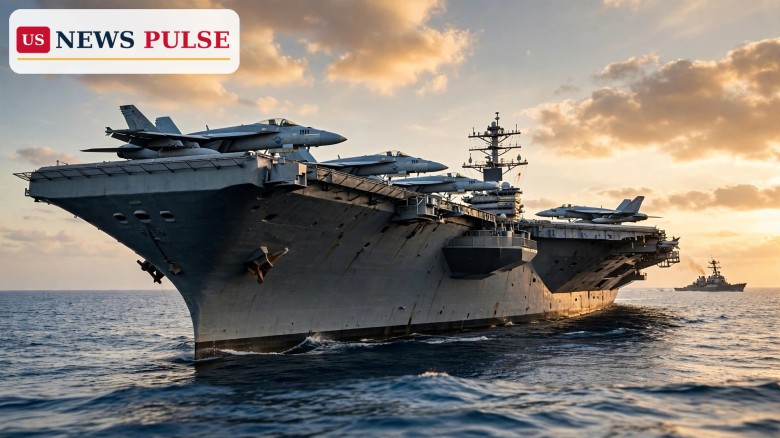
The USS George Washington has arrived in the Middle East to relieve the USS Abraham Lincoln, ending the Lincoln's record-setting deployment of more than 260 days at sea in the war against Iran. US Central Command said the George Washington carrier strike group entered its area of responsibility and began operating in the region, with the carrier now in the Arabian Sea near the Strait of Hormuz and flight operations continuing. The rotation leaves the Pacific without an American carrier for an unknown period.
Key Points
- The USS George Washington carrier strike group has entered US Central Command's area of responsibility and begun operating in the Middle East.
- The carrier, with about 5,000 sailors aboard, is now in the Arabian Sea near the Strait of Hormuz.
- It arrived to relieve the USS Abraham Lincoln, deployed since November 21, 2025, with more than 260 uninterrupted days at sea.
- Reports of mental-health and supply problems aboard the Lincoln were dismissed by Defense Secretary Pete Hegseth as "completely misrepresented".
- The Wall Street Journal reported the rotation leaves the Pacific without a US carrier presence for an unknown period.
What Happened
US Central Command said the George Washington strike group entered its area of responsibility. The Hill reported it arrived to relieve the Lincoln, on station in the region since January. The Washington reached the region after a long transit from the western Pacific: it left port in Da Nang, Vietnam, sailed with a cruiser and a destroyer, crossed the Singapore Strait and was confirmed in the Strait of Malacca en route to the Indian Ocean.
The George Washington had itself left the Middle East only days earlier, on November 18, after three months on station, and was reported to be heading back toward its home port of Yokosuka, Japan. Its swift return shows how heavily the Navy leans on a small number of carriers off Iran.
Background: A Record Deployment Nears Its End
The Lincoln left San Diego on November 21, 2025, and has been in the region since January, supporting the US war against Iran and the blockade of Iranian ports. Its uninterrupted time at sea has run to more than 240 days, and more than 260 days according to the Associated Press, a record stretch that has drawn attention in Washington. The war began on February 28, 2026, and the blockade was reimposed in mid-July.
The United States has disabled at least 15 vessels trying to breach the blockade and redirected 158 more. Central Command said on November 27 that US forces and regional partners control the strait and have restored freedom of navigation. The carrier picture has shifted repeatedly this autumn: the George Washington first arrived in the Fifth Fleet area on August 19, replacing the Lincoln; the USS Theodore Roosevelt arrived on November 15 as a third carrier, joining the George Washington and the USS George H.W. Bush. When the George Washington departed on November 18, the force dropped back to two carrier strike groups. Crude flows through the strait have fallen to about 8.5 million barrels a day, roughly half the prewar level (Kpler).
USS George Washington Returns to the Gulf
The George Washington's return puts a familiar ship back on station. The Nimitz-class carrier, forward-deployed from Yokosuka, Japan, brings its air wing, a cruiser and a destroyer back into the Fifth Fleet area, restoring the two-carrier posture off Iran.
The rotation also leaves the Pacific without a carrier. The Wall Street Journal reported the gap will last for an unknown period, a consequence of a fleet stretched across two oceans. Acting Navy Secretary Hung Cao told a Senate hearing on November 17 that deployments now average closer to a year at sea than the Navy's seven-month goal, with only 286 ships against a requirement of 355.
Reactions and Quotes
The sharpest reaction has come from the Pentagon, in response to reports of conditions aboard the ship: broken plumbing, moldy showers, limited hygiene supplies, food and mail delays, and reported attempts to go overboard. Defense Secretary Pete Hegseth told reporters the reports were "completely misrepresented", without saying what he disputed.
The welfare question was also raised at the Senate Armed Services Committee on November 17, when Acting Navy Secretary Hung Cao confirmed that eight sailors across the Lincoln strike group attempted suicide during the extended 10-month deployment. Cao told the committee: "This war, again, I know it's a strain on our Navy." Central Command's November 27 statement denied an Iranian commander's claims of a Hormuz toll and a strike on the Lincoln, saying the strike group "was well defended and never struck" and adding: "Iran no longer has a navy." No statement from the Lincoln's crew or their families appeared in the sources checked.
Why It Matters
The rotation matters first because of where it happens. The Strait of Hormuz carries a large share of the world's seaborne oil, and the United States has made keeping it open the centrepiece of its naval campaign against Iran. A two-carrier presence gives the operation the air power and escort depth to enforce the blockade. It matters second because of what it reveals about the Navy: a deployment of more than 260 uninterrupted days is the product of a fleet too small for its missions. The destroyer USS Spruance returned to San Diego on November 13 after a 357-day deployment, the longest by a US Navy destroyer since World War II. And it matters third because of the Pacific: every carrier sent to the Middle East is one the Pacific does not have.
What Happens Next
The Lincoln is now expected to head home, closing a deployment that began in San Diego more than a year ago. The George Washington takes up the station it left days earlier, resuming the blockade and deterrence missions the Lincoln was flying. Attention now turns to whether the Navy can fill the Pacific gap, and whether scrutiny of conditions aboard the Lincoln leads to a formal review of crew welfare.
Frequently Asked Questions
How long was the USS Abraham Lincoln at sea? More than 260 uninterrupted days, according to the Associated Press. The carrier left San Diego on November 21, 2025.
Where is the USS George Washington now? In the Arabian Sea near the Strait of Hormuz, with about 5,000 sailors aboard.
How many US aircraft carriers are in the Middle East? Two, according to the Wall Street Journal, with the George Washington replacing the Lincoln as one of them.
What were the reports about conditions aboard the Lincoln? Broken plumbing, moldy showers, limited hygiene supplies, food and mail delays, and reported attempts to go overboard. Hegseth called them "completely misrepresented".
What is the US mission in the region? The United States has been at war with Iran since February 28, 2026, and enforces a blockade of Iranian ports.
Read more on US News Pulse: USS George Washington Leaves Middle East, USS Theodore Roosevelt Arrives in Middle East and CENTCOM Denies Hormuz Toll Claim.
© 2026 US News Pulse. All rights reserved.
 Print
 Save