
Braves Re-Sign Mahle for $40 Million and Dubon for $30 Million - US News Pulse
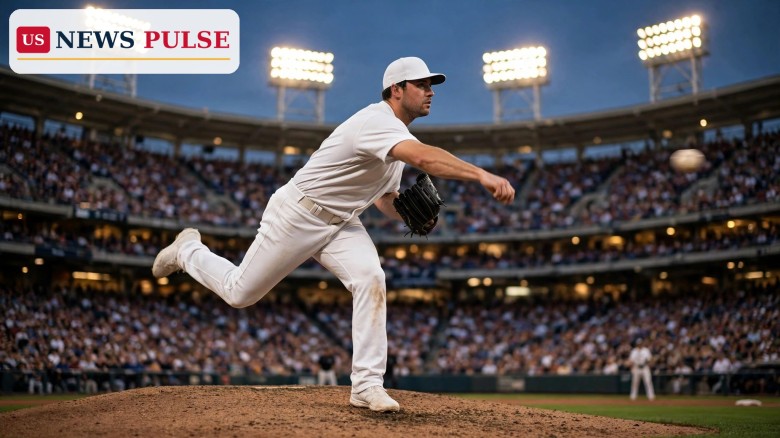
The Atlanta Braves kept two of their own on Saturday, November 28, 2026, re-signing right-hander Tyler Mahle to a two-year, $40 million contract and utility man Mauricio Dubon to a three-year, $30 million deal. The Braves re-sign Mahle and Dubon for a combined $70 million, choosing continuity over the open market at the start of a busy free-agency winter. Mahle, 32, will earn $20 million in each of the 2027 and 2028 seasons, while Dubon, 32, will earn $10 million a season through 2029 and heads into spring training as the leading candidate to start at shortstop.
Key Points
- Announced Saturday, November 28, 2026: the Atlanta Braves re-signed Tyler Mahle (two years, $40 million) and Mauricio Dubon (three years, $30 million), $70 million combined.
- Mahle, 32, earns $20 million in each of the 2027 and 2028 seasons after joining Atlanta in an August 2 trade from San Francisco for right-hander Anthony Molina.
- Dubon, 32, earns $10 million in each of the next three seasons and is the top candidate to start at shortstop in 2027.
- Each player chose to return to Atlanta instead of signing elsewhere as a free agent, and each agreed to donate 1 percent of his salary to the Atlanta Braves Foundation.
- The deals keep Atlanta's rotation and infield depth intact as the free-agency market heats up across Major League Baseball.
What Happened
Atlanta announced both deals on Saturday, November 28, 2026, moving early in the offseason to settle two of its own free agents before the market could pull them away. Mahle's two-year, $40 million contract and Dubon's three-year, $30 million deal were confirmed the same day, a combined $70 million commitment that answers two questions about the 2027 roster at once: who fills a rotation spot, and who plays shortstop.
Mahle's return caps a short but convincing audition. He arrived on August 2 in a trade with the San Francisco Giants, with right-hander Anthony Molina going the other way, and pitched well enough across nine games in a Braves uniform that Atlanta moved to keep him. At 32, Mahle now has two guaranteed years at $20 million a season. Dubon's deal comes with a clear role: the 32-year-old is the top candidate to start at shortstop in 2027, a vote of confidence in a player whose value has always been his versatility.
Background: Two Paths Back to Atlanta
Mahle was a midseason addition, a rental in the classic sense: Atlanta gave up Molina at the August 2 trade deadline to add a veteran arm for the stretch run, and the nine-game audition that followed was, in effect, a tryout for a longer stay. His performance earned him the two-year deal, and the $20 million annual figure reflects a starter's salary for a pitcher the Braves now trust.
Dubon, by contrast, is a known part of the clubhouse, a utility player who has filled gaps wherever Atlanta needed him. His three-year deal at $10 million a season is the kind of contract a club gives a player it expects to use every day, and the shortstop designation makes that explicit.
The timing matters. Atlanta acted while the wider market was still taking shape, and the money is already moving fast: the New York Mets agreed an eight-year, $130 million extension with outfielder Carson Benge and a three-year, $39 million deal with left-hander Alex Vesia the same day, capping a week of more than $700 million in commitments, including ace Tarik Skubal's nine-year, $450 million deal. In that kind of market, waiting costs money. Mahle joins a staff led by Cy Young finalist Chris Sale.
Braves Re-Sign Mahle and Dubon: What the Deals Mean
The money is straightforward, and it tells its own story. Mahle's $40 million over two years is starter money, $20 million a season for a 32-year-old right-hander who proved himself in nine games after the August trade. Dubon's $30 million over three years is everyday-player money, $10 million a season for a 32-year-old the Braves plan to start at shortstop.
For Atlanta, the deals are a statement about how the club wants to build. Rather than chase the biggest names in a market where the Mets have already spent more than $700 million in a single week, the Braves are keeping the players they know, at prices they chose, and saving their remaining budget for the holes that are left.
Reactions and Quotes
No quotes from the players, the club or the agents were included in the reporting of these signings, so this section carries none rather than inventing any. What the deals themselves say is clear enough: both players had the chance to sign elsewhere as free agents, and both chose to stay in Atlanta, each agreeing to donate 1 percent of his salary to the Atlanta Braves Foundation.
That donation detail is the most telling part of the announcement. A player who gives 1 percent of his salary to the club's foundation is a player who plans to be part of the community, not just the roster, and both Mahle and Dubon signed up for it on the same day.
Why It Matters
For Atlanta, the two signings settle the roster before the winter meetings, and that is worth more than the money alone. A rotation spot is filled, a shortstop is named, and the club can spend the rest of the offseason on the remaining gaps instead of starting from scratch at two positions.
For the players, the deals are security at the right moment. Mahle, at 32, has two guaranteed years at $20 million a season after proving himself in a nine-game audition. Dubon, also 32, has three years at $10 million a season and a starting job waiting for him.
What Happens Next
Both players report to spring training in February as Braves, with Mahle slotted into the rotation and Dubon as the leading candidate at shortstop. The shortstop job is his to lose, with spring training deciding the opening-day call.
Atlanta's offseason is not over. With two positions settled, the club can turn to its remaining needs, and the winter meetings will show whether the Braves add more, or whether the $70 million spent on Saturday was the core of their winter.
Frequently Asked Questions
How much did the Braves pay Tyler Mahle?
Two years and $40 million, $20 million in each of the 2027 and 2028 seasons.
How much did the Braves pay Mauricio Dubon?
Three years and $30 million, $10 million a season, with Dubon the top candidate to start at shortstop in 2027.
When did Mahle join the Braves?
August 2, 2026, in a trade with the San Francisco Giants for right-hander Anthony Molina.
Did Mahle and Dubon donate part of their salaries?
Yes, each agreed to donate 1 percent of his salary to the Atlanta Braves Foundation.
What is the combined value of the two deals?
$70 million: $40 million for Mahle over two years and $30 million for Dubon over three years.
Read more on US News Pulse: Mets agree $130 million Benge extension and sign Vesia for $39 million and 2026 Cy Young Awards: Schlittler and Misiorowski win unanimously.
© 2026 US News Pulse. All rights reserved.
 Print
 Save