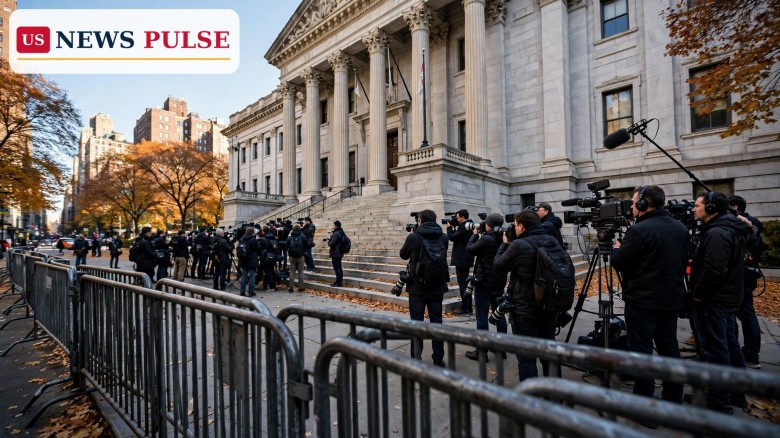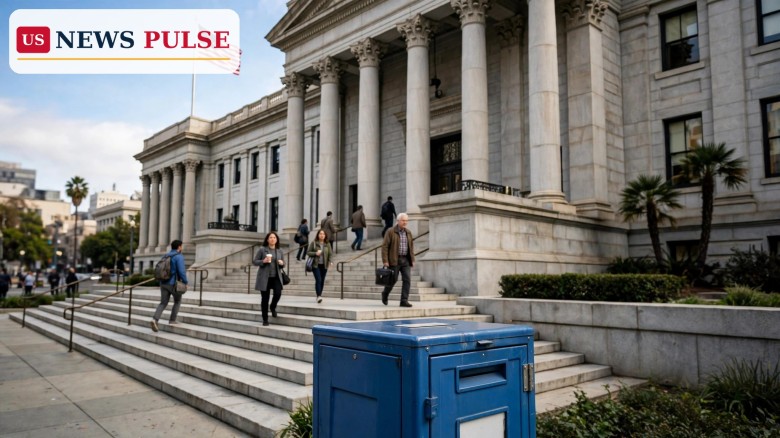
A federal appeals court on Friday rejected the Trump administration's bid to force California to set aside mail-in ballots from more than 20,000 registered voters, handing the Justice Department its second courtroom defeat in three days in a fight that could still reach the Supreme Court before Tuesday's midterm elections. The California ballots ruling, issued by a three-judge panel of the 9th US Circuit Court of Appeals in San Francisco, said blocking the ballots from being counted while the case plays out would risk disenfranchising eligible voters and throwing California's vote count into chaos.
The 2-1 decision keeps the disputed ballots in the count for now. It does not end the underlying lawsuit, in which the Justice Department claims the voters on its list are likely noncitizens. But with the November 3 midterms just days away, the ruling removes the most immediate threat to those ballots and sets up a possible emergency appeal to the Supreme Court, where the administration could ask the justices to intervene before Election Day.
The Justice Department asked the appeals court to order California to separate mail-in ballots from anyone on its list of suspected noncitizens and to hold them uncounted until their citizenship could be verified. The department filed its lawsuit against the state on October 15 and had asked the appeals court to rule by Friday, October 30, after District Judge David O. Carter refused to grant a temporary restraining order earlier in the week.
The panel declined. In its order, the majority said the relief the government sought "might result in immense hardship to defendants and harm the public interest by risking the disenfranchisement of eligible voters and putting the entire tabulation process in jeopardy." The judges pointed to Carter's finding that the administration's list of suspected noncitizens may not be fully reliable, a point California has pressed throughout the case.
The Justice Department has not said how many of the more than 20,000 people on its list have actually submitted ballots in this election. California officials have argued that the government's assertions relied on "suspect data" and that complying with its demands would risk stripping lawful voters of their ballots. The department did not immediately respond to a request for comment on Friday's ruling, according to the report of the decision.
The California fight is the most prominent front in a wider administration campaign to identify possible noncitizens on state voter rolls. Federal law already bars noncitizens from voting in federal elections, and California law does the same. State officials say their safeguards are robust, and researchers and election administrators across the country have long found documented cases of noncitizen voting to be exceedingly rare.
That history shaped the lower-court proceedings. At a three-hour hearing on October 27, Carter pressed the government's lawyer for a legal precedent supporting the request and told the department, in blunt terms, that it already had a remedy if it believed crimes had been committed: bring prosecutions. In his 26-page order on October 28, he wrote that the request was the product of the government's own delay, that it likely lacked standing and a valid cause of action, and that the remedy itself would likely violate federal voting laws.
"Never before in American history has the federal government, on the eve of an election, sought to coerce a state and local government to abandon their own Constitutional elections procedures and bend to the will of the Executive Branch," Carter wrote. He framed his decision as protecting both the right to vote and the states' constitutional role in running federal elections, a role the Constitution assigns to the states.
The same three-judge appeals panel had already ruled against the department once in this case, voting 2-1 earlier to reject its attempt to skip over Carter and take the case directly, after the government argued the district judge was not moving fast enough. The majority rejected that argument and blamed the government for the tight timetable it had created by filing suit weeks before the election.
Shortly after the California lawsuit was filed, federal agents across the state arrested 11 noncitizens who were charged with crimes including fraudulently registering to vote, and more than a dozen others were charged, an enforcement sweep the government said supported its case against the most populous state in the country.
The majority opinion, joined by Bennett and Sanchez, turned on the standard for emergency relief in the middle of an election. Courts are reluctant to change voting rules while ballots are being cast and counted, and the panel held that the Justice Department had not cleared that high bar. "There is a material risk that granting the United States its requested relief would result in disenfranchisement," Bennett and Sanchez wrote.
The dissent saw the case very differently. Bumatay argued that separating the ballots would not cancel anyone's vote but would simply preserve the status quo while citizenship questions were checked. "The federal government proposes a modest remedy — stopping California from mixing the ballots of citizens and suspected noncitizens," he wrote. "California decided long ago that aliens can't vote in its elections. Today, the federal government merely seeks to safeguard that decision. We should have let them try."
The split is notable for its lineup. Bennett was appointed by Trump during his first term, and his vote with Sanchez, a Biden appointee, against the administration's request undercuts any suggestion that the ruling fell along simple partisan lines. Bumatay, also appointed by Trump in his first term, was the lone dissenter.
California Attorney General Rob Bonta welcomed the decision in a statement that also took aim at the administration's broader claims about voter fraud. "California law makes it illegal for noncitizens to vote in federal elections, and there are several state laws that guard against it. That is why it is exceptionally rare," Bonta said. "The administration's baseless claims of widespread fraud are an attempt to sow doubt in our democratic process and risk disenfranchising eligible voters."
The administration, for its part, has argued that its effort is necessary to prevent citizens' votes from being diluted by illegally cast ballots, a position federal officials have repeated as they press similar demands in other states. The Justice Department has not commented publicly on Friday's ruling.
Voting rights advocates have warned for months that the administration's method of identifying suspected noncitizens relies on outdated data and could sweep in immigrants who have since become naturalized citizens. Those concerns were echoed in the courts' focus on the reliability of the government's list, which the appeals panel cited through Carter's findings.
No direct quotes from the judges beyond their written opinions were available in the reports of the ruling, and the panel issued its decision as an order rather than a full published opinion. The Reactions section therefore records the written opinions and the public statements of the parties, rather than inventing courtroom remarks.
The stakes go beyond a single list of names. California holds 52 seats in the House of Representatives, more than any other state, and control of Congress hangs on Tuesday's results, with Republicans battling to retain their majorities in both chambers. A ruling that kept 20,000 ballots uncounted, even temporarily, could have fed disputes over close House races in the country's largest state and given both parties fresh material for post-election litigation.
The decision also matters as a test of how far courts will let the federal government go in policing state-run elections. The Constitution gives states the primary role in administering federal elections, and Carter's ruling leaned heavily on that principle. If the Supreme Court takes the case, its answer could shape not only California's count but also the administration's parallel demands in other states, including Washington, where federal prosecutors this week called on election officials to segregate ballots cast by more than 400 people they say appear to be illegally registered.
For voters on the list, the ruling means their ballots stay in the count while the lawsuit continues. For election officials, it removes the immediate prospect of reworking tabulation procedures days before the polls close, a disruption both courts warned could itself undermine confidence in the result.
Three tracks now converge on Election Day. First, the Justice Department could seek emergency relief from the Supreme Court, which would be asked to decide, on a compressed timetable, whether to block California from counting the disputed ballots while the case proceeds. The reports of Friday's ruling described such a showdown as a live possibility, though the department has not announced its next step.
Second, a separate case brought by national Democratic groups, including the Democratic Senate and House campaign committees, comes to a head on Monday, November 2, the day before the election. The judge in that case has said he will rule then on the Democrats' request to temporarily block the ballot-segregation effort nationwide. The Democrats argue the government's lists are based on "shoddy" data and amount to interference in the elections.
Third, the underlying California lawsuit continues in the district court, where the merits of the government's claims about the voter list will eventually be tested. Whatever happens in the emergency appeals, that case will determine whether the administration can prove that the people it flagged were in fact registered unlawfully.
California's count, meanwhile, proceeds under the rules the courts have now twice refused to change. If any of the races touched by the disputed ballots are close, the litigation could return in a new form after the votes are tallied.
By a 2-1 vote, the court denied the Justice Department's emergency request for an injunction that would have forced California to set aside mail-in ballots from more than 20,000 voters the government claims are likely noncitizens until their citizenship was verified.
For now, yes. The ruling leaves the ballots in the count while the underlying lawsuit continues. The Justice Department could still seek emergency relief from the Supreme Court before or after Election Day.
Judges Mark Bennett and Gabriel P. Sanchez formed the majority. Bennett was appointed by President Donald Trump and Sanchez by former President Joe Biden. Judge Patrick Bumatay, also a Trump appointee, dissented.
On October 28, District Judge David O. Carter denied the government's request for a temporary restraining order, writing that it would "wreak havoc" on the election and potentially disenfranchise thousands of lawfully registered voters.
The government's list covers more than 20,000 registered voters it alleges may not be citizens. The Justice Department has not said how many of them have actually submitted ballots in this election.
Related coverage: California Ballots Appeal: DOJ Asks Court to Rule by Friday on 20,000 Votes; California Ballots Ruling: Judge Rejects DOJ Bid to Set Aside 20,000 Votes; Federal Judge Blocks DOJ Election Pressure Campaign Days Before Midterms. Sources: Reuters reporting on the October 30 ruling; Bloomberg reporting on the 9th Circuit decision; US News Pulse earlier coverage of the Carter ruling and the DOJ appeal.
Leave a Comment



 | Today's Date: