


 | Today's Date:



UN Begins Liquidating Western Sahara Mission After 35 Years as Guterres Warns of Escalation
The United Nations has begun liquidating its peacekeeping mission in Western Sahara after 35 years, closing a chapter that began with a ceasefire and a promised referendum that was never held, while Secretary-General Antonio Guterres warns that the end of the mission could raise the risk of renewed hostilities.
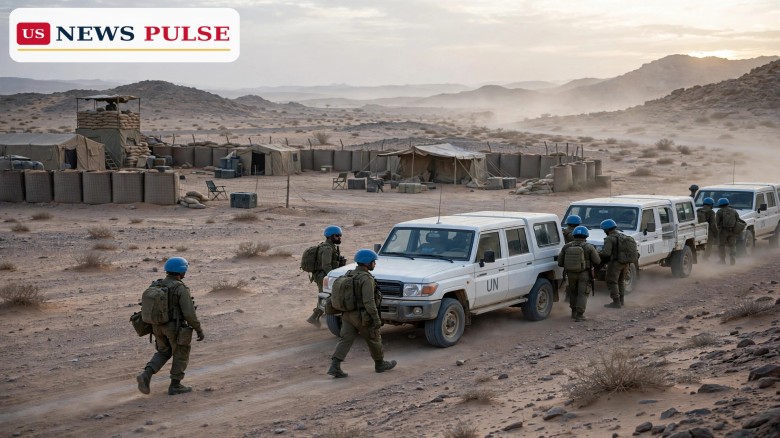
The liquidation phase of the United Nations Mission for the Referendum in Western Sahara, known as MINURSO, began on Sunday, November 1, 2026, after the mission ceased operations when its mandate expired. A smaller team under the UN Department of Operational Support will oversee the return of troop-contributing countries' assets and the disposal of United Nations equipment.
Key Points
- MINURSO ceased operations on November 1, 2026, and liquidation has begun after 35 years in Western Sahara.
- Secretary-General Antonio Guterres warned of potential escalation of hostilities following the mission's end.
- The mission was created in 1991 to monitor a ceasefire and prepare a referendum that was never held over voter-eligibility disputes.
- The Security Council failed to renew the mandate on October 30, 2026, after Russia vetoed a United States draft backed by 11 of 15 members.
- A rival Russian draft for a straight one-year extension won only three votes, short of the nine needed.
What Happened
November 1 marked both the end of MINURSO's operations and the start of liquidation, the formal process by which a peacekeeping mission winds down: sites are closed, contracts are settled, equipment is returned or disposed of, and personnel are repatriated. The UN Department of Operational Support will supervise that work through a reduced team, rather than the full mission structure that had operated across the territory.
The change is more than bureaucratic. MINURSO's observers, liaison officers and civilian staff provided a daily, neutral presence along the ceasefire lines. Their departure removes a witness to incidents and a channel for de-escalation when tensions rise, which is why humanitarian and diplomatic observers have warned that the loss of monitoring matters even if no single incident follows immediately. Guterres pointed to the risk when monitoring disappears where the dispute remains unresolved.
Background and Context
Western Sahara is a disputed territory on the Atlantic coast of northwest Africa, claimed by Morocco and by the Polisario Front, which seeks independence for the Sahrawi people. Spain withdrew in 1975, and fighting followed until a UN-brokered ceasefire took effect in 1991. MINURSO was created that year with two linked tasks: monitor the ceasefire and organise a referendum choosing between integration with Morocco and independence. The referendum was never held, after years of disagreement over who was eligible to vote.
Over its history, the mission was authorised for 534 personnel, with a 2026-2027 budget of more than 62 million dollars, and 20 MINURSO personnel lost their lives during its 35 years. The ceasefire largely held until 2020, when Polisario resumed armed struggle after a confrontation at the Guerguerat crossing in the south. Since then fighting has remained low-level, but it has not stopped, and each side has accused the other of violations.
Western Sahara MINURSO Liquidation: What the End of the Mission Means
The Western Sahara MINURSO liquidation is not a simple withdrawal announcement. It is the UN's structured closure process, and its start signals that the organisation is no longer planning for a resumption of the mission in its previous form unless the Security Council acts anew. A liquidated mission would have to be created again, with a new mandate, staffing and budget, if the Council later decided a presence was needed — a higher political cost than renewing an existing mission, even briefly.
It also closes a monitoring function that had value beyond its formal mandate. MINURSO reported on the military situation, investigated alleged violations and maintained liaison with both sides. Without it, the Council, humanitarian agencies and neighbouring states will rely more heavily on reporting from the parties themselves, which is harder to verify independently.
Reactions and Quotes
Guterres has said the United Nations stands ready to continue supporting dialogue toward a peaceful resolution, while warning of the potential for escalation after the mission's end. That dual message — continued diplomatic engagement, but without the mission on the ground — frames the UN's position for the period ahead.
The parties' positions were clear from the mandate debate. Morocco's Royal Cabinet welcomed the non-renewal, said UN personnel and equipment should leave in the coming days, described a 35-year chapter as closed, and restated its commitment to the ceasefire. The Polisario Front's UN representative, Sidi Omar, welcomed the Russian veto, arguing the United States draft would have undermined Sahrawi self-determination by making Morocco's autonomy plan the sole basis for talks. Algeria expressed regret and criticised the United States draft as biased, while humanitarian groups had warned that losing monitoring risked security and stability.
Why It Matters
The end of MINURSO matters first for the people of Western Sahara, who have lived with a dispute that has shaped their lives for half a century, with generations growing up in refugee camps in Algeria, in Moroccan-administered towns, or in Polisario-controlled areas, waiting for a settlement. It matters for regional stability, since a deterioration could affect a region already facing instability and migration pressures, and for the United Nations itself: MINURSO was one of its longest-running missions, and its closure by default — through a veto and a failed rival draft, rather than a negotiated settlement — raises questions about missions whose political mandates have stalled but whose monitoring role is still valued.
What Happens Next
In the short term, liquidation will proceed over the coming weeks and months, while diplomats watch whether either side tests the new reality on the ground and whether incidents along the ceasefire lines increase without MINURSO observers to verify them. Politically, attention returns to the Security Council and to the Secretary-General's personal envoy, if diplomatic efforts continue outside a mission framework. Any new UN presence would require a fresh Council decision, and the divisions exposed on October 30 suggest agreement would not be straightforward, since Morocco's autonomy plan and Polisario's insistence on self-determination remain far apart. For now, the UN says it remains ready to support dialogue.
Frequently Asked Questions
What was MINURSO? The United Nations Mission for the Referendum in Western Sahara, created in 1991 to monitor the ceasefire and prepare a referendum on the territory's future.
Why did the mission end? Its mandate expired on October 31, 2026, after the Security Council failed to renew it: Russia vetoed a United States draft backed by 11 members, and a rival Russian draft won only three votes.
What is liquidation? The formal wind-down in which a smaller UN team returns troop-contributing countries' assets, disposes of UN equipment and closes mission sites.
Why did Guterres warn of escalation? Because the mission monitored the ceasefire and provided a neutral de-escalation channel; its removal, while low-level fighting continues since 2020, raises the risk that incidents escalate without independent verification.
Was the referendum ever held? No. Disputes over voter eligibility and the political framework prevented a vote, leaving the mission in place for 35 years.
Read more on US News Pulse: Western Sahara MINURSO mandate expires after UN Security Council deadlock, UN boat strikes warning: US must halt Caribbean and Pacific attacks.
Leave a Comment