


 | Today's Date:





Ukraine Russia Alert Apps Hacked: Fake Nuclear Warnings Sent to Millions
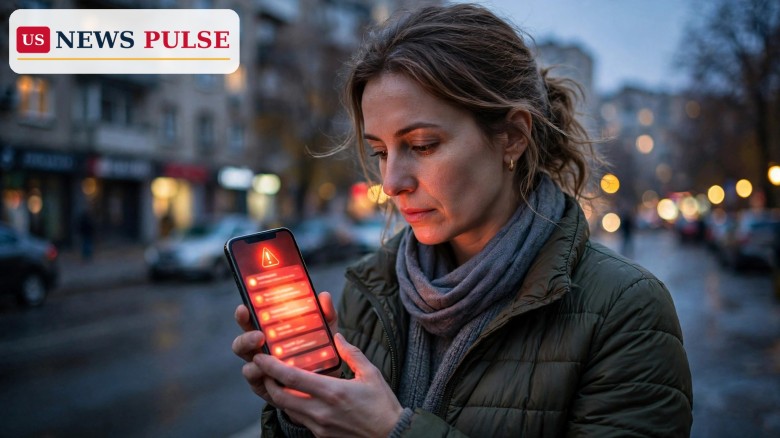
Ukraine Russia alert apps hacked overnight into Monday, November 2, 2026, sending millions of people fake warnings of nuclear and chemical attacks, street fighting and incoming missiles, in what officials on both sides described as a cyberattack on the emergency systems civilians rely on in wartime. There was no radiation threat, no confirmed missile launch behind the messages, and authorities in Kyiv and Moscow both urged the public to ignore the false alerts and trust only official channels, but the twin breaches marked the first time, as far as reported, that either country's official alert app had been hacked.
Key Points
- Ukraine's Air Alert app sent fake nuclear, chemical and street-combat warnings late on Sunday, November 1, including a claim that Russia had launched a hypersonic Oreshnik missile.
- Ukraine's Air Force said the app appeared to have been subjected to hostile interference and stressed: "There is no radiation threat! Stay calm."
- Hours later, Russia's Emergencies Ministry said its own app suffered a "massive cyberattack" and sent false warnings across 33 of Russia's 89 regions.
- The Russian fake messages warned of nuclear warheads launched on all regions and told people to stock three weeks of food and hide in cellars.
- Reuters said it could not verify who was responsible; Ukraine blamed Russia, a pro-Russian group claimed the Ukrainian hack, and a pro-Ukrainian group publicised the Russian breach, all unverified.
What Happened
Ukraine's public air-raid app began sending false alerts late on Sunday evening for Kyiv and other areas, warning of radiation and chemical attacks and of street combat in parts of the capital. One alarm said Russia had launched a hypersonic Oreshnik missile, a weapon capable of carrying a nuclear warhead, and that a nuclear alert had been declared. The messages startled residents in central Kyiv, where Al Jazeera reported that speakers in the city centre also rang out warnings, although many people understood within about half an hour that the alerts were not genuine.
Ukraine's Air Force moved quickly on Telegram, saying the system appeared to have been subjected to enemy influence. "The air alert app appears to have been subjected to enemy influence," it said. "There is no radiation threat! Stay calm and follow our updates on our channel." All-clear messages were sent shortly afterwards for each false alert. Ukraine's Ministry for Digital Transformation said the app had been temporarily suspended, while other warning methods, including air-raid sirens, kept working. Officials added that a separate app used for alerts in Kyiv itself was working normally.
Hours later, on Monday morning, Russia's Ministry of Civil Defence, Emergencies and Disaster Relief said its warnings app had also been hit. The ministry, quoted by the state news agency TASS, said a "massive cyberattack" had sent false information to the public. Reports said the hackers warned Russians that nuclear warheads mounted on Ukrainian drones had been launched against all regions of the country, and instructed people to stock up urgently on food for three weeks and to hide. A fake message seen by Reuters did not closely mimic an official communication: it was laced with colloquialisms and profanities and used derogatory language about Russia, calling its regions "swamps". The ministry said its experts were working to restore the app and asked the public to trust only its website and official social-media accounts.
Background: Alert Apps in a War That Never Switches Off
The Ukrainian app at the centre of Sunday's incident is not a minor utility. It is the country's widely used Air Alert app, which warns people of incoming Russian drone and missile attacks and, according to its developers Ajax Systems, cited by AFP, has been downloaded more than 46 million times and has more than 6.7 million daily users. In a war now in its fifth year, with daily missile and drone strikes, that app is one of the main ways ordinary people decide when to head for shelter. Its temporary suspension therefore mattered even though sirens and other channels remained available, and even though the false messages themselves caused no reported panic.
Russia does not have a nationwide air-alert system of the same kind, and beyond its border regions it does not routinely warn citizens of incoming Ukrainian attacks. Moscow played down the impact of its own breach, saying the affected app was not one of its main public warning channels but only a supplementary source of information. That distinction matters for judging the two incidents: in Ukraine, the hacked system is central to daily civilian safety; in Russia, the ministry said, it was not.
The breaches coincided with the expiry on Sunday of a six-day localised ceasefire in the Russian-occupied Kherson region, brokered by US First Lady Melania Trump and described by Reuters as the longest such pause in fighting since Russia's full-scale invasion in 2022. During those six days, humanitarian aid and evacuations were allowed in the Russian-occupied town of Oleshky. Al Jazeera's correspondent in Kyiv reported that many people in Ukraine now expect renewed fighting along the front lines as that pause ends.
Ukraine Russia Alert Apps Hacked: Who Is Blamed, and What Is Proven
Attribution is where the two stories diverge, and where reporting must stay careful. Ukraine's Centre for Strategic Communications blamed Russia, pointing to the use of Russian in one of the fake messages, and Air Force spokesman Yuri Ignat confirmed the hack to AFP, saying the Russians had indeed attacked the app. Ukraine's Air Force also noted that the alerts were broadcast in Russian, while Ukrainian is compulsory for official communications in Ukraine. A hacking group calling itself Hitcore claimed responsibility for the breach of the Ukrainian system, according to a Russian Telegram channel, but that claim could not be independently verified.
On the Russian side, the Emergencies Ministry did not name any suspect. A pro-Ukrainian hacking group, Atesh, posted a screenshot of the alert message seen in Russia on its Telegram channel early on Monday, with the message: "The Ministry of Emergency Situations app has been hacked!" That post publicised the breach; it did not, by itself, prove who carried it out. Reuters said it was unable to verify which groups were responsible for either attack, and noted that experts have linked previous cyber incidents during the war to activist hackers as well as to intelligence agencies on both sides. Nobody has claimed responsibility for the hack of the Russian system in a verified way.
Cyberwarfare has long been part of this conflict. Russian hackers attacked Ukrainian government and banking sites in January 2022, before the full-scale invasion, and in late 2023 the Russian group Sandworm took the private telecoms network Kyivstar offline, disrupting notifications for days. Ukraine's volunteer-based IT Army, founded after the invasion specifically to engage in cyberwarfare against Russia, has reportedly targeted the Moscow Stock Exchange, Russian power grids and government websites. Sunday and Monday's alert-app breaches, however, appear to be the first time either country's official alert apps themselves have been hacked, which is why they drew attention beyond the usual daily exchange of cyberattacks.
Reactions and Quotes
Ukraine's Air Force statement was short and designed to stop panic before it spread: "There is no radiation threat! Stay calm and follow our updates on our channel." The Centre for Countering Disinformation urged users to monitor other emergency channels on social media and to rely on physical alerts while the cyberattack was addressed. In Moscow, the Emergencies Ministry struck a similar note, asking the public to remain calm and to trust only official sources: its website and the department's official social-media accounts.
On the streets of Kyiv, residents interviewed by Reuters played down the impact. Artem Pyndyk, 37, a businessman, said he was briefly surprised by the messages but then realised what had happened. "This didn't trigger the kind of reaction in society that they expected," he said, adding that family members and friends he had checked in with had also not panicked. "You can laugh about it but, on the other hand, they gained a certain level of access and were able to hack the program." Oksana Vostrykova, 48, a pizzeria employee, said she was calm about it and understood almost immediately that it might be a false message. "You worry more not for yourself but for your children who are nearby," she said.
The false alerts also landed in a country already anxious about nuclear safety. Ukraine suffered the Chornobyl disaster in April 1986, when a reactor exploded and released radioactive material, and fighting continues around the Zaporizhzhia Nuclear Power Plant, Europe's largest, in territory partly controlled by Russia. Last week, the International Atomic Energy Agency said a welder working at that plant was killed in a drone attack, and its director general, Rafael Grossi, called for maximum military restraint from both sides. That history helps explain why a fake radiation warning, even one quickly debunked, is more than a prank: it touches a real and living fear.
Why It Matters
The alert-app hacks matter for three reasons. First, they strike at trust in the very systems meant to keep civilians alive. If people begin to doubt genuine air-raid warnings, or to ignore them because a previous alert turned out to be fake, the next real attack becomes more dangerous. Ukrainian officials clearly understood that risk, which is why their first messages stressed that there was no radiation threat and told people to follow official channels instead of the compromised app.
Second, the twin breaches show how cyberwarfare is moving from websites and networks into the intimate, personal space of a phone notification. A warning that appears on millions of phones at night, in a city under regular attack, does not need to be believed for long to cause confusion, disrupt sleep and force officials into emergency corrections. The fact that Kyiv residents largely saw through the messages within half an hour is reassuring, but it also shows how much depends on a public that has, over nearly five years of war, learned to be sceptical of alarming alerts.
Third, the timing, at the end of a rare local ceasefire, raises the question of whether the hacks were a signal as much as an attack: a demonstration that either side, or an activist group acting in its name, can reach into the other side's civilian warning system. Whether the two breaches were coordinated, carried out by the same actor, or simply coincidental remains unproven, and that uncertainty itself is part of the story. What is proven is narrower, and more important: two official apps were compromised, false nuclear warnings were sent, officials corrected them quickly, and no real radiation threat was reported.
What Happens Next
Ukraine's developers temporarily disabled notifications on the Air Alert app and said on Monday that operations had been restored. Russia's Emergencies Ministry said its experts were working to restore its app to normal operation. The next steps are technical and investigative: forensic work to establish how the apps were accessed, whether the same vulnerability or actor was involved in both cases, and what safeguards can prevent a repeat. Any verified attribution, or any admission by a named group backed by evidence, would be the next major development.
For civilians, the practical advice from both governments is unchanged: follow official channels, sirens and verified government accounts, and treat unexpected warnings that appear only in one app, especially warnings in an unusual language or with unusual wording, with caution until confirmed. For Ukraine, there is a further context: the United States announced on Friday a 2.1 billion dollar deal to supply 500 Patriot interceptors, Ukraine's only effective defence against Russian ballistic missiles, although people briefed on the decision said it could take years for the missiles to arrive. That gap between announcement and delivery is one reason Kyiv remains so dependent on early warning in the meantime.
Frequently Asked Questions
Was there a real nuclear threat in Ukraine or Russia?
No. Officials in both countries said the warnings were fake, there was no radiation threat, and no real attack behind the messages was reported.
What did the fake alerts say?
In Ukraine, they warned of nuclear and chemical threats, street combat in Kyiv and a hypersonic Oreshnik missile launch. In Russia, they warned of nuclear warheads launched on all regions and told people to stock three weeks of food and hide in cellars.
Who hacked the apps?
That has not been verified. Ukraine blamed Russia, a group calling itself Hitcore claimed the Ukrainian hack, and a pro-Ukrainian group publicised the Russian breach. Reuters said it could not verify who was responsible.
Was this the first time alert apps were hacked?
According to Al Jazeera, this appears to be the first time either Ukraine's or Russia's official alert apps have been hacked, although cyberattacks have been a major part of the war since before 2022.
Are the apps working again?
Ukraine's developers said operations were restored on Monday after notifications were temporarily disabled, and Russia's ministry said its experts were working to restore its app. Sirens and other warning channels in Ukraine kept working throughout.
Related coverage: Iran Designates UK Royal Navy and RAF as Terrorist Groups, MI6 as Hostile, Netanyahu Urges Trump to Strike Iran Right After Midterms, Axios Reports and Carlson Claims Trump May Be Days From Nuclear Strike on Iran.
Leave a Comment