


 | Today's Date:





Maine Collins-Jackson Senate Race May Not Be Decided on Election Night
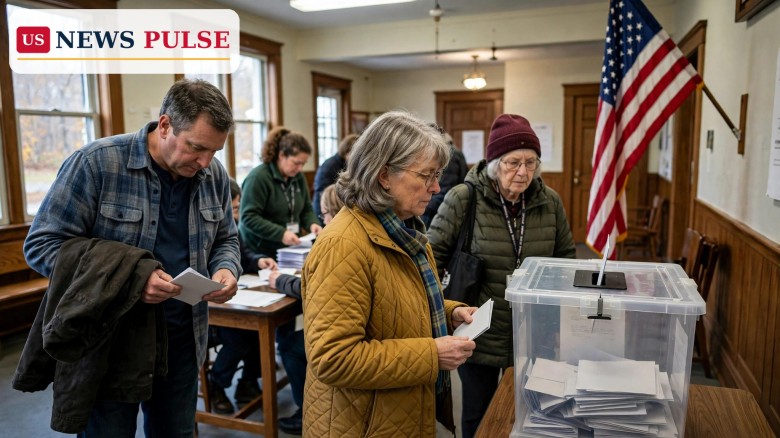
Maine voters are choosing a United States senator on Tuesday, November 3, 2026, but may have to wait well beyond election night to learn who won. Secretary of State Shenna Bellows has warned that the race between incumbent Republican Senator Susan Collins and Democrat Troy Jackson is, in her words, "highly possible" not to be decided on election night, because ranked-choice tabulation could run to November 13.
The warning turns one of the most closely watched Senate contests of the 2026 midterms into a test of patience as well as politics. Recent polls put Collins and Jackson in a dead heat, and with six declared write-in candidates also on the ballot, the conditions for a ranked-choice count are very much in play. If no candidate wins more than 50 percent of first-choice votes, officials must tabulate ranked preferences until one candidate holds a majority.
Key Points
- Shenna Bellows says it is "highly possible" Collins-Jackson will not be decided on election night, November 3.
- Maine uses ranked-choice voting in statewide races with more than two candidates; this race also has six declared write-in candidates.
- If no candidate wins over 50 percent of first-choice votes, a ranked-choice tabulation follows, the first ever for a Maine Senate race.
- That tabulation has typically run until the Friday of the following week, November 13 this year.
- Municipalities have two days to report, so election night may not even reveal whether the race goes to ranked choice.
What Happened
Bellows gave the warning in comments to USA TODAY ahead of Election Day. She did not say the race will go to ranked choice, only that a delayed result is a realistic possibility that voters, campaigns and news organisations should prepare for.
The reason is the calendar built into Maine's system. Municipalities have two days to report their results, so first-choice totals may not be complete on election night. Only once those totals are known can officials determine whether any candidate has cleared the 50 percent threshold. If none has, the ranked-choice tabulation begins, a process Bellows said has typically run until the Friday of the following week. In 2026, that Friday is November 13, ten days after Election Day.
That timeline matters because the Maine race is one of a small number of Senate contests that could decide which party controls the chamber. Collins, a Republican seeking a sixth term, faces Jackson, a former Maine Senate president chosen as the Democratic replacement nominee in July 2026. With polls showing a dead heat, neither campaign can assume a first-round majority.
Background and Context
Maine adopted ranked-choice voting for federal elections after voters approved the system in ballot measures. Voters rank candidates in order of preference. If one wins a majority of first-choice votes, that candidate wins outright. If not, the last-place candidate is eliminated and those ballots move to voters' next choices, until one candidate holds a majority.
The system has already decided congressional races in Maine: Congressional District Two has gone to ranked-choice tabulation multiple times. A Senate race, however, would be new territory, and Bellows noted it would be the first time the system has been used at that level in Maine.
Maine Senate Race Ranked Choice: How the Count Would Work
If the race goes to ranked choice, the process unfolds in stages. Municipalities report first-choice results within two days of Election Day. If Collins, Jackson or another candidate clears 50 percent, the race is over. If not, the last-place candidate is eliminated, those ballots move to voters' next choices, and totals are recalculated, round by round, until one candidate passes 50 percent.
If no candidate clears the bar, the tabulation begins. The last-place candidate is eliminated, and ballots for that candidate are examined for the voter's next preference. Those votes move to the surviving candidates, and totals are recalculated. Elimination and redistribution continue, round by round, until one candidate passes 50 percent. Because the field includes six write-in candidates as well as the two major-party nominees, early rounds could involve several eliminations before the contest narrows to Collins and Jackson.
Reactions and the Political Stakes
Neither campaign has disputed Bellows's timeline, and the warning has been treated as election administration rather than partisan dispute. The broader stakes, however, are impossible to ignore: the Senate enters the midterms narrowly divided, and Maine is one of the contests both parties see as critical to the balance of power in Washington.
For Collins, the race is a bid for a sixth term and a test of whether a moderate Republican with a long record of bipartisan deal-making can still win in a state that has trended Democratic in presidential elections. For Jackson, it is an opportunity to flip a seat Democrats have targeted for years. The dead-heat polling suggests neither message has yet broken through decisively, which is precisely why a ranked-choice count remains plausible.
Why It Matters
The Maine result matters for three reasons. First, it could help decide control of the Senate, and with it legislation, nominations and oversight for the final two years of President Donald Trump's term. Second, it is a high-profile test of ranked-choice voting itself. Third, Bellows's warning sets expectations early, so a slow count is less likely to be misread as something wrong.
Second, the race is a high-profile test of ranked-choice voting itself. A smooth, well-explained tabulation ending on or before November 13 would strengthen the case for the system; a chaotic or contested one would do the opposite. Third, Bellows's warning is itself a lesson in election communication. By flagging the possibility of a delay before votes are cast, Maine's top election official has sought to set expectations early, reducing the chance that a slow count is misread as something wrong.
What Happens Next
On election night, attention will turn to whether either Collins or Jackson appears to hold a first-choice majority. But even a clear-looking lead may not settle the race, because municipalities have two days to report and ranked-choice tabulation takes longer still. If triggered, tabulation will proceed through the following week, with November 13 the typical endpoint.
Frequently Asked Questions
Why might the Maine Senate race not be decided on election night? If no candidate wins over 50 percent of first-choice votes, a ranked-choice tabulation follows, which has typically run until November 13.
Who are the main candidates? Incumbent Republican Senator Susan Collins, seeking a sixth term, and Democrat Troy Jackson, a former Maine Senate president chosen as the Democratic replacement nominee in July 2026.
How does ranked-choice voting work? Voters rank candidates in order of preference. If no candidate wins a majority of first-choice votes, the last-place candidate is eliminated and those ballots are redistributed to voters' next choices, until one candidate holds a majority.
When will the result be known? It may not be known on election night whether the race goes to ranked choice, as municipalities have two days to report. If it does, tabulation has typically run until November 13, 2026.
Related midterm coverage: 2026 midterms set to cost a record $11.9 billion, as Musk leads donor surge; Justice Department names 1,000 election monitors across all 50 states; National Guard assists midterm elections in seven states.
Leave a Comment