


 | Today's Date:





McDonald's US Sales Slip 0.2% in Third Quarter as Fewer Customers Visit
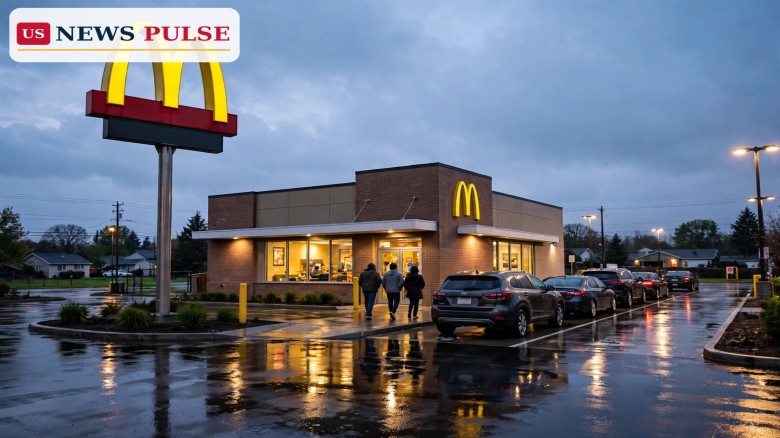
Chicago — McDonald's reported on Wednesday, November 4, 2026, that its US comparable sales slipped 0.2% in the third quarter, the first decline in its home market since early 2025, as fewer customers visited while higher petrol prices and the high cost of living squeezed household budgets. The dip was smaller than the 0.5% fall Wall Street had forecast, and profit beat expectations, with adjusted earnings of $3.57 a share against the $3.38 analysts expected.
The fast-food giant said US sales returned to growth in September after falling in July and August, helped by restored promotional deals in its app and a shift in marketing toward value. Global comparable sales rose 1.5%, with gains in Germany and Australia offsetting weakness in France, where protests that began in September weighed on trading.
Key Points
- US comparable sales fell 0.2% in the third quarter (July-September 2026), the first US decline since early 2025, and a smaller drop than the 0.5% Wall Street forecast.
- US sales returned to growth in September after declines in July and August, helped by restored in-app deals including a $2 breakfast sandwich and free fries with a $1 minimum purchase.
- Adjusted earnings per share were $3.57, beating the $3.38 analysts expected and up from $3.22 a year earlier; net income rose 9% to $2.49 billion.
- Total revenue rose 1% to $7.16 billion, short of Wall Street's $7.28 billion estimate; operating income climbed 7% to $3.60 billion.
- Foot traffic fell 2.6% across the US fast-food sector, and visits to McDonald's restaurants fell 4.6% from a year earlier, according to industry data.
What Happened
McDonald's published its third-quarter results on Wednesday, covering July through September. The headline number was the 0.2% fall in US comparable sales — sales at restaurants open at least a year, the standard measure of underlying demand. It capped a steady slowdown: US comparable sales had risen 3.9% in the first quarter of 2026 and 0.8% in the second, after a 2.4% gain in the third quarter a year ago.
The company said fewer guests visited its US restaurants and higher average checks largely made up for the shortfall — the customers who did come spent more per visit, but not enough to offset the thinner crowds. Sector foot traffic fell 2.6% in the quarter, according to Revenue Management Solutions, while Placer.ai data showed visits to its restaurants down 4.6% from a year earlier.
The quarter ended on a better note. After declines in July and August, US sales returned to growth in September, helped by the restored app deals and the shift toward value marketing. The improvement suggests the value push is starting to bring some customers back, though the company has not said how far the recovery has gone.
Background: A Squeeze on Everyday Spending
The results land in a year when American households have been squeezed from several directions. Higher petrol prices have eaten into the money families have left for eating out, and the general cost of living has stayed high, pushing many customers to cook at home or visit restaurants less often. McDonald's is the largest fast-food chain in the United States, and its quarterly numbers are read as a gauge of how ordinary consumers are coping — when its US sales fall, analysts read it as a signal about the wider economy.
McDonald's US Sales: The Numbers Behind the Dip
The profit picture was stronger than the sales picture. Total revenue rose 1% to $7.16 billion, short of Wall Street's $7.28 billion estimate, but net income rose 9% to $2.49 billion and adjusted earnings per share were $3.57, up 11% from $3.22 a year earlier and ahead of the $3.38 analysts expected. Diluted earnings per share rose 10% to $3.51, and operating income climbed 7% to $3.60 billion, taking the operating margin to 50.2% of revenue, up from 47.4% a year earlier.
The shape of the business explains part of that resilience. Revenue from franchised restaurants increased 3% to $4.49 billion, while sales at restaurants the company runs itself fell 3% to $2.48 billion, so franchised revenue made up 62.7% of the total. Systemwide sales grew 4% to more than $38 billion, and the company raised its quarterly dividend 4% to $1.93 a share.
Reactions and Quotes
Chairman and chief executive Chris Kempczinski struck an encouraged note about the direction of travel in the United States. "In the U.S., we're encouraged by improvement as the quarter progressed following our intervention on value," he said. The comment points to the value deals restored during the quarter as the main reason September turned positive after two weak months.
Investors had braced for worse. Wall Street had forecast a 0.5% fall in US comparable sales, so the reported 0.2% decline came in better than feared. The company gave no full-year outlook figures in its release, so the fourth quarter's US comparable sales number is now the next test of whether the value push is genuinely bringing guests back.
Why It Matters
McDonald's is more than a burger chain: it is one of the clearest bellwethers of American consumer spending. Its restaurants serve tens of millions of people every day, and its sales figures capture, in a single number, whether households feel they can afford small treats or are cutting back. A fall in US sales, even a small one, tells economists that the cost-of-living squeeze is reaching into everyday habits, not just big purchases.
What Happens Next
The fourth quarter is now the test. McDonald's will need to show that the September return to growth was the start of a recovery rather than a one-month bounce from discounting. The next set of numbers, covering the holiday season, will show whether the value strategy can rebuild visits through the busiest weeks of the year — and whether the wider fast-food slowdown is easing or deepening.
Frequently Asked Questions
How much did McDonald's US sales fall?
US comparable sales fell 0.2% in the third quarter of 2026 (July-September), the first US decline since early 2025, and a smaller drop than the 0.5% Wall Street had forecast.
Did McDonald's beat profit expectations?
Yes. Adjusted earnings per share were $3.57, ahead of the $3.38 analysts expected and up 11% from $3.22 a year earlier. Net income rose 9% to $2.49 billion.
Why did fewer customers visit?
The company pointed to higher petrol prices and the high cost of living. Sector foot traffic fell 2.6%, and visits to McDonald's fell 4.6% from a year earlier.
What is McDonald's doing about it?
It restored promotional deals in its app, including a $2 breakfast sandwich and free fries with a $1 minimum purchase, and shifted marketing toward value. US sales returned to growth in September.
When is the next test for McDonald's?
The fourth quarter, covering the holiday season. The company gave no full-year outlook figures, so the next comparable-sales number will show whether the value push is bringing guests back.
Related coverage: Fed rate decision: why a pause looks likely despite high inflation; US-India trade deal nears finish as White House calls talks productive; Meta $95 billion AI raise leads a $198 billion day of AI spending.
Leave a Comment