


 | Today's Date:


Iran Hands Out Iodine Tablets Near Nuclear Sites as US Strike Fears Grow
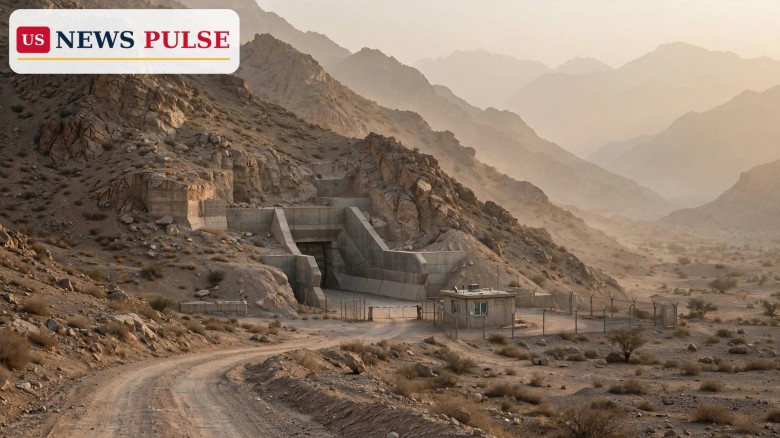
Iran is distributing iodine tablets to communities living near its nuclear facilities as it braces for the possibility of an American strike on one of its most heavily fortified sites, The Times of London reported on Friday. The move, confirmed by a Health Ministry official, is the clearest public sign yet that Tehran is preparing its population for a United States attack on Pickaxe Mountain, the deeply buried tunnel complex near Natanz.
The report, published on November 6, 2026, lands in a war now in its ninth month. Missiles struck Qeshm Island again early on Saturday, and President Donald Trump said on Thursday that a decision on widening the war is coming soon. No strike on Pickaxe Mountain has taken place, and no radiation has been released. But Iran is acting as if one could.
Key Points
- Iran is handing out iodine tablets within two to three kilometres of its nuclear facilities, a Health Ministry official told The Times.
- The preparations are tied to fears of a United States strike on Pickaxe Mountain, the fortified underground complex near Natanz.
- Iodine tablets protect the thyroid gland from radioactive iodine if radiation is released after a nuclear blast.
- The report rests on a single Times source and has not been independently confirmed. No strike has happened.
- Iran published nuclear-blast survival guidance in late October; about 180,000 tablets went to Bushehr earlier this year.
What Happened
The Times reported on Friday that Iran has begun distributing iodine tablets to people living near its nuclear sites. A Health Ministry official confirmed it, saying: "Yes, we are distributing iodine," and added: "Trump can no longer be trusted. He may go through with this crime."
The official said Iran has tried during every war to distribute the tablets within two to three kilometres of nuclear facilities. The fear centres on Pickaxe Mountain, the fortified underground complex near Natanz. An Iranian political journalist told The Times that officials had been briefed that an American nuclear strike on the site was being seriously considered.
The preparations are not new in kind. On October 29, Iran's state news agency IRNA published nuclear-blast survival instructions and an eight-minute training video. Earlier this year, about 180,000 iodine tablets were distributed around Bushehr, home to Iran's only operating nuclear power plant. What is new is the timing: the tablets are going out days after President Trump said a decision on widening the war is coming soon.
Background and Context
The war between the United States and Iran began on February 28, 2026, and is now in its ninth month. President Trump has repeatedly claimed that American strikes destroyed Iran's nuclear programme, yet the International Atomic Energy Agency has lacked access to key facilities since Israeli and American strikes in June 2025, leaving the fate of an estimated 440 kilograms of uranium enriched to 60 percent uncertain.
Pickaxe Mountain sits at the centre of that uncertainty. New satellite imagery analysed by the Center for Strategic and International Studies shows a surge in construction activity at the deeply buried tunnel complex near Natanz, though it does not indicate that uranium enrichment is taking place there now. The site is built to survive conventional bombing, which is why speculation about a nuclear strike on it carries such weight.
Diplomacy is still running alongside the military pressure. Vice President JD Vance said on Monday that Washington has made "progress" in talks and set no deadline for a deal. Qatar denied reports on Saturday that the talks had failed, saying mediation is ongoing. Late on Friday, United States Central Command announced a reward of up to $20 million for information about Iran's nuclear programme.
Iran Iodine Tablets: What They Do and Why They Matter Now
Iodine tablets, usually potassium iodide, work by flooding the thyroid gland with stable iodine so it cannot absorb radioactive iodine released after a nuclear blast. Taken before or shortly after exposure, they sharply reduce the risk of thyroid cancer, especially in children. Governments around the world stockpile them near nuclear plants.
But the tablets protect against only one risk. They do nothing against the blast, the heat or other forms of radiation from a nuclear explosion. Their distribution is therefore as much a signal as a shield. It tells residents near Natanz and Bushehr that the state is preparing for the worst, and it tells Washington that Tehran expects an attack could come.
Reactions and Quotes
The Health Ministry official's words are the only on-record Iranian confirmation so far; no formal government statement has confirmed the programme. The Times report rests on a single source and has not been independently confirmed.
The United States has not commented on the report. The backdrop, though, is a White House sending mixed signals. Vice President Vance said on Monday that Washington has made "progress" in talks and has "no strict deadline" for a deal. President Trump said on Thursday that a decision on widening the war is coming soon, keeping the military option in view while negotiators keep talking.
Why It Matters
If the United States struck Pickaxe Mountain with a nuclear weapon, as the briefing described to The Times reportedly suggested, it would cross a line no American president has crossed since 1945. The iodine distribution shows that Tehran is gaming out that scenario in public.
It also matters for the negotiations: handing out tablets while mediators work signals Iran expects diplomacy could fail. And for the civilians living near Natanz and Bushehr, the tablets are the difference between a precaution and a casualty count if the worst happens.
What Happens Next
Several markers will show which way this goes. United States Central Command said it would issue an announcement about Iran at 8:30 a.m. Eastern on Saturday. Watch whether the distribution spreads beyond the two-to-three-kilometre radius, whether Washington responds to the report, and whether Qatar's mediation produces a deal.
If the talks collapse, the risk to Pickaxe Mountain rises sharply, and the tablets may become the first step in a wider civil defence mobilisation. If they hold, the tablets may simply stay in drawers: a precaution that was never needed.
Frequently Asked Questions
What are iodine tablets?
Usually potassium iodide, which floods the thyroid with stable iodine so it cannot absorb radioactive iodine after a nuclear blast, cutting the risk of thyroid cancer.
Why is Iran distributing them now?
According to The Times, Iran fears a United States strike on Pickaxe Mountain, the fortified underground complex near Natanz. A Health Ministry official confirmed the distribution on Friday.
Has a strike on Pickaxe Mountain happened?
No. No strike has taken place and no radiation has been released. The report rests on a single source and has not been independently confirmed.
What is the state of the United States-Iran talks?
Vice President JD Vance says Washington has made progress with no deadline, and Qatar says mediation is ongoing. President Trump said a decision on widening the war is coming soon.
Related coverage: Two missiles strike Iran's Qeshm Island in new Saturday attack, Iran says, Two more tankers catch fire in Strait of Hormuz after mine strikes, Iran says and Oman and Iran seek lasting deal to reopen Strait of Hormuz shipping lanes.
Leave a Comment