

 | Today's Date:





Trump Drops Plan to Deport Migrants by Ship After Congress Pushback - US News Pulse
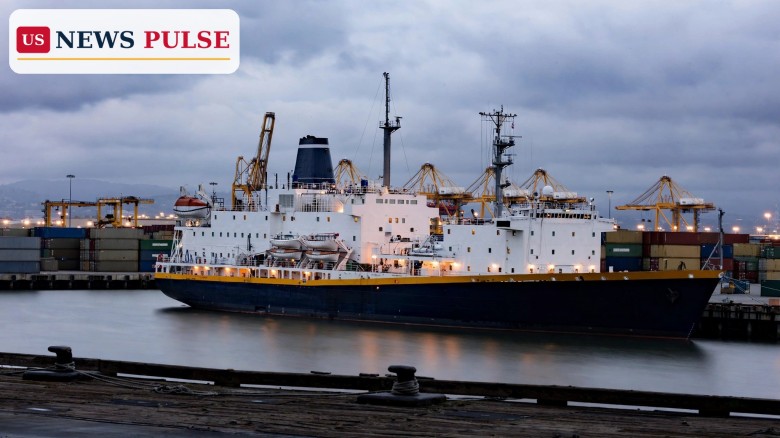
The Trump administration has formally abandoned its plan to deport migrants by ship, telling Congress it will not use vessels to carry out removals. The decision, confirmed in a new report on Tuesday, November 17, 2026, ends weeks of speculation about a proposal that would have refitted a California training ship for days-long voyages to Latin America.
Key Points
- The Department of Homeland Security told Congress it will not use ships to deport migrants, ending a plan first revealed by The New York Times on October 8, 2026.
- The plan involved refitting the 500-foot Training Ship Golden Bear, docked in Vallejo, California, and possibly other vessels for voyages to Venezuela, El Salvador and Honduras.
- Reps. John Garamendi and Salud Carbajal wrote to Homeland Security Secretary Markwayne Mullin on October 27, 2026, asking him to scrap the idea and calling a converted vessel a "floating prison".
- No vessel was ever formally assigned, no route was announced and no receiving country agreed to accept deportees by sea.
- The administration relies mainly on military or commercial flights for removals; the Migration Policy Institute counted 980,000 deportations in the first 18 months of President Donald Trump's second term.
What Happened
The Department of Homeland Security has told Congress it will not use ships to deport migrants, according to a new report published on Tuesday, November 17, 2026. The report confirms that the plan, first revealed by The New York Times on October 8, is now dead.
Under the proposal, the administration had considered refitting the 500-foot Training Ship Golden Bear, a Cal Poly Maritime Academy training vessel in service for 30 years and docked in Vallejo, California. Other vessels or ferries were also under consideration for days-long voyages carrying deportees to Venezuela, El Salvador and Honduras, at a cost of millions of dollars per trip.
The idea drew immediate criticism when it surfaced in October. Lawmakers and maritime experts questioned how a ship built to train cadets could be converted to carry detained migrants across open ocean, and what law would govern people held on board for days.
Background: How the Ship Plan Surfaced
The plan first came to light when The New York Times reported on October 8, 2026, that the administration was weighing the use of ships for deportations, with the Golden Bear named as a possible platform and ferries and other vessels also under consideration.
Within weeks, two California Democrats in Congress moved to stop it. Reps. John Garamendi and Salud Carbajal wrote to Homeland Security Secretary Markwayne Mullin on October 27, 2026, asking him to scrap the plan. Their letter cited "enormous operational, safety and legal challenges" and warned that converting a training ship into a deportation vessel would create problems the department had not solved.
Garamendi went further in public, calling a converted vessel a "floating prison" and the idea "extremely inhumane". The department, for its part, had never fully embraced the idea, calling it hypothetical and saying it was "assessing all our resources". Read our report on the 980,000 deportations recorded in the first 18 months of the Trump administration here.
The Deportation Ship Plan and Why It Was Dropped
The plan faced obstacles at almost every step. A training ship built for cadets would have needed a major refit before it could carry detained migrants, including secure holding areas, medical facilities and crew trained for the task. Each voyage would have taken days, far longer than a flight, and cost millions of dollars per trip.
There were also legal questions with no clear answers. It was never established which country's laws would apply to people held on a US vessel in international waters for days, or how medical emergencies, escapes or deaths at sea would be handled. No receiving country had agreed to accept deportees arriving by ship, and no route had ever been announced.
The practical case was never made in public either. The administration already moves deportees by military and commercial aircraft, a fast and established system. Ships would have been slower, more expensive and harder to operate, with no obvious advantage beyond adding capacity while removals are already at record levels — the Migration Policy Institute counted 980,000 deportations in the first 18 months of the president's second term.
Reactions: What Lawmakers and the Department Said
The sharpest criticism came from the two California lawmakers who led the congressional push against the plan. Garamendi's description of a converted vessel as a "floating prison" framed the debate in terms that were hard for the administration to answer, and his warning that the idea was "extremely inhumane" made the proposal a political liability as well as a logistical one.
The department has not elaborated publicly on why the plan was dropped, beyond telling Congress that ships will not be used. No official has said whether the decision was driven by cost, the legal questions, the congressional pressure or a combination of all three.
Why It Matters
The decision removes one of the most controversial ideas from the administration's deportation programme before it could be tested in practice. A ship carrying detained migrants on a days-long voyage would have created a new and largely untested legal situation, with people held at sea beyond the reach of courts, lawyers and journalists. Read our report on the eight-year-old Haitian boy freed from ICE custody here.
It also shows the limits of the administration's search for new removal capacity. The deportation drive is already operating at a scale not seen in modern American history, and the fact that officials were even considering ships suggests they were looking for ways to move more people faster. For now, flights remain the only practical tool.
What Happens Next
With ships ruled out, the administration will continue to rely on military and commercial flights for removals. The question now is whether the deportation drive can keep growing without new methods of transport, and whether the administration will look for other ways to expand capacity.
The Golden Bear is expected to remain in service as a training vessel for Cal Poly Maritime Academy cadets. The ship has trained merchant mariners for three decades, and the end of the deportation plan means it will not be converted into something very different.
Frequently Asked Questions
What was the deportation ship plan?
The Trump administration considered refitting the 500-foot Training Ship Golden Bear, docked in Vallejo, California, and possibly other vessels, to carry deported migrants on days-long voyages to Venezuela, El Salvador and Honduras.
Has the plan been cancelled?
Yes. The Department of Homeland Security told Congress it will not use ships to deport migrants, ending the plan first revealed on October 8, 2026.
Why did lawmakers oppose it?
Reps. John Garamendi and Salud Carbajal warned of "enormous operational, safety and legal challenges". Garamendi called a converted vessel a "floating prison" and the idea "extremely inhumane".
Was any ship ever assigned?
No. No vessel was formally assigned, no route was announced and no receiving country agreed to accept deportees by sea.
How does the administration deport migrants now?
It relies mainly on military and commercial flights. The Migration Policy Institute counted 980,000 deportations in the first 18 months of President Donald Trump's second term.

The US News Pulse newsroom covers breaking news across the United States and the world, working from wire services, official statements and on-the-record sources. Every story is reviewed against our editorial standards before publication. Corrections and tips: info@usnewspulse.com
About our newsroomLeave a Comment