

 | Today's Date:


Penn State Fraternity Cocaine Ring 'Godfather' Indicted on Federal Charges
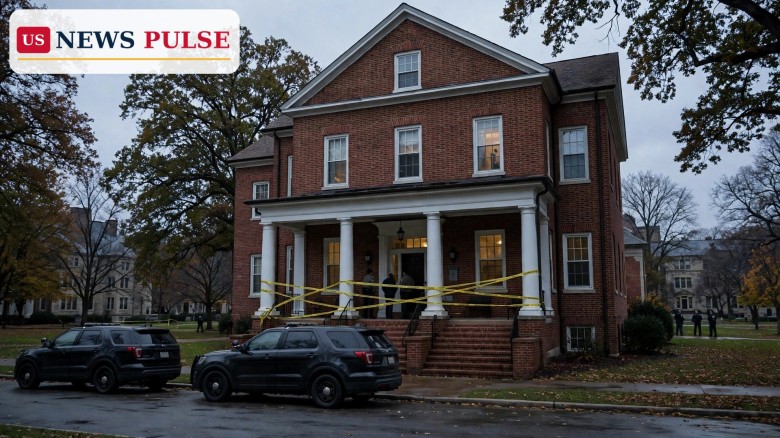
A Penn State fraternity member accused of running the university's cocaine trade as its self-styled "Godfather" has been indicted by a federal grand jury, prosecutors announced on Wednesday, in the latest turn of a campus drug case that has swept up 14 people.
Agostino Abbatiello, 24, of Westbury, Long Island, faces one conspiracy count and six distribution counts, the US Attorney for the Middle District of Pennsylvania said. Prosecutors say he bought cocaine in Philadelphia and New York and sold it to Sigma Chi and Delta Upsilon members at Penn State, where the drug was allegedly cut and packaged inside the fraternity houses. If convicted, he could face up to life in prison.
Key Points
- Agostino Abbatiello, 24, was indicted by a federal grand jury on Wednesday, November 18, on one conspiracy count and six distribution counts.
- Prosecutors say he was the alleged "Godfather" of the Penn State cocaine ring and the largest dealer of cocaine to students on campus, taking in more than $123,500.
- He allegedly bought cocaine in Philadelphia and New York from January 2023 to December 2024, then sold it to Sigma Chi and Delta Upsilon members.
- The cocaine was allegedly cut and packaged inside the fraternity houses, according to the federal charges.
- Thirteen alleged co-conspirators were arrested in September 2026, bringing the total charged to 14, nearly all current or former Penn State students.
What Happened
The federal indictment, announced on Wednesday, November 18, by US Attorney Brian Miller, moves the case from state court to the federal system, putting its alleged ringleader at the centre of the prosecution. Abbatiello, a Sigma Chi member, is accused of running the operation for nearly two years, from January 2023 to December 2024.
Prosecutors say Abbatiello sourced cocaine from dealers in Philadelphia and New York and supplied it to students in two of Penn State's best-known fraternities. The drug was allegedly cut and packaged in the fraternity houses, turning student housing into the ring's distribution hub. Witnesses testified that Abbatiello called himself the operation's "Godfather" and was the largest dealer of cocaine to Penn State students, receiving more than $123,500 in payments.
Background: How the Penn State Drug Investigation Unfolded
It began in December 2024, when Delta Upsilon member Thomas Robinson, known as "T-Rob", was arrested on a tip. In August 2026, the Pennsylvania Attorney General charged 14 people over the alleged ring, nearly all current or former Penn State students. In September 2026, thirteen alleged co-conspirators were arrested, including Robinson, a Delta Upsilon co-ringleader, and his father, 59-year-old lawyer Paul Robinson.
It is the latest federal drug prosecution to reach American college life, where fraternity houses have repeatedly been used as cover for distribution networks. Prosecutors describe a two-year supply chain from big-city dealers to fraternity houses in State College, led by a ringleader who, witnesses say, embraced the "Godfather" title. Penn State has been in the federal spotlight before this year, after the Justice Department sued the university over in-state tuition for undocumented students.
Penn State Cocaine Ring: The 'Godfather' and the $123,500 Trail
At the heart of the federal case is the money. Prosecutors say Abbatiello received more than $123,500 from Penn State students who bought cocaine from him, pointing to a large, steady customer base, not occasional sales between friends. The payments, with witness testimony about the "Godfather" nickname, are the evidence prosecutors will use to present him as the organiser of a commercial operation, not a fellow student sharing drugs.
The alleged supply chain is straightforward: cocaine bought in bulk in Philadelphia and New York, transported to State College, then cut and packaged in the Sigma Chi and Delta Upsilon houses before being sold. Preparing the drugs inside the houses tied the fraternities themselves to the alleged crime. The arrest of Paul Robinson, the 59-year-old lawyer father of alleged co-ringleader Thomas Robinson, drew attention well beyond Pennsylvania.
Reactions and Quotes
The most striking words so far come not from a press conference but from the witnesses themselves. Witnesses testified that Abbatiello called himself the "Godfather" of the ring, a nickname prosecutors have made the centrepiece of the case against him. It is the detail prosecutors will return to in court.
Prosecutors have been blunt about what is at stake: Abbatiello could face up to life in prison if convicted, a sentence reflecting the scale of the alleged dealing. Neither Penn State nor the two fraternities is a defendant, and neither the university nor Abbatiello's representatives has commented.
Why It Matters
The indictment matters beyond State College: it shows how campus drug markets have changed. This was not a student selling to friends, prosecutors say. It was a two-year operation with out-of-state suppliers, more than $123,500 in payments and drugs prepared inside fraternity houses. The federal charges signal prosecutors are treating campus dealing like any other organised drug network.
It also matters for families sending children to college: fraternities are meant to be supervised, and the allegation that two served as a cocaine ring's packaging and sales base will renew questions about oversight of university chapters. Federal drug and cybercrime cases have increasingly targeted young defendants who built large operations from ordinary settings.
What Happens Next
Abbatiello's federal court appearance in Harrisburg is next, where he will be formally presented with the seven counts and a plea will be entered. Prosecutors will move toward trial, with the "Godfather" testimony and payment trail at the centre of their case. The 13 co-conspirators arrested in September face their own proceedings, with state and federal cases running in parallel.
Further developments are likely. Indictments of this kind are often followed by plea agreements, and investigators may still be looking at others in the supply chain, including the dealers named in the charges. Federal cases involving young defendants have drawn national attention this year, and the "Godfather" label guarantees this one will be followed closely.
Frequently Asked Questions
Who is Agostino Abbatiello?
Agostino Abbatiello, 24, of Westbury, Long Island, is a Sigma Chi member at Penn State. Prosecutors say he was the alleged "Godfather" of a cocaine ring supplying students, indicted on one conspiracy and six distribution counts.
What is the Penn State cocaine ring accused of doing?
Prosecutors say Abbatiello bought cocaine in Philadelphia and New York between January 2023 and December 2024, then sold it to Sigma Chi and Delta Upsilon members, with the drug cut and packaged in the houses. He allegedly received more than $123,500.
How many people have been charged in the case?
Fourteen in total, nearly all current or former Penn State students. The Pennsylvania Attorney General charged 14 people in August 2026; 13 alleged co-conspirators were arrested in September, including co-ringleader Thomas Robinson and his father, lawyer Paul Robinson.
What sentence could Abbatiello face?
Prosecutors said Abbatiello could face up to life in prison if convicted on the seven federal counts. The exact sentence would depend on the convictions and sentencing guidelines.
When did the investigation begin?
It began in December 2024 after Delta Upsilon member Thomas Robinson, known as "T-Rob", was arrested on a tip — an arrest that led investigators to the wider ring, the state charges in August 2026, the September arrests and now the federal indictment.

The US News Pulse newsroom covers breaking news across the United States and the world, working from wire services, official statements and on-the-record sources. Every story is reviewed against our editorial standards before publication. Corrections and tips: info@usnewspulse.com
About our newsroomLeave a Comment