

 | Today's Date:



Iran Electricity Rationing Hits Bread and Fuel as US Blockade Bites Hard
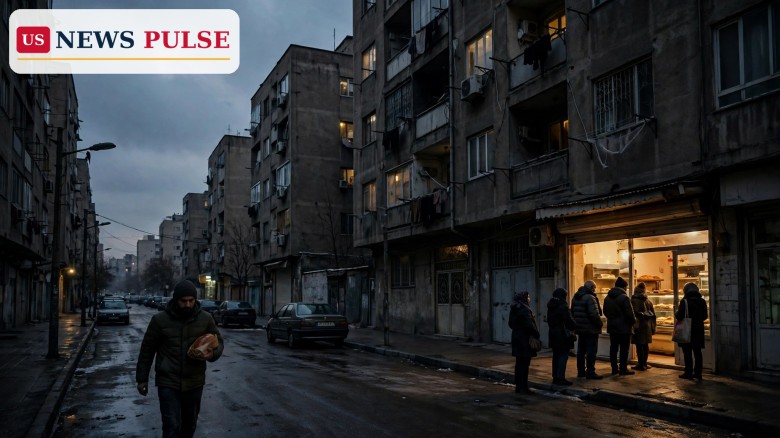
Iran has begun rationing electricity and cutting back government subsidies on bread and gasoline, the clearest sign yet that the United States' economic pressure campaign is biting deep into daily life in the ninth month of the war. Tavanir started rolling blackouts on Sunday, November 22, lasting up to two hours a day, and President Masoud Pezeshkian has warned the nation to expect "difficulties this winter". With food prices up more than 110 percent in a year and the rial at 2.9 million to the dollar, the austerity is squeezing households worn down by war, sanctions and a blockade that has cost Iran $3 billion to $4 billion a month in oil revenue.
Key Points
- Iran began rolling blackouts on Sunday, November 22, lasting up to two hours a day, longer once winter sets in.
- At least three provinces now cap subsidised bread purchases through the digital Nanino card; shoppers pay five times the normal price once their monthly quota runs out.
- Millions of people were removed last month from a state food voucher programme launched in January.
- Food and drink prices are up more than 110 percent year on year, and the rial has fallen to 2.9 million to the dollar, against 32,000 at the 2015 nuclear deal.
- The US naval blockade has cost Iran $3 billion to $4 billion a month in oil revenue, and economists expect the economy to shrink 4 to 6 percent this year.
What Happened
The blackouts are the most visible part. Tavanir began the cuts on November 22 after strikes damaged gas processing facilities, leaving the grid short of fuel. Pezeshkian announced the rationing in a Sunday message to the nation, saying blackouts would last up to two hours a day, longer once the cold sets in. On state television on November 20 and 21, he said: "We have no money."
The electricity cuts follow months of quieter austerity. The government has slashed subsidies, restricted aid programmes and scrapped plans to raise wages. This month, new limits capped subsidised bread purchases in at least three provinces, enforced through the Nanino digital card. Once a household's monthly quota runs out, bread costs five times the subsidised price. Last month, millions were removed from a state food voucher programme launched only in January.
Iranians say the rollback of fuel subsidies has hit hardest. Fuel is deeply sensitive in Iran: subsidy cuts helped drive protests in 2019 and unrest last December. A 25-year-old Tehran business owner told the Post the change had cut her profits by about a third.
Background and Context
Iran is under economic strain greater than at any other time in recent decades, according to Iranian economist Hadi Kahalzadeh of Brandeis University. The war with the United States began on February 28, 2026, and is now in its ninth month. After a provisional truce fell apart in July, Washington reimposed its blockade on Iranian oil exports, costing Iran $3 billion to $4 billion a month since.
Strikes have also hit energy infrastructure, and parliament economic commission head Shamseddin Hosseini has warned of fuel and heating shortages this winter. The rial tells the story: 32,000 to the dollar at the 2015 nuclear deal, 2.9 million now.
Washington has turned to economic pressure to force Iran to capitulate in talks to end the war and curb its nuclear programme. The strategy aims to stoke discontent, less than a year after a deadly January crackdown on protesters killed thousands. President Donald Trump told US troops on Thanksgiving that the United States has "victory at hand" over Iran and said a deal to reopen the Strait of Hormuz could come within days.
Iran Electricity Rationing: Bread, Fuel and the Cost of the Blockade
The Nanino bread system shows how the squeeze works in practice. Bread is the staple of the Iranian diet, and its subsidised price is a basic state promise. Under the new limits, a household that exhausts its monthly quota pays five times as much for the same loaf, a jump few families can absorb.
Fuel is the other pressure point. The subsidy rollback has raised the cost of everything that moves. Hosseini, the parliament economic chief, has warned that the expected fuel and heating shortages should not "come at the cost of closing industrial units and making workers unemployed", an admission that factories are already at risk as energy runs short.
Reactions and Quotes
Pezeshkian called it a different kind of war. "We are engaged in a silent war that is far more difficult than one in which missiles are launched," he told state television. His candour, "We have no money", was striking from a government that had insisted the economy could withstand the pressure.
"It's infuriating," a 40-year-old Tehran language teacher told the Washington Post, whose husband lost his job early in the war. "People are too tired, but they are also kind of numb," she said. "If there's no electricity and no gas, I guess we can just go out to the car to keep warm."
Anger is also surfacing inside the system. Reformist lawmaker Ahmad Bigdeli said "workers cannot breathe today", and labour activist Somayeh Golpour accused the state of "structural injustice" and betraying "public trust". A 26-year-old musician who marched in the December and January protests said: "People are scared, but the conditions are unbearable."
Why It Matters
The austerity marks a turning point in the war. For nine months the conflict was fought with missiles, drones and blockades; now it is fought in kitchens and at bakery counters. That is the pressure Washington intends, but it also drove Iranians into the streets in 2019 and last December.
Yet Kahalzadeh cautions that the blockade alone will not force an economic collapse. Iran has more than 90 million people, still collects taxes and exports overland. "Despite all of the damage from the war, blockade and sanctions, Iran still has some leverage, some capacity to survive," he said. "But this survival will be very costly."
What Happens Next
Winter is the immediate test. Pezeshkian has warned blackouts could grow longer as temperatures fall, and Hosseini of fuel and heating shortages that could idle factories. Whether bread caps spread beyond three provinces will show how far it must go.
The political test is whether hardship turns into protest. The January crackdown left Iranians fearful of organising, but the musician predicted people will "once again take the risk and mobilise" as conditions worsen. Much depends on the talks: Trump says a deal could come within days, but Tehran insists its conditions must be met before the Strait of Hormuz reopens.
Frequently Asked Questions
What is Iran rationing?
Electricity, subsidised bread via the Nanino card, and fuel.
How long will the blackouts last?
Up to two hours a day, longer in winter, Pezeshkian said.
Why is Iran imposing austerity?
The US blockade has cost $3-4 billion a month in oil revenue since July.
How bad is inflation in Iran?
Food and drink prices are up more than 110 percent year on year, and the rial has fallen to 2.9 million to the dollar.
Could the hardship lead to protests?
Discontent is widespread, but the January crackdown left many fearful of organising.

The US News Pulse newsroom covers breaking news across the United States and the world, working from wire services, official statements and on-the-record sources. Every story is reviewed against our editorial standards before publication. Corrections and tips: info@usnewspulse.com
About our newsroomLeave a Comment