

 | Today's Date:



Russia Sabotage in Europe Risks Mass-Casualty Event, IISS Warns as Attacks Double
Russia sabotage in Europe is intensifying and could cause a mass-casualty event, a new report from the International Institute for Strategic Studies (IISS) warns. The report, released on Thursday, November 26, 2026, says the use of explosives and arson in alleged Russian sabotage operations has roughly doubled over the past year, with rail lines, airports and energy networks in the crosshairs. Germany and Poland, the two countries whose logistics and industries play the largest roles in supporting Ukraine, account for more than half of the incidents recorded between October 2025 and September 2026. The warning comes as European governments struggle to deter a campaign that arrests and expulsions have failed to stop.
Key Points
- The IISS warns alleged Russia-directed sabotage in Europe is intensifying and could cause a mass-casualty event, with explosives and arson roughly doubling.
- Germany and Poland account for more than half of reported incidents between October 2025 and September 2026, reflecting their central role supporting Ukraine.
- Twenty-nine Moscow-linked incidents were recorded in Poland, including a November 2025 blast that damaged a rail line linking Warsaw to the Ukraine border.
- Russian intelligence services recruit proxies using more complex methods, including improvised explosive devices with timers and detonators, the report says.
- Arrests and expulsions have not deterred Moscow, the IISS concludes, and a mass-casualty disaster could bring calls for retaliation and divide governments.
What Happened
The IISS report, published on Thursday, November 26, 2026, draws on a year of reported incidents and finds a clear escalation. Attacks using explosives and arson have roughly doubled, and the targets have grown more dangerous: rail lines, airports, and energy networks that keep homes warm and factories running. The report describes alleged Russia-directed sabotage that European intelligence increasingly attributes to Russian handlers working through recruited proxies.
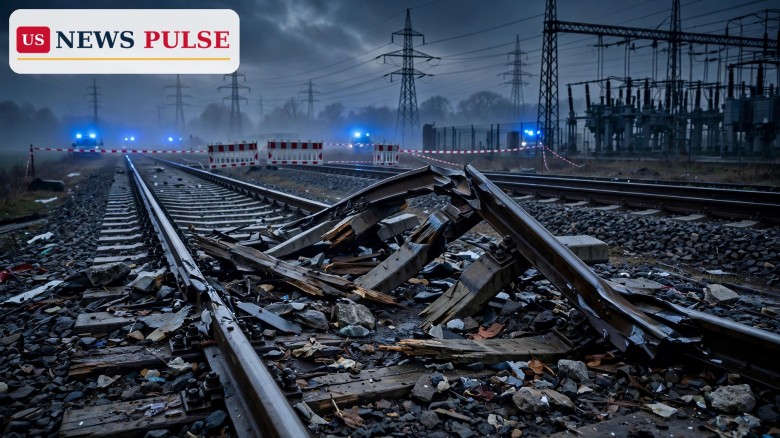
Poland is the sharpest example. The report records 29 Moscow-linked incidents there between October 2025 and September 2026, more than in any other country. Among them was a November 2025 blast that damaged a rail line linking Warsaw to the Ukraine border. There were no casualties, but Prime Minister Donald Tusk said it was likely meant to destroy a train. The methods are also growing more sophisticated: proxies are recruited to plant improvised explosive devices armed with timers and detonators, built to strike when their makers are far away.
Background and Context
Alleged Russian sabotage in Europe is not new, but the IISS argues it has entered a more dangerous phase. Since the full-scale invasion of Ukraine in 2022, European security services have reported arson attacks on warehouses, vandalism, cyberattacks and plots against defence suppliers. What has changed is the tempo and lethality of the tools: fire and explosives rather than graffiti and disruption.
Germany and Poland sit at the centre of the campaign because both are the logistical spine of Western support for Ukraine: weapons and aid flow through Polish rail hubs and German ports on their way east. Recent cases show the pattern: Estonia moved to close all its Russia border crossings after police foiled an alleged GRU-ordered arson attack on a drone maker supplying Ukraine; France blamed Iran's Revolutionary Guards for a cyberattack on supermarket refrigeration; and German police arrested two Iraqis over an alleged bomb plot against a Cologne synagogue tied to a pro-Iran group.
Russia Sabotage in Europe: What the IISS Report Found
The report's headline finding is the doubling of attacks using explosives and arson. That statistic matters more than the raw count, because it signals a change in intent. Arson against an empty warehouse is a message; a charge on a busy rail line is an attempt to kill. The IISS warns the campaign now operates where a single miscalculation, a mistimed device or a crowded target could produce the mass-casualty event officials have long feared.
Perhaps the bleakest conclusion concerns deterrence. Arrests and expulsions, the standard tools against suspected Russian operatives and their proxies, have not worked. The IISS states plainly that "there is no clear evidence that these measures have made sabotage a less attractive instrument of Kremlin policy". A mass-casualty disaster, it adds, could bring calls for retaliation and divide European governments, forcing the escalation the campaign was meant to avoid.
Reactions and Quotes
The IISS language is unusually blunt for a think tank known for careful understatement. Its conclusion that arrests and expulsions produced "no clear evidence" of deterrence amounts to a verdict on three years of European counter-sabotage policy, and a demand for a different approach.
In Poland, Prime Minister Donald Tusk said the charge was likely planned to destroy a train, turning what could have been dismissed as vandalism into an attempted mass killing. The report also lands awkwardly in Washington, where President Donald Trump's envoy Jared Kushner praised President Vladimir Putin's "restraint" in a podcast that debuted on Wednesday, the same week as the warning.
Why It Matters
The warning matters first because of the human stakes. A sabotage campaign aimed at rail lines, airports and energy networks does not distinguish between soldiers and civilians. A bomb on a passenger train, a fire in an airport terminal or an attack on a power grid in midwinter would kill ordinary people.
It matters second because of what it does to European unity. The report warns a mass-casualty event could divide governments over retaliation, the division a sabotage campaign is designed to produce. If arrests and expulsions have not deterred Moscow, governments need a strategy beyond policing: better protection of critical infrastructure, faster intelligence sharing, and a credible answer to what happens after the next attack.
What Happens Next
In the short term, expect heightened security around the infrastructure the report names. Rail operators, airport authorities and energy companies in Germany, Poland and other frontline states are likely to face new demands for guards and sensors.
Winter adds urgency. Energy networks are at their most important and vulnerable in the cold months, and a successful attack on a substation or pipeline could leave thousands without heat. That seasonal pressure is why the IISS published now.
FAQ
What did the IISS report warn about?
The International Institute for Strategic Studies warned that alleged Russia-directed sabotage in Europe is intensifying and could cause a mass-casualty event, with explosives and arson roughly doubling.
Which countries are most affected?
Germany and Poland account for more than half of reported incidents between October 2025 and September 2026, because their logistics and industries play the largest roles in supporting Ukraine.
What happened on the Polish rail line?
In November 2025 an explosive charge damaged a rail line linking Warsaw to the Ukraine border. There were no casualties, but Prime Minister Donald Tusk said it was likely planned to destroy a train.
Why have arrests and expulsions not stopped the sabotage?
The IISS says there is "no clear evidence that these measures have made sabotage a less attractive instrument of Kremlin policy", because Russian intelligence recruits proxies and uses deniable, timed devices.
What could happen if a mass-casualty attack succeeds?
The report warns it could bring calls for retaliation and divide governments over how to respond, escalating a shadow campaign into a wider confrontation.

The US News Pulse newsroom covers breaking news across the United States and the world, working from wire services, official statements and on-the-record sources. Every story is reviewed against our editorial standards before publication. Corrections and tips: info@usnewspulse.com
About our newsroomLeave a Comment