

 | Today's Date:





EPA Finds Zero Airborne Lead After Iowa Lead Azide Blast in 'Best Case' Result
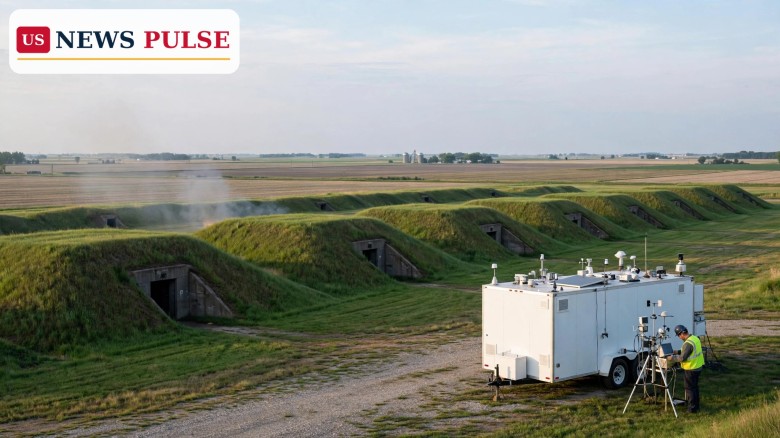
The EPA zero airborne lead Iowa result is now official: the Environmental Protection Agency reported on Thursday, November 26, 2026, that its real-time air monitors detected no airborne lead after the Army's controlled detonation of about five tons of degraded lead azide at the Iowa Army Ammunition Plant in Middletown, Iowa. The finding is the first hard evidence that the blast did not send a toxic lead plume over nearby communities.
Key Points
- The EPA reported on Thursday, November 26, 2026, that its Xact air monitors detected zero airborne lead after the controlled detonation of about five tons of lead azide in Middletown, Iowa.
- EPA Administrator Lee Zeldin called the initial air monitoring a "best case scenario" in a Fox News interview on Friday, November 27.
- Air monitoring concluded on Thursday afternoon after 30 consecutive hours with no detectable airborne lead.
- The EPA collected 1,639 samples before the blast and 1,618 after it, over 3,000 samples in total.
- Post-detonation sampling at 88% of the homes also sampled before the blast was complete by Friday.
What Happened
On Wednesday, November 25, 2026, the Army detonated 68 barrels of unstable lead azide, about 9,500 pounds, in a controlled blast at the Iowa Army Ammunition Plant in Middletown. The material had been stored for about 20 years and had crystallised into a form too sensitive to move.
The EPA had placed real-time Xact air monitors around the plant and across the region, and kept them running for 30 hours after the blast. On Thursday the agency reported that the monitors "continue to report, as they have since detonation, zero detection of airborne lead throughout the region". Monitoring ended on Thursday afternoon after 30 consecutive hours with no detectable lead.
EPA Administrator Lee Zeldin gave the first public assessment in a Fox News interview on Friday, November 27, calling the initial air monitoring a "best case scenario". "We only have measurements of 0.0, sometimes referred to as zero detect, sometimes referred to as non detect," he said.
Background: A Week of Warnings, Lawsuits and Delays
The all-clear ends a saga that began when a March 2026 inspection found crystallisation on the barrels, a sign the lead azide had become dangerously unstable. The Army first planned to detonate the stockpile on Friday, November 20, then postponed it to Monday, November 23, after the Iowa Environmental Council and the Sierra Club Iowa Chapter sued in the Eighth Circuit Court of Appeals to block the EPA's emergency permit.
The Eighth Circuit imposed an administrative stay on November 19, and President Donald Trump ordered the Army not to proceed until the court and Iowa's incoming governor agreed. The court lifted its stay on Monday, November 23, ruling that a controlled detonation with safety measures "better alleviates the risk of irreparable harm than the risk of an uncontrolled explosion". The Army delayed the blast once more, to Wednesday, November 25. Army modelling had warned lead particles could travel up to 100 miles northeast, with dust possibly crossing into Illinois.
EPA Zero Airborne Lead Iowa: What the Monitors Showed
The EPA's monitoring programme was built to answer one question first: did the blast put lead into the air people breathe? The agency's real-time Xact monitors reported zero detection of airborne lead from the moment of detonation through 30 consecutive hours, and the 0.0 reading was repeated across the monitoring network.
The air result is only the first part of a much larger sampling effort. The EPA collected 1,639 samples before the blast to establish a baseline and 1,618 after it, over 3,000 samples in total. Teams sampled homes, parks, drinking-water intakes in the plume model, nearby farms, and the Mississippi River watershed. By Friday, post-detonation sampling at 88% of the homes sampled before the blast was complete. Zeldin said the first lab results were expected as early as Friday night. Those results, covering soil, dust and tap water, will matter as much as the air readings, because lead settles.
Reactions
Zeldin's "best case scenario" assessment was the most direct official verdict yet. His description of the readings — "We only have measurements of 0.0, sometimes referred to as zero detect, sometimes referred to as non detect" — was aimed at residents who had spent the week asking whether the air was safe.
The all-clear also changes the political picture. The detonation had drawn a lawsuit from two environmental groups, a court stay, a presidential halt order and criticism from Iowa's governor-elect, Rob Sand, and Governor Kim Reynolds. With the air readings at zero, the Army and the EPA can now point to a measured outcome.
Why It Matters
For the people of Middletown and the towns inside the plume corridor, the zero readings are the difference between a frightening week and a lasting health scare. Lead exposure is most dangerous to children, and the CDC's position that no safe blood lead level has been identified in children turned a military disposal problem into a public-health emergency. A plume carrying lead dust up to 100 miles would have put tens of thousands at risk; the monitors say it did not happen.
The result also matters for the next unstable stockpile. The Army rejected a chemical-neutralisation option that would have produced no lead-dust plume. The choice was defended in court as safer than an uncontrolled explosion as temperatures dropped. The zero air readings are the first evidence that the gamble paid off.
What Happens Next
The first lab results were expected as early as Friday night, and the EPA will post results as they come in. The most closely watched will be the soil, dust and tap-water results from homes, schools and playgrounds. The legal fight is not over: the underlying challenge to the EPA's emergency permit is still pending, and the White House has opened an inquiry into why senior officials were not told of the stockpile's severity sooner. For now, the immediate emergency is over: the barrels are gone and the air is clean.
Frequently Asked Questions
Did the Iowa lead azide detonation release lead into the air?
No. The EPA reported that its Xact air monitors detected zero airborne lead after the detonation, after 30 consecutive hours with no detectable lead.
What did EPA Administrator Lee Zeldin say about the results?
Zeldin called the initial air monitoring a "best case scenario" in a Fox News interview on Friday, November 27, saying: "We only have measurements of 0.0, sometimes referred to as zero detect, sometimes referred to as non detect."
How much lead azide was detonated in Iowa?
The Army detonated 68 barrels of degraded lead azide, about 9,500 pounds or roughly five tons, at the Iowa Army Ammunition Plant in Middletown on Wednesday, November 25, 2026.
How many samples did the EPA collect around the blast?
The EPA collected 1,639 samples before the blast and 1,618 after it, over 3,000 samples in total.
When will the soil and water test results be released?
The first lab results were expected as early as Friday night; soil, dust and tap-water results were still pending.
Related coverage: Iowa Lead Azide Detonation Succeeds, Eighth Circuit Lets Army Blast Go Ahead, and FEMA Hotline Gave No Evacuation Help in Iowa.

The US News Pulse newsroom covers breaking news across the United States and the world, working from wire services, official statements and on-the-record sources. Every story is reviewed against our editorial standards before publication. Corrections and tips: info@usnewspulse.com
About our newsroomLeave a Comment