

 | Today's Date:





FBI Warns ATM Jackpotting Is the New Bank Robbery as Cash Machines Spit Out Money
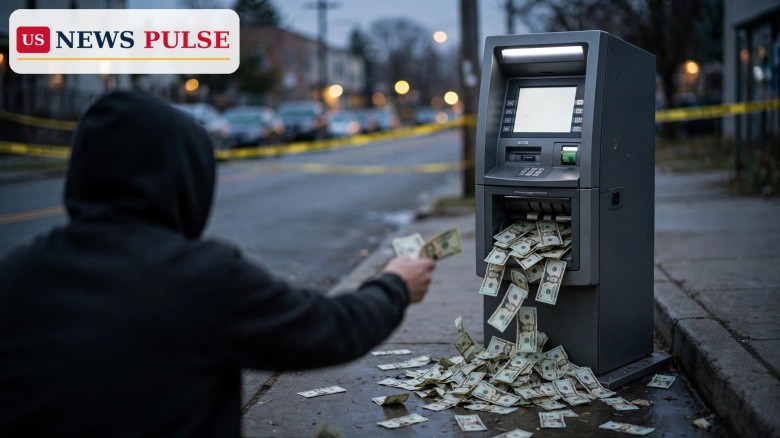
The FBI is warning banks and the public about a fast-growing form of high-tech bank robbery that needs no mask, no note and no getaway car. In a crime called ATM “jackpotting”, thieves install malware on cash machines and force them to spit out thousands of dollars in minutes. US banks have reported more than 1,900 such attacks since 2020, including about 700 in 2025 alone, with losses topping $20 million, according to a February 19, 2026 FBI cybersecurity alert. Investigators say the attacks are getting bolder and harder to spot.
Key Points
- US banks have reported more than 1,900 ATM jackpotting incidents since 2020, including about 700 in 2025, with losses above $20 million that year, the FBI says.
- Thieves install malware — including the Ploutus family — on ATMs, often after opening the machine with a key, then order it to dispense cash.
- In Glendale, Wisconsin, in March 2026, two men took about $110,000 from a UW Credit Union ATM; about $230,000 was stolen from another ATM in nearby Greenfield a week later.
- FBI Milwaukee chief Alan Karr calls it “the new bank robbery, without the force of violence of a bank robbery.”
- The FBI and the FDIC’s inspector general urge banks to update ATM software, tighten physical security and add cameras.
What Happened
The FBI’s warning, set out in a cybersecurity alert issued on February 19, 2026, puts hard numbers on a crime that has quietly spread across the country. More than 1,900 jackpotting incidents have been reported by US banks since 2020, and the pace is quickening: roughly 700 took place in 2025 alone, with losses of more than $20 million. The bureau says the attacks have moved from a rare curiosity to a routine threat for banks of every size.
In Glendale, Wisconsin, in March 2026, surveillance video showed two men using a key to open a UW Credit Union ATM, rebooting it and walking away. About an hour later they returned and took around $110,000 in cash. About a week later, roughly $230,000 was stolen from another bank ATM in nearby Greenfield. Investigators say many attacks go unnoticed at first, because the machine looks untouched and the theft is found only when the cash is counted.
Background and Context
ATM jackpotting takes its name from the slot-machine term for a big payout: the machine is tricked into paying out everything it holds. Unlike card skimming, which steals customers’ account details one card at a time, jackpotting attacks the machine itself. The thieves need physical access to the ATM, usually a drive-up or standalone machine in a quiet location, and a way to load malicious software onto it.
The malware at the centre of the FBI’s warning belongs to the Ploutus family, which exploits weaknesses in the software that controls the cash dispenser. Once installed, it lets criminals command the dispenser directly, bypassing the checks that verify a card, a PIN and a balance. Many machines still run older software, and thousands sit outside branches, in shopping centres, petrol stations and convenience stores, reachable after hours with little supervision.
How ATM Jackpotting Works
The attack usually unfolds in a few quick steps. First, the criminals open the ATM, often with a universal or stolen key, or by exploiting a weak lock on the service panel. Next, they connect a laptop or USB device, install the malware and reboot the machine so the malicious software takes control of the dispenser.
Then they wait. In Glendale, the men left and returned about an hour later, a gap investigators say is deliberate: it separates the break-in from the theft and makes the pair harder to link on camera. A few keypad commands then tell the machine to empty its cassettes, and the cash pours out in minutes. There is no teller to threaten and no alarm to trip in the usual way, so banks often learn of the theft only after the money is gone.
Reactions and Quotes
Agent Karr’s warning was blunt. “Think of this as the new bank robbery, without the force of violence of a bank robbery,” he said, urging banks in Wisconsin and across the country to treat the threat as seriously as an armed hold-up. The FBI’s message is that any institution with an ageing ATM in a quiet spot is a possible target.
The FDIC’s Office of Inspector General has joined the warning, pressing banks to update ATM software, improve physical security and add camera coverage that records anyone opening a machine. Credit unions, which often run smaller ATM fleets on tighter budgets, are among the most exposed — and the Glendale and Greenfield thefts hit exactly that kind of institution.
Why It Matters
The scale of the problem is what makes the warning urgent. More than 1,900 incidents in six years, with 700 in 2025 alone, point to a crime that is accelerating rather than fading. Losses of more than $20 million in one year fall on banks, insurers and ultimately customers, through higher fees and the cost of new security. Although jackpotting is usually non-violent, the gangs behind it are organised, well-funded and mobile, often moving from city to city.
For communities, a tampered ATM also shakes confidence in machines millions of people rely on daily. Readers can also see our coverage of the US seeking a 24-year term for Nikhil Gupta in the Pannun murder-for-hire plot and the triple homicide in Jackson.
What Happens Next
The FBI and the FDIC are pressing banks to act now: patch ATM software, replace default and shared service keys, fit stronger locks and alarms, and make sure cameras cover the front and service panel of every machine. Banks are also told to reconcile cash daily, so an emptied machine is noticed the same morning. Investigators in Wisconsin are still working the Glendale and Greenfield cases.
For customers, the advice is simple: use ATMs inside branches or busy, well-lit places, check the machine for tampering, and report anything unusual at once. A machine that has been opened or left with its service panel loose should not be used. For more on crime and public safety, see also Florida and Texas setting executions for Thursday.
Frequently Asked Questions
What is ATM jackpotting?
It is a crime in which thieves install malware on an ATM and force it to dispense large amounts of cash without a legitimate withdrawal.
How many attacks have there been?
US banks have reported more than 1,900 since 2020, including about 700 in 2025, with losses above $20 million that year, the FBI says.
What malware is used?
The FBI points to the Ploutus family, which exploits weaknesses in the software controlling an ATM’s cash dispenser.
How can banks stop it?
Update ATM software, replace shared service keys, strengthen locks and alarms, add cameras and reconcile cash daily, the FBI and the FDIC say.
What should customers do if an ATM looks tampered with?
Do not use it. Note the location, report it to the bank or police, and use a machine inside a branch or a busy, well-lit place.

The US News Pulse newsroom covers breaking news across the United States and the world, working from wire services, official statements and on-the-record sources. Every story is reviewed against our editorial standards before publication. Corrections and tips: info@usnewspulse.com
About our newsroomLeave a Comment