


 | Today's Date:





Alaska Senate Race Still Uncalled as Sullivan Leads Peltola by 1,677 Votes
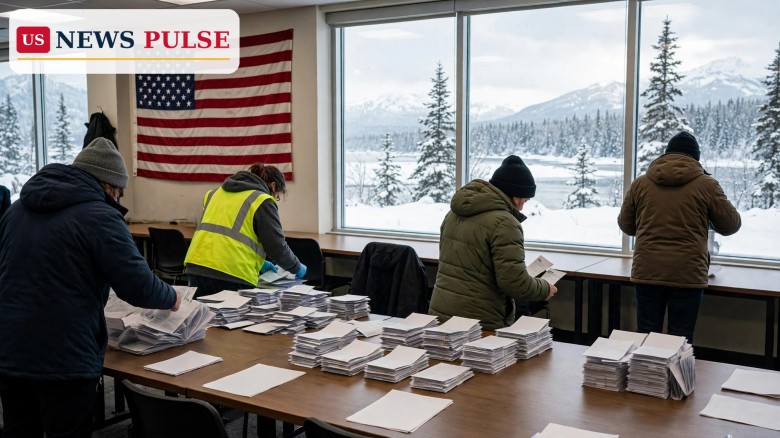
Alaska's Senate race remains uncalled on Wednesday, November 4, 2026, with Republican incumbent Dan Sullivan holding a lead of just 1,677 votes over Democratic challenger Mary Peltola in one of the closest contests of the midterm cycle. The Associated Press lists the race as "Too Early to Call", making Alaska one of only two Senate races still undecided, alongside Mississippi, a day after Americans voted.
The Alaska Senate race matters beyond its narrow margin because of what comes next. Alaska uses ranked-choice voting, so if no candidate wins a majority of first-choice votes, the lowest-placed candidates are eliminated one by one and their supporters' next choices are redistributed until one candidate reaches a majority. That process, rather than the first-choice tally alone, will decide who represents Alaska in the Senate for the next six years.
Key Points
- Republican incumbent Dan Sullivan leads Democrat Mary Peltola by 1,677 votes: 100,751 to 99,074.
- Just 72.21 percent of precincts had reported, 291 of 403, with an estimated 72.41 percent of the vote counted.
- Alaska is one of only two Senate races still uncalled, alongside Mississippi, according to the Associated Press.
- Namesake candidate Daniel J. Sullivan Jr. won 3,448 votes, more than double the incumbent's lead.
- The race no longer decides Senate control, after Democrats secured at least 54 seats, but it will set the size of their majority.
What Happened
When the first full day of counting after Election Day began, the Associated Press showed Sullivan, first elected in 2014, ahead of Peltola, a former congresswoman and the first Alaska Native elected to the United States House. Fellow Republican Gerald Heikes had 4,495 votes, while Daniel J. Sullivan Jr., who shares the incumbent's name, had 3,448, more than twice the gap between the two leading candidates.
With 291 of Alaska's 403 precincts reporting and an estimated 72.41 percent of the overall vote counted, a large share of the electorate had still not been reflected in the published totals on Wednesday. In a state where ballots from remote communities can take days to arrive and be counted, the remaining votes are not a footnote. They could narrow the gap, widen it, or leave the first-choice result without a majority winner, which would trigger ranked-choice tabulation.
Background and Context
Sullivan, 61, is seeking a third term and was endorsed by President Donald Trump. He has represented Alaska in the Senate since 2014, with a record centred on energy, defence and Arctic policy, issues that carry particular weight in a state shaped by oil, fisheries and a large military presence.
Peltola came into the race with a different profile. She previously served in the House, where she became the first Alaska Native elected to Congress, and she led the August top-four primary for this Senate seat with 49.5 percent of the vote to Sullivan's 41.4 percent. A primary electorate, however, is not a general electorate, and the November contest has proved far tighter.
The campaign also unfolded against an unusual legal backdrop. Before the election, the Justice Department sued to block certification if Sullivan lost by fewer votes than his namesake received. Judge Sharon Gleason dismissed that suit as infeasible, the Justice Department appealed, and a criminal investigation involving target letters over the alleged recruitment of the namesake candidate remains ongoing. Peltola has denied any involvement. None of that litigation decides the count, but it explains why the namesake candidacy is being watched so closely.
Alaska Senate Race: Why Ranked-Choice Voting Matters
Under Alaska's system, voters rank candidates in order of preference rather than choosing only one. If a candidate wins a majority of first-choice votes outright, that candidate wins. If no one does, the candidate with the fewest first-choice votes is eliminated and those ballots are redistributed to their voters' next-ranked choices, repeating until one candidate holds a majority.
In practice, the final result may look different from the first-choice tally now being reported. Supporters of Heikes and of Daniel J. Sullivan Jr. will have their second and later preferences counted if their first choice is eliminated. In a race separated by fewer than 1,700 votes, those redistributed ballots could prove decisive, and neither campaign can safely treat the current margin as final. Tabulation also takes time, since officials must first count ballots still arriving from remote areas before the ranked-choice rounds can be completed.
Reactions
Neither campaign has been reported as conceding or claiming victory, which is consistent with a race this close and this incomplete. With more than a quarter of precincts still to report and ranked-choice tabulation still to come, any declaration at this stage would be premature, and both sides have reason to wait for the official count.
The wider reaction has focused on the arithmetic. Because Democrats have already secured control of the Senate, with at least 54 seats, attention has shifted to the size of the majority and to the handful of races, including Alaska and Mississippi, that will set its final shape. In Mississippi, the margin is even tighter, with the Democratic challenger leading by just 43 votes.
Why It Matters
The result matters for several reasons. The size of the Senate majority shapes what a governing party can pass and how it handles nominations. Alaska's seat also carries weight on energy, Arctic strategy, fisheries and the federal relationship with Alaska Native communities, and its winner will have a direct say in those debates for six years. The race is also a high-profile test of ranked-choice voting for other states considering similar reforms.
What Happens Next
The immediate next step is the completion of the count. Officials will continue processing ballots from precincts that have not yet reported, and the published totals will move as those results are added. Until the count is substantially complete, the margin of 1,677 votes should be treated as a snapshot, not a result. Once the first-choice count is complete, officials will determine whether any candidate holds a majority; if neither does, ranked-choice tabulation will begin. Legal developments may continue in parallel, with the Justice Department's appeal and the ongoing criminal investigation still open.
Frequently Asked Questions
Who is leading the Alaska Senate race?
Dan Sullivan leads Mary Peltola by 1,677 votes, with 100,751 votes to Peltola's 99,074, according to Associated Press figures reported on November 4, 2026.
Why is the Alaska Senate race still uncalled?
Only 72.21 percent of precincts had reported, and Alaska uses ranked-choice voting, which may require further tabulation rounds if no candidate wins a first-choice majority.
What is ranked-choice voting?
Voters rank candidates in order of preference. If no candidate wins a first-choice majority, the lowest-placed candidates are eliminated and their votes redistributed until one candidate holds a majority.
Does the Alaska race decide control of the Senate?
No. Democrats have already secured at least 54 seats. Alaska will determine the size of that majority, not which party holds it.
Why does the namesake candidate matter?
Daniel J. Sullivan Jr. won 3,448 votes, more than double the incumbent's lead, and his candidacy is the subject of a dismissed and appealed Justice Department lawsuit and an ongoing criminal investigation, in which Peltola denies any involvement.
Leave a Comment