

 | Today's Date:





EPA Soil Tests After Iowa Lead Azide Blast Find Negligible Contamination, EPA Says
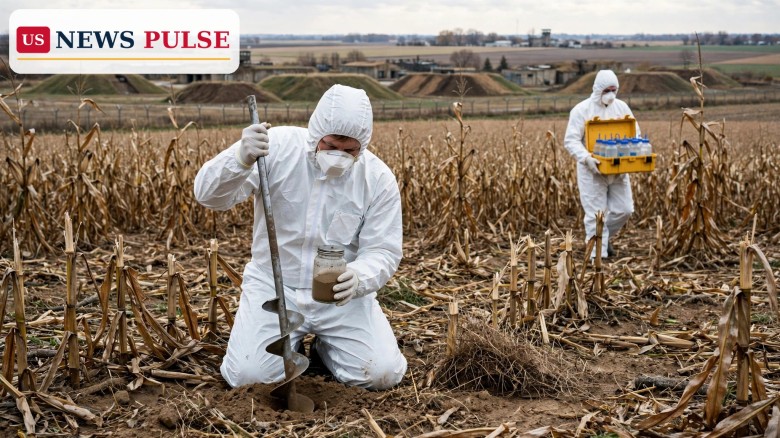
The first laboratory results from soil and water samples collected after the Army's controlled detonation of nearly five tons of unstable lead azide in Iowa show negligible contamination from the blast, the Environmental Protection Agency said on Saturday, November 28, 2026. According to initial results from 88 percent of the samples, measurable lead in soil, water and drinking supplies was no higher after the explosion than before it. The finding, posted online three days after Wednesday's blast in Middletown, is the third clean result in a row — but residents near the plant say it does not settle who let the stockpile rot for years.
Key Points
- The EPA's first soil and water lab results found negligible contamination from the blast.
- Lead in soil, water and drinking supplies was no higher after the blast than before it.
- More than 1,600 samples were collected after the blast; 187 homes and structures were assessed.
- Air monitors recorded 0.0 micrograms per cubic metre of airborne lead for 30 straight hours.
- Residents still demand accountability; Senator-elect Josh Turek wants a full investigation.
What Happened
The EPA posted its readings online on Saturday, three days after the Army blew up nearly five tons (4,500 kilograms) of lead azide in 68 degrading plastic drums, in two simultaneous explosions at the munitions depot in Middletown, Iowa. In a statement on X, the EPA said the controlled detonation "did not result in an elevation of lead in the water bodies that act as drinking water sources" and that there was "no detection of lead in drinking water sources taken after the detonation".
The agency collected more than 1,600 air, water, soil and dust samples after the blast, roughly the same number as before, and assessed 187 homes and other structures, including schools, playgrounds, churches and daycare centers. Air monitors recorded "0.0 µg/m3 readings" for 30 consecutive hours. Residents closest to the plant were evacuated in advance, while others sheltered in place.
Background: The Long Road to Wednesday's Blast
The detonation followed days of public rancour and legal wrangling. The Army announced on November 15 that it planned to detonate 68 barrels of the obsolete chemical, stored for more than 20 years and too dangerous to move after a March inspection found it near spontaneously exploding. Environmental groups sued over the EPA's emergency permit, and President Donald Trump ordered the Army to hold off until the courts approved it. That same day, the 8th US Circuit Court of Appeals upheld the permit, clearing the way for Wednesday's blast.
The air gave the first reassurance: EPA monitors reported 0.0 micrograms per cubic metre of airborne lead for 30 consecutive hours, which Administrator Lee Zeldin called a "best case scenario" on Friday. The blast, which Major General Eric P. Shirley called "tremendously successful", used containment measures to keep toxic dust from spreading. The soil results complete the picture: on Saturday the EPA also reported no lead in any of the 38 post-blast water samples. The story behind the stockpile is darker: records reviewed by The New York Times show the Army knew the lead azide was dangerous as far back as 2009, when the barrels were moved from Texas to Middletown — some already more than 60 years old. The White House has opened an inquiry.
EPA Soil Tests After Iowa Lead Azide Blast: What the First Lab Results Mean
Soil was always the test that mattered most. Independent experts welcomed Wednesday's air readings but said atmospheric sampling was of limited value: the real measure of lead fallout would come from water, soil and surfaces. Air clears; lead in soil does not break down. Once it settles it stays, and can work its way into gardens, wells and play areas for years. That is why the 88 percent figure matters: more than 1,600 samples after the blast, matched against roughly the same number before. Army projections had shown lead dust could settle as far as 40 miles southwest, threatening 350 farms. The initial results say the dust did not land in measurable amounts — a genuine reassurance, but still initial, with the remaining samples yet to be reported.
Reactions
For Jessica Phillips, who lives on a farm about five miles from the blast site, the clean results are welcome but not the end of it. "I teach my kids accountability," she told Reuters. "And there sure in hell should be some accountability over this."
Iowa Senator-elect Josh Turek, a Democrat, has called for a full investigation of why the stockpile deteriorated so badly. Sean Byers of Middletown packed his three small children into the car and drove six hours to Branson, Missouri, rather than stay. "They're still developing. They're still growing," he said. Staying was "just not a risk I'm willing to take."
Melanie Knedler of Burlington taped her windows shut and brought her cats inside, then heard nothing as a plume of dust showed faintly on a livestream. She still plans to send soil samples gathered before and after the blast to the University of Nebraska for independent testing. "I think they contained it well," she said.
Why It Matters
The soil result closes the loop the air and water results opened. A clean air reading proves the plume did not drift over homes; a clean water reading proves the rivers and lakes that supply drinking water were not poisoned. But lead's danger is in the ground it lands on, and children are the most vulnerable: there is no safe level of lead in the blood, and it can impair brain development. A clean soil result is the one that lets families believe the all-clear will still hold next year. The detonation was fought in court and carried out over residents' objections, after the Army sat on a deteriorating stockpile for years. But until the remaining samples are validated, the all-clear covers the soil tested so far, not every home.
What Happens Next
The EPA will release the remaining lab results as they are validated, with tap-water, soil and dust data posted at epa.gov/IowaData. Knedler's samples go to the University of Nebraska, and residents will watch whether they match the government's. The White House inquiry into why senior officials were not told sooner will be the next focus, alongside Turek's call for a full investigation.
Frequently Asked Questions
Did the Iowa lead azide blast contaminate the soil?
No — measurable lead in soil, water and drinking supplies was no higher after the blast than before it.
How many samples has the EPA collected?
More than 1,600 after the detonation, roughly the same number as before.
What did the air and water tests show?
Air monitors recorded 0.0 micrograms of airborne lead for 30 hours, and none of the 38 post-blast water samples contained lead.
Are all the results in yet?
No. Initial results cover 88 percent of post-detonation samples; tap water and the rest are still being validated.
Who is investigating how the stockpile deteriorated?
The White House has opened an inquiry, and Iowa Senator-elect Josh Turek has called for a full investigation.
Related coverage: EPA Finds No Lead in Iowa Water, EPA Finds Zero Airborne Lead, Army Knew of Iowa Danger Since 2009.

The US News Pulse newsroom covers breaking news across the United States and the world, working from wire services, official statements and on-the-record sources. Every story is reviewed against our editorial standards before publication. Corrections and tips: info@usnewspulse.com
About our newsroomLeave a Comment