


 | Today's Date:




Mullin Says US Deportations Will Continue Despite Democrats' Midterm Sweep
Washington, D.C. — Homeland Security Secretary Markwayne Mullin has made clear that the 2026 midterm elections will not slow the Trump administration's deportation programme. In a social-media post published on November 4, 2026, and reported by The Hill, Mullin said US deportations will continue after Democrats won control of both the House and the Senate. The Mullin deportations continue message sets up an early confrontation with the incoming Democratic Congress, which has said it intends to use its new majorities to limit the activities of Immigration and Customs Enforcement, known as ICE.
Mullin's post arrived as Democrats celebrated a sweeping midterm victory and began outlining priorities for the new Congress, which convenes in January 2027. Among those priorities is immigration enforcement, and Representative Delia Ramirez's Reimagining Safety Act, which would reorganise United States immigration agencies, has been cited as part of that effort. Mullin has previously said the midterm outcome "won't affect me at all", explaining that he enforces the nation's laws and that his agency would continue to work diligently regardless of which party holds Congress.
Key Points
- Homeland Security Secretary Markwayne Mullin said on November 4, 2026, that US deportations will continue after Democrats won control of the House and Senate.
- Democrats intend to use Congress to limit ICE's activities, including Representative Delia Ramirez's Reimagining Safety Act to reorganise US immigration agencies.
- Mullin earlier said the midterm outcome "won't affect me at all", saying he enforces the nation's laws and his agency would continue diligently under either party.
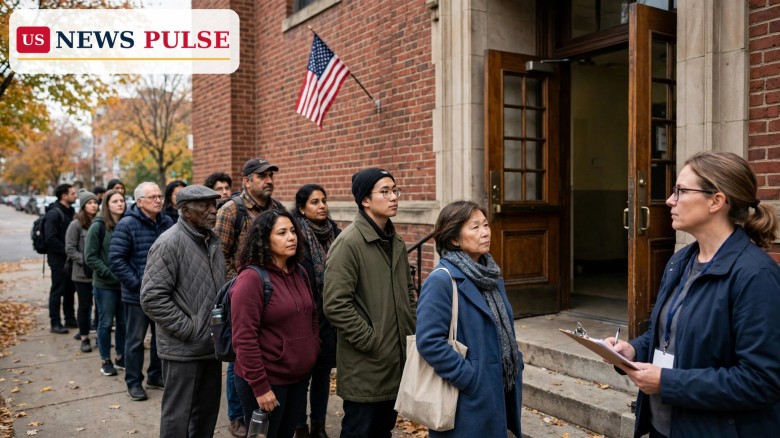
- In a Fox News interview with Will Cain before polls closed on November 3, Mullin said ICE agents would not be present near voting locations unless a threat arose.
- The new Democratic Congress convenes in January 2027, setting up a clash over enforcement, oversight and funding.
What Happened
According to The Hill, Mullin used a post on November 4, the day after voters went to the polls on November 3, to state plainly that deportations would continue after the Democratic sweep. It was a short, direct message, but its meaning was unmistakable: the Department of Homeland Security does not regard the election result as a reason to change course on removals.
Mullin's position is consistent with what he said before the election. That framing presents continued deportations not as a political choice made in response to the result, but as the ordinary execution of existing law. Critics are likely to dispute that framing, arguing that enforcement priorities, resources and tactics are choices administrations do make, and that a newly elected Congress has a legitimate role in shaping them. Supporters, by contrast, are likely to welcome the clarity, seeing it as a promise that enforcement will not be softened by the change in Washington.
Background and Context
Immigration enforcement has been one of the most contested areas of American politics for years, and the 2026 midterms did not settle the argument. The Trump administration has pursued an assertive deportation programme, while Democrats have repeatedly criticised ICE's tactics, scale and accountability. The election gave Democrats control of Congress, but it did not change the presidency, and the executive branch retains broad authority over how immigration laws are enforced day to day.
Mullin Deportations Continue: What the Statement Means for ICE
The core of the Mullin deportations continue message is about ICE and the wider Department of Homeland Security. Deportations run through arrests, detention, immigration court proceedings and removals, and each stage involves legal authority, funding and operational capacity. A statement that deportations will continue therefore implies that none of those stages will be paused because of the election result. It does not, by itself, announce a new operation, a new target or a change in numbers, and the post reported by The Hill did not set out fresh statistics or a revised plan.
Reactions and Quotes
Mullin's own words frame the administration's position most directly. He has said the midterm outcome "won't affect me at all", adding that he enforces the nation's laws and that his agency would continue to work diligently regardless of which party holds Congress. That leaves little room for interpretation: in his view, the department's duty does not change with the composition of Congress.
On the other side, Democrats have said they intend to use control of Congress to limit ICE's activities. The Reimagining Safety Act, championed by Representative Delia Ramirez, is presented as a vehicle for reorganising United States immigration agencies, reflecting a view that the enforcement system itself needs to be restructured. Its supporters argue that reorganisation would improve accountability and safety, while opponents are likely to argue that it would weaken enforcement at a time when the administration says it is needed.
Why It Matters
This story matters because it previews the central institutional conflict of the next Congress: a president and his cabinet pursuing an enforcement agenda, and a Congress controlled by the opposition seeking to restrain it. How that conflict is resolved will affect people facing removal, families in mixed-status households, employers, local police departments and the courts that process immigration cases. It will also shape the politics of 2028, as both parties test which immigration message resonates after the midterm result.
What Happens Next
The immediate next step is the seating of the new Congress in January 2027. Democrats will then be able to schedule hearings, introduce and advance legislation, and use the appropriations process to test the administration's enforcement plans. The Reimagining Safety Act and other immigration proposals will be watched as indicators of how far the new majority is prepared to go, and how united it is behind a single approach.
At the same time, the Department of Homeland Security is expected to continue operations under Mullin's direction, unless a court orders otherwise or Congress enacts a binding restriction that survives a veto. Advocacy groups are likely to challenge individual removals and broader policies in court, while local governments will continue to decide their own cooperation with federal enforcement. The result is likely to be a period of legal and political contest, rather than a sudden change in either direction.
Frequently Asked Questions
What did Markwayne Mullin say about deportations after the midterms?
Mullin said on November 4, 2026, reported by The Hill, that US deportations will continue after Democrats won control of the House and Senate.
What do Democrats plan to do about ICE?
Democrats intend to use Congress to limit ICE's activities, including Representative Delia Ramirez's Reimagining Safety Act to reorganise US immigration agencies.
Did Mullin say the election would not affect his work?
Yes. He earlier said the outcome "won't affect me at all", saying he enforces the nation's laws and his agency would continue diligently under either party.
What did Mullin say about ICE near polling places?
In a Fox News interview with Will Cain before polls closed on November 3, he said ICE agents would not be present near voting locations unless a threat arose.
When does the new Democratic Congress take over?
The new Congress, in which Democrats control both chambers, convenes in January 2027.
Leave a Comment